
Janmashtami 2026 in Albuquerque: Events, Puja & Where to Celebrate
TL;DR
- \U0001fa73 Janmashtami 2026 falls around September 8, marking Lord Krishna's birth at the stroke of midnight
- The Desi community in Albuquerque has an active temple life, anchored by events at HTSNM throughout the year
- Mata Ki Chowki at HTSNM (July 26) and Balaji / Venkateshwara Kalyanam (July 25) show how vibrant the local devotional calendar already is
- Fasting through the day, the midnight arati and cradle ceremony, and Dahi Handi the following morning are the three pillars of any Janmashtami celebration
- \U0001f5d3️ From Guru Purnima 2026 through Navratri 2026, Albuquerque's festival calendar stays full for months
Lord Krishna's Birthday and What It Means for Albuquerque's Desi Community
Janmashtami 2026 -- falling on or around September 8 -- commemorates the birth of Lord Krishna, the eighth avatar of Vishnu, born at the stroke of midnight to Devaki and Vasudeva in the prison city of Mathura. It is one of the most widely observed festivals across Hindu traditions, and the Desi community in Albuquerque brings to it an energy shaped by multiple regional backgrounds and a temple community that stays active year-round.
The events calendar around HTSNM reveals exactly how much devotional life pulses through Albuquerque across the year. Consider what July alone holds: Vishnu Sahasranam Chanting - Vishnu Puja on July 23 sets a contemplative tone with the full recitation of the thousand names of Vishnu. Two days later, the Balaji / Venkateshwara Kalyanam on July 25 -- an elaborate celestial wedding ceremony for Lord Venkateshwara performed with full puja, floral decorations, and prasad distribution -- draws families for several hours of devotion. Then the Mata Ki Chowki at HTSNM on July 26 gathers the community in bhajan and devotional singing. Guru Purnima 2026 on July 29 closes the month with a day to honor teachers and spiritual lineages.
That is a community that shows up consistently. By the time Janmashtami arrives in September, the groundwork of relationship, practice, and shared worship has already been laid across months of gathering.
The Midnight Celebration: Why Janmashtami Begins After Dark
Krishna's birth at midnight gives Janmashtami its most distinctive ritual structure. Devotees who observe Krishnashtami Vrat fast through the day -- some abstaining from all food, others following the Phalahar tradition of consuming only fruits, milk, yoghurt, and sabudana (tapioca) preparations. Temples hold extended bhajan sessions through the evening, with congregational singing of Krishna's names and pastimes building steadily in devotion as the clock approaches midnight.
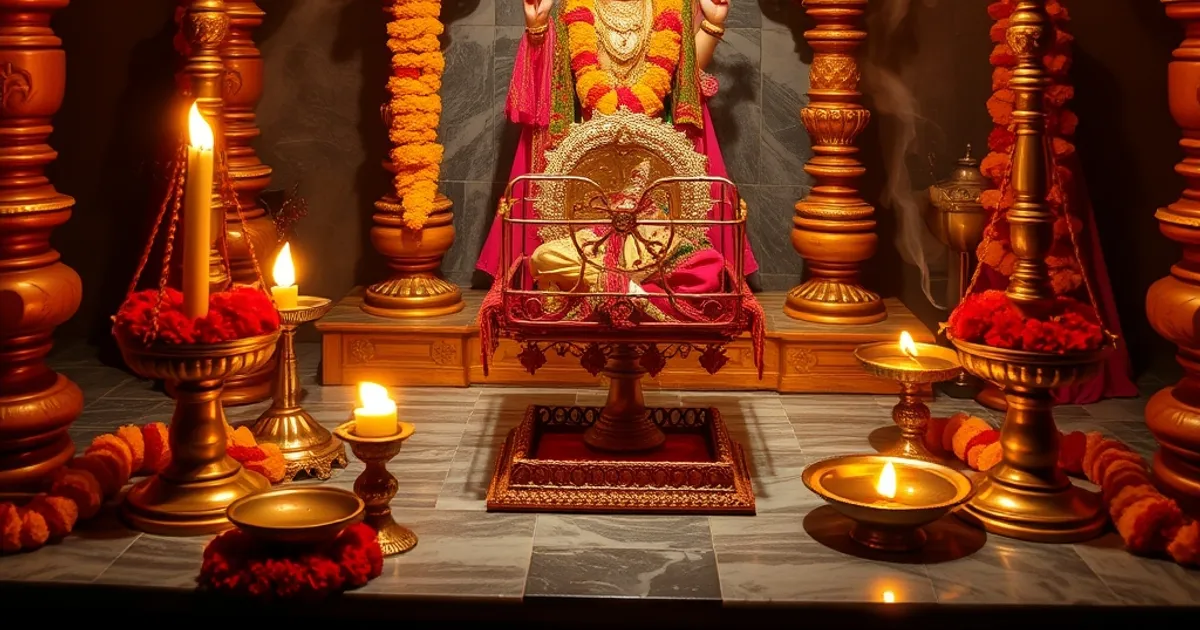
At the stroke of twelve, the moment of Krishna's birth is announced -- typically with a conch shell, bells, and the waving of incense and camphor lamps in an arati. A murti of infant Krishna, Bal Gopal, is bathed in panchamrit (a mixture of milk, yoghurt, honey, sugar, and ghee), then dressed and placed in a decorated cradle. Devotees come forward to rock the cradle and receive teertha (sanctified water). The fast is broken only after this midnight puja, usually with fruits, sweets, and the panchamrit itself.
At HTSNM, where large programs like Mata Ki Chowki and Balaji / Venkateshwara Kalyanam already draw strong participation, Janmashtami night is likely to see elaborately decorated premises, cultural performances by children (Krishna Leela skits and dance), and prasad distribution after midnight including panjiri, fruits, and charnamrit.
Dahi Handi: The Joyful Morning After
The day after Janmashtami, Nandotsav, is traditionally marked by Dahi Handi -- the breaking of a clay pot filled with curd, butter, and dairy tied high overhead, referencing young Krishna's famous mischief stealing butter from his mother's kitchen. Human pyramids of young men, Govindas, climb each other's shoulders to reach and shatter the pot.
In diaspora communities, Dahi Handi often moves to a community parking area or open ground rather than a street, with the pot suspended from a basketball hoop or temporary pole. The spirit is unchanged: it is among the most photogenic and participatory events of the festival year, drawing in families who might skip the midnight puja but come alive for the morning energy and friendly competition.
\U0001f5d3️ The Full Festival Arc: August Through October
The weeks surrounding Janmashtami 2026 form a dense arc of observance. After Guru Purnima 2026 (July 29), the calendar moves to Nag Panchami 2026 (August 16) -- a day of serpent worship and prayers for protection of the family, observed with milk offerings and temple puja.
Raksha Bandhan 2026 (August 27) follows, the sibling festival where sisters tie the protective rakhi thread around brothers' wrists, often paired with sweets and heartfelt promises of care.
Janmashtami 2026 itself falls around September 8, followed almost immediately by Ganesh Chaturthi 2026 (around September 13) -- the elephant-headed deity's birthday, celebrated with murti installations, daily arati, and a grand visarjan procession.
The season then rolls into Navratri 2026 (October), nine nights of worship of the divine feminine in her nine forms, typically celebrated with garba and dandiya dancing in community halls.
Insider Tip
For those observing a full Janmashtami fast and finding it difficult to stay energized through a long evening program, the Phalahar approach is completely traditional and widely observed. Communities in Albuquerque sometimes organize informal Phalahar potlucks during the day -- families share sabudana khichdi, fruit chaat, and sweet potato preparations with sendha namak (rock salt). Sharing the fast together makes the evening far more sustainable, and arriving at the midnight puja having eaten lightly is actually ideal for deep devotional participation.
Connecting with the Community in Albuquerque
The Hindu and broader Desi community in Albuquerque is tightly enough knit that events like Mata Ki Chowki at HTSNM and Vishnu Sahasranam Chanting - Vishnu Puja draw consistent participation. HTSNM serves as a hub for multiple regional communities -- North Indian, South Indian, and Gujarati families often share the same temple calendar -- which means Janmashtami programs typically reflect the full breadth of local Desi culture rather than any single regional tradition.
For newcomers to Albuquerque, the fastest way to connect is through the temple's own social media channels and announcements, the Desi.Net Albuquerque directory, and community group chats on WhatsApp or Facebook. Connecting before the festival season peaks means you will have advance notice of registration deadlines for communal dinners, volunteer slots for temple decoration, and children's performance signups.
FAQ
When is Janmashtami 2026? Janmashtami 2026 falls on approximately September 8. The exact date follows the lunar calendar, so confirm with HTSNM or a current panchang as the month approaches.
Can non-Hindus attend Janmashtami events? Temple programs at community mandirs are generally welcoming to visitors of all backgrounds. Dress modestly and follow the customs of the space.
What is the significance of breaking the fast only after midnight? Krishna is believed to have been born at Nishita Kaal -- the exact midnight moment. Devotees hold the fast until that precise point and break it only after the midnight arati and cradle ceremony.
Is Dahi Handi a separate event from the midnight puja? Yes. The midnight puja is Janmashtami proper; Dahi Handi is celebrated the following morning on Nandotsav.
What should I bring to a temple Janmashtami celebration? Most temples welcome prasad contributions -- fruits, milk sweets, or flowers for the deity. Contact HTSNM directly for any specific guidelines for their Janmashtami program.
Bottom Line
Janmashtami 2026 lands at the peak of a devotional season that Albuquerque's Desi community has been building through all of summer. The track record of events like Mata Ki Chowki at HTSNM, Balaji / Venkateshwara Kalyanam, and Vishnu Sahasranam Chanting - Vishnu Puja confirms a community that shows up for its traditions consistently. The midnight puja, the Dahi Handi morning, and the shared fast make Janmashtami one of the most memorable nights of the temple year -- plan now, connect with HTSNM early, and make 2026 a Janmashtami to remember.