
Weekend Activities for Desi Kids in Amsterdam
TL;DR
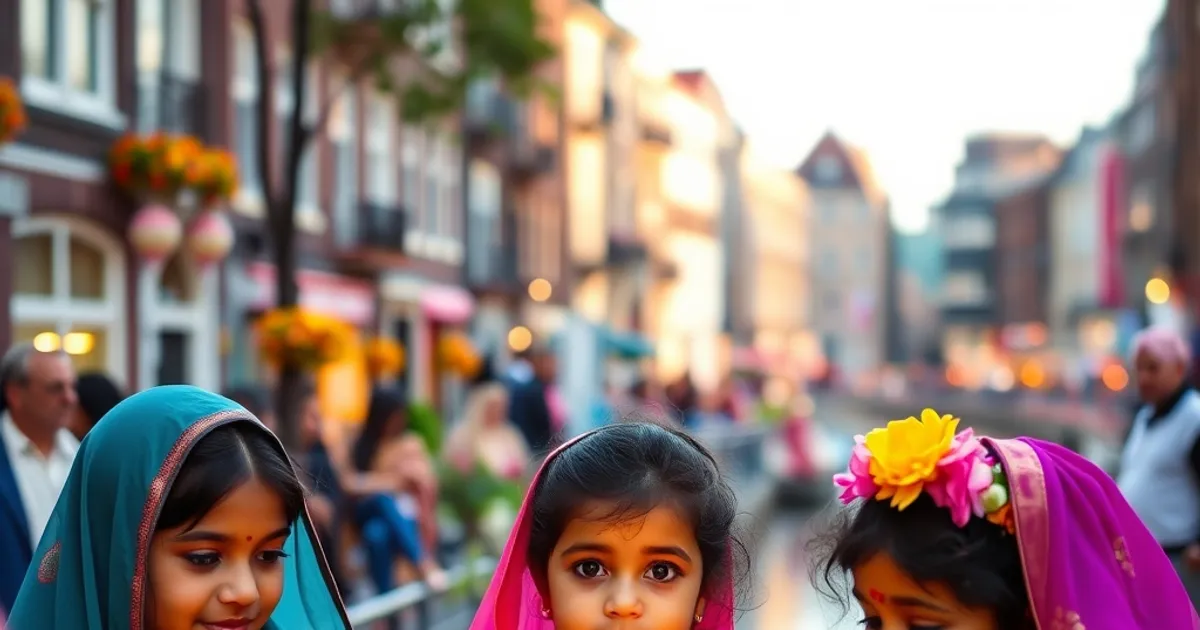
- 🌷 Amsterdam's Desi community spans two distinct groups: Surinamese-Hindustani families with deep Dutch roots, and Indian expats and professionals
- 🎭 The late July and August calendar includes six Hindu observances that anchor community gatherings across the city
- 🧒 Guru Purnima 2026 (Jul 29) opens the season with temple and community programs accessible to Desi kids of all ages
- 🐍 Nag Panchami 2026 (Aug 17) is the standout for children—vivid mythology, craft activities, and community celebration
- 🇳🇱 Understanding Surinamese-Hindustani history deepens the experience of Amsterdam's uniquely layered Desi cultural scene
Amsterdam's Desi Community: Two Roots, One Calendar
Amsterdam's South Asian community has a history unlike any other Desi diaspora city. The Surinamese-Hindustani community—descendants of Indian indentured laborers brought to what was then Dutch Suriname between 1873 and 1916—has been part of Dutch society for generations. These families came to the Netherlands in large numbers after Suriname's independence in 1975, and they have built a Hindu cultural and religious infrastructure in the Netherlands that predates the arrival of more recent Indian expat communities by decades.
The result is a Desi community with dual roots and two distinct cultures operating alongside each other. Surinamese-Hindustani families typically speak Dutch and Sranantongo or Sarnami (a form of Bhojpuri), practice a Hinduism that evolved distinctly in the Caribbean, and have deep connections to Dutch civic life. More recent Indian expats—tech workers, students, and professionals—bring the religious practices and cultural references of contemporary India. The two communities share calendar observances and sometimes temple space, but they hold distinct identities that are worth understanding rather than conflating.
For Desi kids growing up in Amsterdam, this layered history is itself a form of cultural education that few other cities can offer.
Guru Purnima 2026: The Season Opens
The late summer Desi cultural season in Amsterdam begins with Guru Purnima 2026 on July 29. This full-moon observance honoring teachers and spiritual guides holds significance across Hindu traditions—and in Amsterdam, it is observed by both Surinamese-Hindustani and Indian communities, making it one of the more cross-community moments of the calendar year.
For children, Guru Purnima is a natural opportunity to introduce the concept of respect for elders and the enduring value of learning—themes that translate across cultures and generations. Amsterdam-area mandirs and cultural organizations associated with the Surinamese-Hindustani community typically organize bhajan sessions and community gatherings around Guru Purnima. Indian community organizations may run separate or joint programs, and some cultural centers host events that bring the two communities together.
Checking with local temple communities in the weeks before July 29 will give families a clear picture of what's available and where programming is best suited to younger participants.
The August Calendar: Five Observances in Fifteen Days
August 2026 brings a remarkable concentration of observances for Amsterdam's Desi community, starting on the second day of the month.
Sankashti Chaturthi (Aug 02) — The monthly Ganesh observance is particularly well-established in Surinamese-Hindustani religious culture. Ganesha worship has been central to Hindu practice in Suriname and the Netherlands for generations, shaped by the community's Caribbean experience. Sankashti Chaturthi gatherings at Surinamese-Hindustani mandirs often have a warm, multigenerational character—with food, music, and conversations that span the community's Dutch and Surinamese history. For Desi kids, these gatherings offer the rare experience of encountering Hindu cultural practice that has been specifically adapted by a community with a Caribbean-Dutch identity.
Ekadashi (Aug 08-09) — The bi-monthly Vishnu fasting day brings quieter observation across both communities, with families often engaging in home-based activities: devotional music, simplified fasting menus, and storytelling from the Ramayana and Mahabharata. Some Amsterdam-area temples offer evening bhajan programs open to all. In Surinamese-Hindustani tradition, the Ramayana holds a particularly central place—Ramleela performances and Ramayana recitation have been major community traditions since the nineteenth century, carried across the ocean and preserved in the Netherlands.
Pradosh Vrat (Aug 10) — This Shiva-focused observance centers on the auspicious evening window around sunset. Amsterdam-area mandirs with Shiva temples conduct abhishekam ceremonies, and for children, the visual richness of the ritual—milk, water, and flowers poured over the Shiva lingam—makes for a genuinely memorable first encounter. The Shiva tradition in Surinamese-Hindustani culture carries its own distinctive expressions, shaped by the community's long sojourn in the Caribbean before arrival in the Netherlands.
Amavasya (Aug 12) — New moon day carries significance for ancestral remembrance, which holds particular resonance in the Surinamese-Hindustani community. The ancestors being honored may include those who crossed the kala pani—the "black water," the ocean—as indentured laborers in the nineteenth century, leaving India for Suriname under colonial labor contracts that few fully understood at the time of departure. For Desi kids in Amsterdam, Amavasya can be a meaningful occasion for learning about family and community history. Some community organizations host prayer services that specifically acknowledge this ancestral history, connecting the observance to the unique story of Hindustanis in the Dutch-speaking world.
Nag Panchami 2026 (Aug 17) — The celebration of serpent deities is the standout observance for Desi kids. Nag Panchami combines vivid mythology—the Naga stories from the Puranas and Mahabharata—with accessible ritual: offerings of milk and flowers, clay serpent images, and the kind of visual storytelling that engages children across age groups. The observance also connects to agricultural and monsoon traditions in India, making it a natural teaching moment about the ecological knowledge embedded in Hindu practice. In Amsterdam, where the Netherlands' own relationship with water and land management is a point of national cultural pride, the connection between Nag Panchami's agricultural roots and the Dutch concept of working with natural forces can be a resonant bridge for Dutch-raised Desi kids.
Navigating Amsterdam's Desi Cultural Scene with Kids
Amsterdam's Surinamese-Hindustani mandirs are found in the city and in surrounding areas, with significant concentrations also in The Hague, Rotterdam, and Almere—all within reasonable reach. The Den Haag area is particularly significant for the Surinamese-Hindustani community and hosts major religious events that draw Amsterdam-area families for important observances.
For Indian expat families, community networking happens largely through WhatsApp groups and periodic events organized by Indian associations, local chapters of cultural organizations, and professional community groups in the Amsterdam tech and academic scenes.
For Desi kids specifically, the most enriching experiences often come from attending Surinamese-Hindustani community events, where the cultural practice is embedded in a Dutch civic context—Dutch is the language of community meetings, the food draws on Caribbean-Indian culinary tradition (roti with curried chickpeas and potatoes alongside Dutch-influenced sweets, for instance), and the sense of community belonging is multi-generational. This is Hindu cultural life that has been practiced continuously in Europe for fifty years, built by people who made the Netherlands their permanent home.
Insider Tip: Look for Surinamese-Hindustani cultural organizations in Amsterdam and The Hague area that host youth programs and family days. Some organizations run Dutch-language workshops for younger generations on Hindu practice and Surinamese-Indian history—a rare and genuinely valuable offering for Desi kids growing up in the Netherlands. Connecting with the mandir nearest to your neighborhood is the best starting point, and staff can direct you toward youth-oriented programming.
FAQ
Are temple events open to Indian expat families and non-Surinamese Desi families? Generally yes. Surinamese-Hindustani mandirs welcome South Asian visitors respectfully. Some events may be conducted in Dutch or Sarnami, so it can be helpful to ask temple staff about language accessibility in advance.
What is the difference between Surinamese-Hindustani Hinduism and Indian Hinduism? The two share the same core texts and deities, but Surinamese-Hindustani practice developed independently in the Caribbean over more than a century, creating distinct traditions around festivals, music, and community ritual. The differences are interesting and worth exploring rather than treating as barriers.
How do I find events for the August observances? Mandir websites and community Facebook groups are the primary announcement channels. Dutch-language Surinamese-Hindustani community media is also a reliable source for temple programming.
Are there English-language resources for Indian expat families in Amsterdam? Yes—Indian expat communities in Amsterdam maintain active online groups in English and Hindi that announce community events. Searching for "Indian Community Amsterdam" on Facebook and expat platforms is effective for finding the relevant networks.
Can Desi kids engage meaningfully with the Surinamese-Hindustani cultural scene if they don't speak Dutch? Yes. Ritual participation, music, and shared food are accessible across language barriers, and many Surinamese-Hindustani community members speak English. Younger generations especially are often multilingual, and the communities are generally welcoming of curious visitors who approach with respect.
Bottom Line
Amsterdam offers Desi families a genuinely rare cultural experience: two distinct South Asian communities—Surinamese-Hindustani and Indian expat—sharing a religious calendar against the backdrop of a European city with centuries of historical connection to the Indian subcontinent. The late July and August 2026 observances, from Guru Purnima 2026 through Nag Panchami 2026, give Desi families in Amsterdam a rich season of cultural touchpoints. The most distinctive feature of the Amsterdam Desi scene is the Surinamese-Hindustani community's deep Dutch roots—a community whose Hindu cultural life has been continuously practiced in Europe across multiple generations, and whose ancestors' story of crossing the ocean makes every Amavasya observance something more than a calendar date.