
Ganesh Chaturthi 2026 in Bengaluru: Events, Puja & Where to Celebrate
TL;DR
- 🐘 Ganesh Chaturthi 2026 arrives in late August — Bengaluru's tech corridors, traditional Kannada families, and Tamil and Telugu communities all prepare in genuinely distinct ways
- 🎨 Sri Prasanna Ganapathi Temple in Koramangala anchors one of the city's most energetic neighborhood celebrations
- 🎭 Bangalore International Centre in Domlur has been running an ambitious arts calendar through late July, setting the cultural mood for the festival season
- 🪔 The spiritual run-up — Guru Purnima on July 29, Nag Panchami in August — marks the weeks before Ganesha's arrival
- 🌺 The multi-community character of Bengaluru's celebration makes it genuinely unlike what you find in any other city
Bengaluru's Ganesh Chaturthi: A Festival That Belongs to Everyone
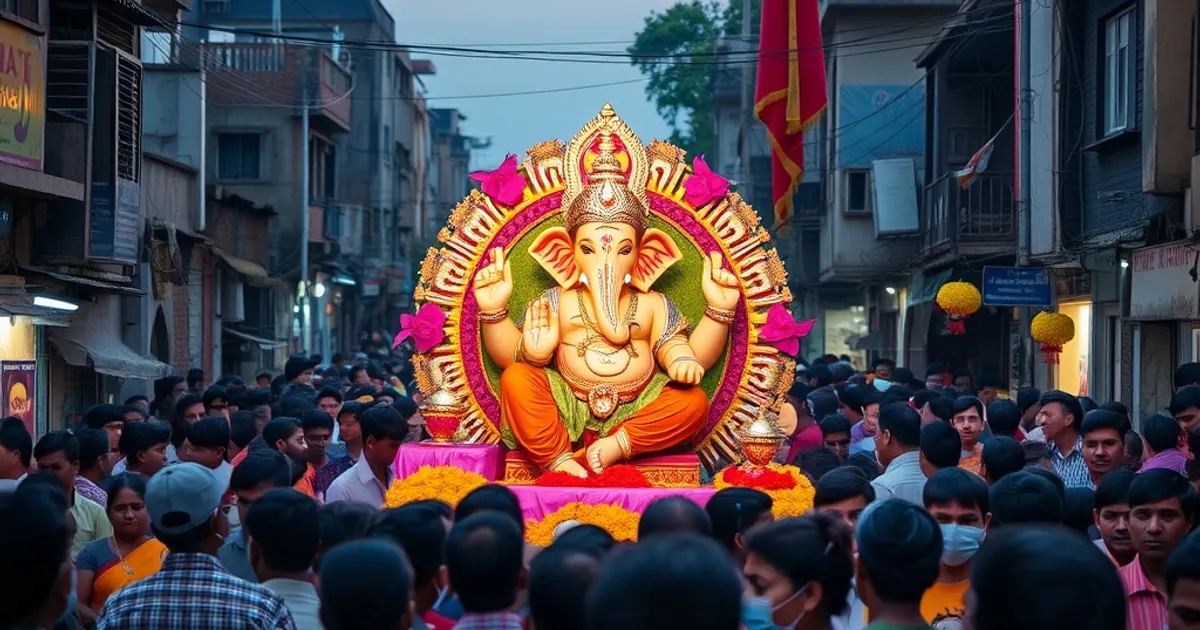
The first thing to understand about Ganesh Chaturthi in Bengaluru is that it does not belong to a single community. The city's Kannada-speaking neighborhoods, its large Tamil and Telugu populations, its Maharashtrian families, and the hundreds of thousands of people who have moved here for work in technology and education all participate — and they bring different traditions, different aesthetic sensibilities, and different intensities to the same celebration.
The result is a festival experience that, by the time it arrives, has spread across the entire city. Ganesha idols range from small clay forms kept on household altars to elaborate pandal installations in public squares and on main roads. The puja rituals layer Kannada, Tamil, Telugu, and Maharashtrian practices in ways that mirror Bengaluru's actual demographic history — a city built by successive waves of migration, each of which left its mark on how the city prays.
This year, the festive energy builds through a layered spiritual calendar. Guru Purnima on July 29 arrives first — a day of honoring teachers and spiritual guides, observed at the city's temples, yoga centers, and ashrams. Nag Panchami follows in August, with its own specific rituals around serpent deities. Each occasion adds to the accumulating sense of arrival before Ganesh Chaturthi itself appears.
Sri Prasanna Ganapathi Temple: Koramangala at Its Most Festive
In Koramangala — the suburb that houses more technology offices, co-working spaces, and startup-funded ventures than almost any comparable neighborhood in the country — Sri Prasanna Ganapathi Temple in KHB Colony, 5th Block, serves as the spiritual center for Ganesh Chaturthi.
The temple's presence in this particular neighborhood is not coincidental. Ganesha, as the remover of obstacles and the deity of auspicious beginnings, has a natural resonance with professional and commercial communities. The engineers, product managers, and founders who live in Koramangala are not, in practice, detached from the festival. Building societies in and around KHB Colony organize pandals, contribute to community pujas, and hang strings of lights that transform the roads of 5th Block for the duration of the celebration.
On the main festival day, the area around Sri Prasanna Ganapathi Temple becomes difficult to navigate by vehicle. This is not an inconvenience to avoid — it is a sign that Koramangala is doing what it does during Ganesh Chaturthi. Walking through those roads while the music plays from multiple directions simultaneously is one of the city's more specific and memorable pleasures.
Sri Ranganathaswamy Temple and the Kannada Devotional Tradition
Not every temple in Bengaluru centers its religious calendar on Ganesha, and that is part of what makes the city's religious landscape interesting. Sri Ranganathaswamy Temple is among Bengaluru's significant Vaishnava shrines, dedicated to Ranganatha — the reclining form of Vishnu worshipped widely across South India.
During the festive months leading into Ganesh Chaturthi, Sri Ranganathaswamy Temple maintains its own calendar of special abhishekams, homas, and cultural programs. The Vaishnava tradition runs deep in Karnataka through the Haridasa movement — the poet-saints Purandaradasa and Kanakadasa composed devotional music in Kannada that is still sung, still taught, and still genuinely alive in the city's cultural life. Sri Ranganathaswamy Temple represents this continuity: a tradition that runs alongside Ganesh Chaturthi without being absorbed into it, maintaining its own devotional rhythm through the festive months.
Bangalore International Centre: Arts Before the Festival Arrives
In the weeks before Ganesh Chaturthi, Bengaluru's intellectual and arts life has been running at full speed at Bangalore International Centre, located at 7, 4th Main Road, Domlur II Stage. The programming through late July has been wide-ranging: The Eye That Defined India on July 24, a contemporary expression in dance program on July 25, The Stories and Songs of Kumar Gandharva on the same evening, the children's event I SPY A BOOK on July 26, and Slytrix on July 28.
This breadth — documentary work, contemporary dance, classical music history, children's programming, and performance — reflects what Bangalore International Centre does throughout the year. It is one of the most consistent venues for public intellectual and cultural programming anywhere in the country, operating with an institutional seriousness that is relatively rare. Its pre-festival schedule demonstrates that Bengaluru does not pause its arts institutions as the festive calendar builds — it runs both in parallel.
The Stories and Songs of Kumar Gandharva event deserves particular attention in this context. Kumar Gandharva was one of the genuine innovators of Hindustani classical music — a vocalist who worked across traditions, drew on folk idioms, and created something that belonged entirely to itself. Bringing his legacy to Bengaluru audiences in the run-up to the festival season connects the city's arts culture to a broader national musical inheritance, one that complements rather than competes with the local Kannada devotional tradition.
Guru Purnima and the Season's Opening Note
Guru Purnima on July 29 is observed across Bengaluru's extensive network of temples, ashrams, and yoga organizations. The city has a significant concentration of spiritual institutions — some rooted in traditional Kannada and South Indian practice, others in more contemporary or cross-traditional lineages — and this full moon carries genuine weight across most of them.
For the Ganesh Chaturthi season, Guru Purnima functions as an opening note: quieter and more reflective than the exuberance that will follow. The sequence from Guru Purnima through Nag Panchami to Ganesh Chaturthi gives the festive arc its rhythm — a gradual intensification that arrives at its peak with the ten-day festival and its public processions.
Insider Tip: To experience Ganesh Chaturthi near Sri Prasanna Ganapathi Temple in Koramangala, arrive on foot from at least two blocks away. The roads around KHB Colony, 5th Block fill completely on the main day. The approach through celebrating streets — music audible from multiple directions, lights strung between buildings, neighborhood energy at its highest — is part of the experience rather than an obstacle to it.
FAQ
When is Ganesh Chaturthi 2026? Ganesh Chaturthi 2026 falls in late August. Confirm the exact date against a current calendar, as it shifts annually with the Hindu lunar cycle.
How is Bengaluru's Ganesh Chaturthi different from Mumbai's? Bengaluru's celebration is more distributed and multi-community. Rather than a single dominant public celebration, the city has dozens of neighborhood-level gatherings shaped simultaneously by Kannada, Tamil, Telugu, and Maharashtrian traditions. There is no single central processional equivalent to Mumbai's largest public pandals.
Is Sri Prasanna Ganapathi Temple open to all visitors during Ganesh Chaturthi? Yes. As with most Ganapathi temples in Bengaluru, it is open to all visitors during the festival. Expect large crowds in and around KHB Colony, 5th Block Koramangala on the main festival day and the evening before.
What does Bangalore International Centre program during the festive season? Bangalore International Centre at Domlur II Stage continues its regular program of talks, cultural events, and exhibitions through the festive season. Its programming is generally open to the public; confirm details for individual events directly with the venue.
What is Nag Panchami? Nag Panchami is observed in August and is dedicated to serpent deities. Worshippers offer milk and prayers at temples. It falls in the festive build-up before Ganesh Chaturthi and is observed particularly in Kannada households.
Why does Ganesha resonate particularly in Koramangala? Ganesha is associated with the removal of obstacles and the auspicious beginning of new endeavors — qualities that align naturally with a neighborhood whose residents are disproportionately engaged in building companies and launching careers. The cultural resonance is genuine rather than manufactured.
Bottom Line
Ganesh Chaturthi 2026 in Bengaluru is shaped by the city's particular makeup: cosmopolitan and multi-community, rooted in Kannada tradition and open to the cultures that have arrived alongside it. Sri Prasanna Ganapathi Temple anchors Koramangala's celebration. Sri Ranganathaswamy Temple represents the city's Vaishnava depth and the Karnataka devotional tradition. Bangalore International Centre in Domlur shows that the arts institutions do not stand down during festival season — they run alongside it, sustaining the intellectual culture that Bengaluru considers as much a part of its identity as any temple program. August in this city is worth being present for.