
Bengaluru Civic Polls Deferred to December as Supreme Court Rules on Karnataka SIR
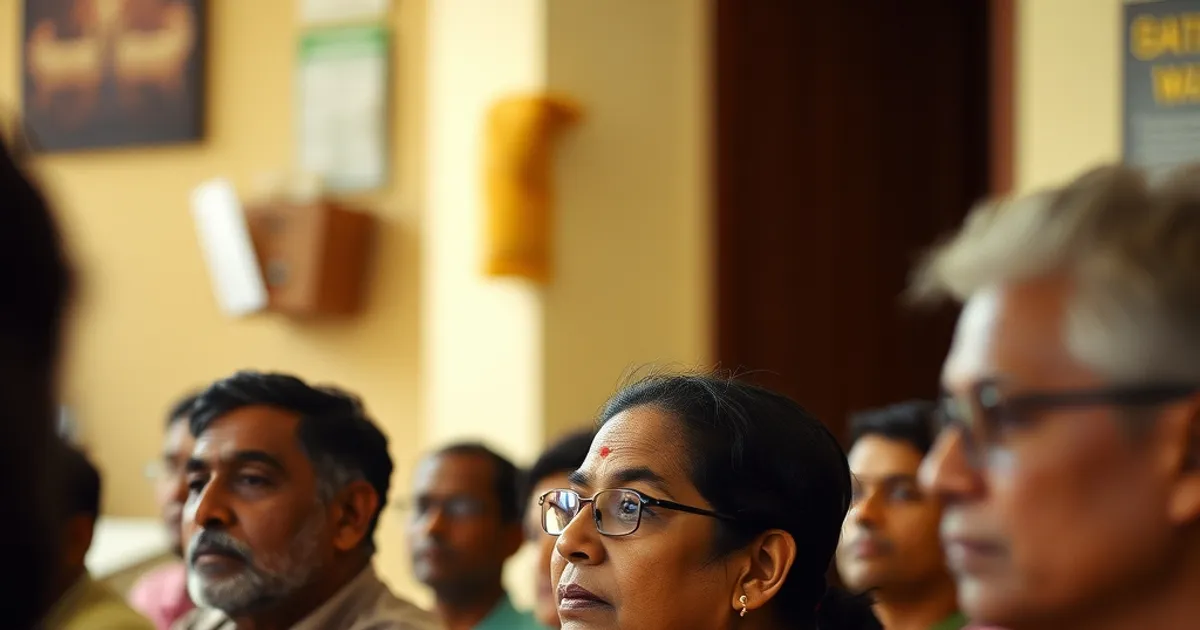
The Supreme Court of India has extended the deadline for Bengaluru's municipal elections to December 2026, citing the ongoing Special Intensive Revision of Karnataka's electoral rolls. The ruling comes as voters across the city raise alarm about missing and relocated polling booths, and Chief Minister D.K. Shivakumar has offered assurances that elections will proceed within the court-mandated window. Meanwhile, Bengaluru's week has been marked by a dramatic bar-room murder confession, a protest against street vendor evictions, and a Karnataka High Court ruling in the long-running drug case involving actor Siddhanth Kapoor.
Civic Polls Deferred to December After SC Ruling
The Supreme Court of India has granted an extension for holding Bengaluru's municipal corporation elections, pushing the deadline to December 2026. The ruling came amid Karnataka's ongoing Special Intensive Revision of electoral rolls, a process that has complicated the timely scheduling of local body polls across the state. Chief Minister Siddaramaiah and Deputy Chief Minister D.K. Shivakumar welcomed the directive, with Shivakumar personally assuring residents and political stakeholders that polls would be held within the court-mandated window. The ruling party indicated it was prepared to conduct elections in an orderly manner once the revised rolls were finalised. The extension carries significant implications for the BBMP — Bruhat Bengaluru Mahanagara Palike — which has operated without an elected council for an extended period, leaving civic governance in the hands of an appointed administrator. Opposition parties have continued to demand early elections, arguing that the absence of elected representatives has hampered local accountability and neighbourhood-level governance. The court's order brings some clarity to an uncertain timeline, though activists and residents' associations reiterated that further delays would be unacceptable given the city's mounting infrastructure and service delivery pressures. [9]
🗳️ Voters Anxious as Polling Booths Vanish Amid SIR
Karnataka's Special Intensive Revision of electoral rolls has generated fresh anxiety among Bengaluru voters, with residents reporting that familiar polling booths have been relocated or eliminated without adequate notice. Civic activists and neighbourhood groups have flagged concerns that the booth-level reshuffling, conducted as part of the state election commission's SIR process, could disenfranchise thousands of long-time voters who may struggle to locate their new designated polling stations. In several urban wards, booth boundaries have been redrawn and numbers reassigned, leaving residents uncertain about where they are meant to cast their ballots when elections are eventually held. Election officials sought to reassure citizens that all adjustments are temporary administrative measures tied to the roll revision exercise and that updated voter information cards would reflect correct booth details. However, voluntary organisations working on voter education cautioned that insufficient outreach in Kannada and local languages could lead to significant confusion and depress turnout. The situation has prompted calls for the state election commission to mount an urgent, multilingual public awareness campaign to ensure no voter is inadvertently left out of the electoral process. [5]
Drunken Bar Confession Leads to Arrest in Teen's Murder
A drunken confession made at a Bengaluru bar has led to the arrest of a suspect in the murder of a 16-year-old, bringing renewed attention to a case that had remained unsolved. According to police, the suspect allegedly spoke openly about the killing to patrons at a local drinking establishment, and information relayed through informal channels eventually reached investigators. Officers subsequently questioned the individual, whose admissions under interrogation corroborated details known only to those with direct involvement in the crime. The victim, a teenager whose identity has not been publicly disclosed in keeping with guidelines protecting minors, was reportedly killed some time before the bar incident came to light. Police confirmed that the confession, though made in an inebriated state, contained sufficient detail to justify a formal arrest and the registration of a murder case. The episode has prompted questions in Bengaluru about the detection of violent crimes involving young people and the role that community awareness can play in surfacing information about unsolved incidents. Investigators stated that the case remains under active investigation. [2]
🤝 Activists and Artists Demand Halt to Vendor Eviction Drive
A coalition of social activists and artists raised its voice against what they described as a callous eviction drive targeting street vendors in Bengaluru, calling on civic authorities to immediately halt removals. Demonstrators argued that the livelihoods of thousands of working-class families are at stake and that many vendors have operated in their traditional spots for decades under protections offered by the Street Vendors (Protection of Livelihood and Regulation of Street Vending) Act. The artistic community joined the protest in a show of solidarity with informal workers who contribute to the accessibility and character of urban public life. Participants demanded that the Bruhat Bengaluru Mahanagara Palike establish designated vending zones rather than simply displacing vendors onto other streets or out of the city altogether. Several artists displayed works at the gathering to draw public attention to the human cost of urban redevelopment that prioritises aesthetics and traffic management over the rights of vulnerable workers. Legal advocates indicated they were considering seeking judicial intervention if the eviction drive continued without adherence to the statutory framework designed to protect street vendors from arbitrary displacement. [3]
🏢 Karnataka Bets on Tier-2 Cities to Ease Bengaluru Pressure
The Karnataka government has outlined a strategy to channel investment and infrastructure development into the state's tier-2 cities as a means of reducing the enormous burden that decades of in-migration have placed on Bengaluru. Cities including Mysuru, Hubballi-Dharwad, Belagavi, and Mangaluru are being considered for targeted interventions in industrial zones, educational institutions, and digital infrastructure. State officials argue that Bengaluru's rapid growth has outpaced its capacity, leading to chronic traffic congestion, water scarcity, and a worsening housing affordability crisis. By making secondary cities more attractive for businesses and skilled workers, the government hopes to moderate migration to the capital. The plan involves streamlining approvals for industrial parks and special economic zones in smaller urban centres and improving road and rail connectivity to those hubs. Economic planners noted that global companies increasingly seek mid-sized cities offering lower operating costs and better quality of life for employees. If successfully executed, the strategy could reshape Karnataka's economic geography over the next decade, distributing employment and prosperity more equitably and reducing the infrastructure strain on Bengaluru's already-stretched systems. [4]
Karnataka HC Quashes Siddhanth Kapoor Drug Case FIR
The Karnataka High Court has quashed the First Information Report filed against actor Siddhanth Kapoor in connection with a 2022 drug case in Bengaluru. Kapoor, the son of veteran filmmaker Shakti Kapoor, was among several individuals detained during a police raid on a party in the city in June 2022. Authorities at the time alleged that a drug test administered to Kapoor had returned a positive result, a claim his legal team disputed throughout the proceedings. Defence counsel challenged the FIR on grounds of procedural irregularities and contested the validity of the testing process. The High Court, after reviewing the matter, set aside the FIR, granting Kapoor significant legal relief nearly four years after the incident. The judgment drew attention in legal and entertainment circles, with the actor's supporters welcoming the ruling as a vindication of his consistent denial of the allegations. Defence lawyers stated that the outcome affirms the importance of due process in cases where the initial publicity surrounding drug accusations often far outweighs the eventual legal determination. The matter had been closely watched as a test of evidentiary standards in celebrity drug cases. [6]
Case Filed Over Assault on Suspected Bangladeshi Nationals
A criminal case has been registered in Karnataka following reports of an assault on individuals suspected to be Bangladeshi nationals, drawing attention amid a national conversation on undocumented migration and the treatment of vulnerable migrant communities. Details of the assault, including the precise location and number of individuals involved, remained under investigation at the time of reporting. Human rights organisations raised immediate concerns about the safety of migrant populations in the state and called on Karnataka Police to investigate the matter with urgency and impartiality. Advocates stressed that regardless of the nationality or legal status of the victims, physical assault constitutes a cognisable offence under Indian law and must be treated accordingly. Local authorities confirmed that a case had been registered and that preliminary inquiries were underway to identify those responsible. The incident has prompted wider questions about the conditions faced by undocumented and migrant communities in Karnataka's urban areas and whether adequate mechanisms exist to protect them from targeted violence or vigilante action. Civil society groups demanded that those responsible be identified and prosecuted to the full extent of the law. [10]
Sources: [9] The Indian Express · [5] Deccan Herald · [2] The Times of India · [3] The News Minute · [4] The New Indian Express · [6] Bar and Bench · [10] Telangana Today