
Desi Things to Do in Bethany (July 2026)
Desi Things to Do in Bethany (July 2026)
TL;DR
- 🗓️ Nine Hindu calendar observances fall between July 24 and August 16 in Bethany's Indian community calendar
- Guru Purnima 2026 on July 28 anchors the season — a full moon night for honoring the teachers who shaped your life
- Nag Panchami 2026 on August 16 closes the cycle, a Shravan-month celebration of serpent deities connected to rain, protection, and fertility
- Most of these observances are built for home practice, making them accessible for dispersed communities like Bethany's growing Indian diaspora
- This guide covers what each observance means and how to mark it meaningfully without a local temple
A Season of Sacred Dates for Bethany's Indian Community
Bethany, Oregon occupies the western edge of the Portland metro, within Washington County's expanding suburban corridor. The South Asian population here has grown steadily over the past decade, drawn largely by the tech and healthcare employment base of the region. The community is active but geographically scattered — families are not clustered around a single Indian neighborhood or temple the way they might be in a Middlesex County town in New Jersey.
That dispersion makes the Hindu calendar more significant, not less. The calendar's observances do not require a congregation. They require intention, a quiet hour, a clean altar, and the willingness to mark time differently than a secular week would suggest. Between July 24 and August 16, there are nine such opportunities: two Ekadashis, two Pradosh Vrats, two Purnimas, Sankashti Chaturthi, Amavasya, and Nag Panchami 2026.
Ekadashi and Pradosh Vrat: The July Fasting Season Opens
The season begins with Ekadashi on July 24, the eleventh lunar day falling in the bright fortnight of Ashadha. This particular Ekadashi — known in many Vaishnava traditions as Devashayani or Shayani Ekadashi — carries the additional weight of opening Chaturmas, the four-month austerity season associated with Vishnu's cosmic rest. It is considered one of the most significant Ekadashis of the year.
For Bethany families, the Ekadashi fast typically means avoiding grains, legumes, and rajasic foods through the day. Fruits, milk, root vegetables, and sattvic preparations form the day's meals. The evening is devoted to prayer, devotional reading, or listening to Vishnu Sahasranama or bhajans.
Pradosh Vrat follows on July 26. The Pradosh period — the roughly 1.5-hour window spanning sunset — is the prescribed time for Shiva worship on the thirteenth lunar day. A home practice centers on lighting a lamp before a Shivalinga or Shiva image, offering bilva leaves, and chanting the Maha Mrityunjaya Mantra or the Shiva Panchakshara. The evening should be unhurried; the quality of attention matters more than the length of time.
For families new to these observances, July 24 and July 26 together form a natural two-step introduction to the season's spiritual discipline: a fasting day focused inward, followed two days later by an evening of active worship.
Guru Purnima 2026: Full Moon Night for Honoring Teachers
Guru Purnima 2026 falls on July 28 in Bethany — the Ashadha Purnima, the full moon of the Ashadha lunar month. The Purnima itself appears twice in the calendar: July 28 and July 29. This reflects the way the full moon tithi can extend across two civil calendar days depending on its start and end times relative to sunrise. Some families observe the puja on July 28; others hold through July 29 or extend the observance across both days.
Guru Purnima is arguably the most universally observed date in all of Indian spiritual culture. It transcends sectarian lines — Hindus, Buddhists, and Jains all observe it, and it is also embraced by secular Indian families as a day to acknowledge the teachers who shaped their formation. The day is named for the guru-disciple relationship, and its historical anchor is the birth of the sage Veda Vyasa — credited with organizing the Vedas and composing the Mahabharata — which tradition places on this full moon.
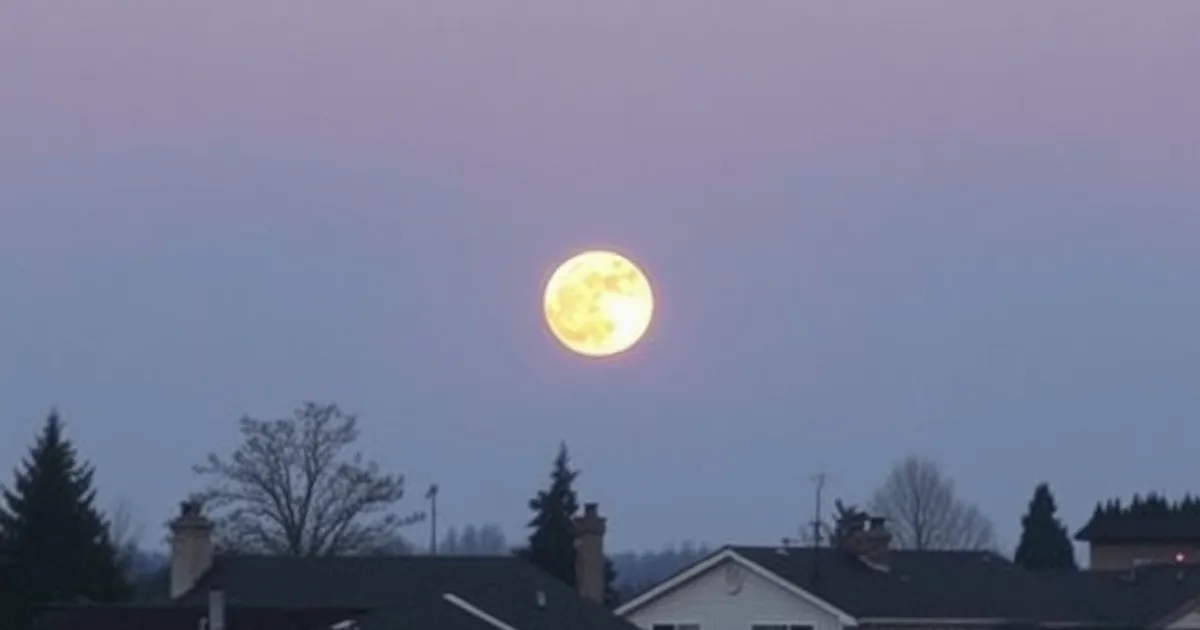
For Bethany's Indian community, Guru Purnima 2026 is most practically observed at home. The full moon rises on the evening of July 28, and its light is visible from backyards and windows across the Washington County suburbs. That visibility is itself the observance — many families simply step outside, acknowledge the moon, and spend a few minutes in gratitude for the teachers in their lives.
A more structured practice might include reciting the Guru Stotram, performing a simple puja to a photo of one's guru or teacher, writing a letter to a mentor in India, or calling an elderly relative who holds the family's lineage memory. If you have children, Guru Purnima 2026 is an occasion to tell them about the teachers who shaped you — the school teacher who changed your trajectory, the family elder who passed down cooking or prayer, the guru whose words still live in your decision-making. The tradition is not about elaborate ritual; it is about acknowledging the debt of learning.
Sankashti Chaturthi, Amavasya, and the August Rhythm
August opens with Sankashti Chaturthi on August 2, the monthly observance devoted to Lord Ganesha. The fast runs through the day, broken only after moonrise. Offerings of modak, coconut, and flowers are made to Ganesha, and the Ganesh Atharvashirsha or simpler Ganesha prayers are recited. This observance is especially prominent in Maharashtrian households but is broadly observed across regional traditions in Bethany's pan-Indian community.
Ekadashi returns on August 8 — the dark fortnight's eleventh day — followed by Pradosh Vrat on August 10. These mirror the July observances in form but carry the more introspective energy of the waning moon. The focus here is restraint and inward attention rather than celebration.
Amavasya on August 12 is the new moon, the darkest night of the lunar month. Amavasya carries a somber, reflective quality distinct from other observances. It is explicitly auspicious for pitru tarpan — ancestral rites — and for Shiva puja, but inauspicious for new beginnings. Diaspora families often use Amavasya as a day to light a lamp for ancestors who have passed, offer water or sesame seeds in their memory, or contact elderly relatives who carry the family's ancestral knowledge. It is a day for looking backward rather than forward.
Nag Panchami 2026: Serpent Worship and the Shravan Season
The season's final observance is Nag Panchami 2026 on August 16, the fifth day of the bright fortnight of Shravan month. This is the only date in this Bethany calendar cycle that does not appear in the parallel Carteret calendar, making it the distinctive closing marker for this region.
Nag Panchami is dedicated to the Nagas — serpent deities who occupy a complex and ancient role in Hindu tradition as protectors, fertility symbols, guardians of underground water, and cosmological supports. Sheshanaga holds up the universe in Vaishnava cosmology; Vasuki circles Lord Shiva's neck in Shaiva tradition; the serpent deities of specific regional cults guard family clans, village boundaries, and agricultural fields. The observance involves worshipping serpent images or idols with milk, turmeric, flowers, and sandalwood paste.
In agrarian contexts, Nag Panchami also marks a pause from plowing — honoring the serpents that live underground and are disturbed by cultivation. For Bethany families far from any agrarian context, the symbolic meaning is more accessible: a day to acknowledge the natural world's sacred creatures and the mythological traditions that developed around them over millennia.
Nag Panchami falls within Shravan month, which is considered among the most sacred months in the Hindu calendar, particularly for Shiva devotees. Shravan Mondays draw special Shiva worship; Nag Panchami adds the serpent dimension to an already intensified ritual season. For families from Maharashtra, Karnataka, or Andhra Pradesh, Nag Panchami 2026 will carry specific regional memory and may prompt family recipes, family stories, or calls to relatives who observe it more elaborately back home.
Insider Tip: For smaller Indian communities like Bethany's, a coordinated WhatsApp group practice on Guru Purnima 2026 can substitute for a temple gathering. Several families agreeing to light their lamps at the same time on the evening of July 28, share a photo, and check in the next morning creates a genuine sense of shared observance across dispersed households. The calendar is the same; the community just needs a thread to connect on it.
FAQ
Do any of these observances require a temple? None require a temple. All have documented home-practice forms that need only a clean altar, a lamp, the appropriate prayer text, and the intention to observe.
How does Guru Purnima 2026 differ from an ordinary full moon? Every full moon (Purnima) carries general spiritual significance in the Hindu calendar. Guru Purnima 2026 specifically falls on the Ashadha Purnima, which has been dedicated to guru-worship since ancient times and is also known as Vyasa Purnima in honor of the sage Veda Vyasa.
Why does Purnima appear twice in the Bethany calendar (July 28 and July 29)? The full moon tithi can begin before midnight on one calendar day and extend past midnight into the next. Different traditions and regional Panchangams assign the puja to one day or the other. Observing on July 28 and extending gratitude through July 29 is a common household approach.
What makes Nag Panchami 2026 significant beyond serpent worship? Nag Panchami 2026 falls in Shravan month, the most sacred month for Shiva devotees in many traditions. The serpent is deeply tied to Shiva's iconography (Vasuki around his neck), which adds a Shaiva dimension to the observance. It also connects to older agricultural protection rituals.
How do I calculate the Pradosh window for Bethany, Oregon? Use a Panchangam app or Hindu calendar tool set to the Pacific timezone. The Pradosh window is approximately 1.5 hours before and after local sunset on the thirteenth lunar day.
Is Amavasya inauspicious for all activities? Amavasya is considered unsuitable for new auspicious beginnings (marriages, housewarmings, new ventures) but explicitly favorable for ancestral worship and Shiva puja. Normal daily activities continue; the day calls for restraint and reflection rather than festivity.
Bottom Line
Bethany's Indian community may be spread across a wide suburban geography, but the Hindu calendar makes no concession to distance. From Ekadashi on July 24 through the paired Pradosh Vrats, the full moon beauty of Guru Purnima 2026, the monthly Ganesha focus of Sankashti Chaturthi, the ancestral quiet of Amavasya, and the serpent-worship closing of Nag Panchami 2026 — these nine dates offer something the secular calendar doesn't: a rhythm built for remembering where you came from and what you carry forward. A lamp lit in Bethany on a Pradosh evening holds the same light as one lit anywhere in the world.