
Visiting Brescia? A South Asian Traveler's Food & Culture Guide
TL;DR
- Brescia is a compact Lombard city with genuine Roman ruins, a walkable historic center, and a South Asian food scene larger than its size suggests 🇮🇹
- Seven South Asian and halal-friendly restaurants are distributed across the city, from sit-down Indian menus to Pakistani grills and a Sri Lankan kitchen
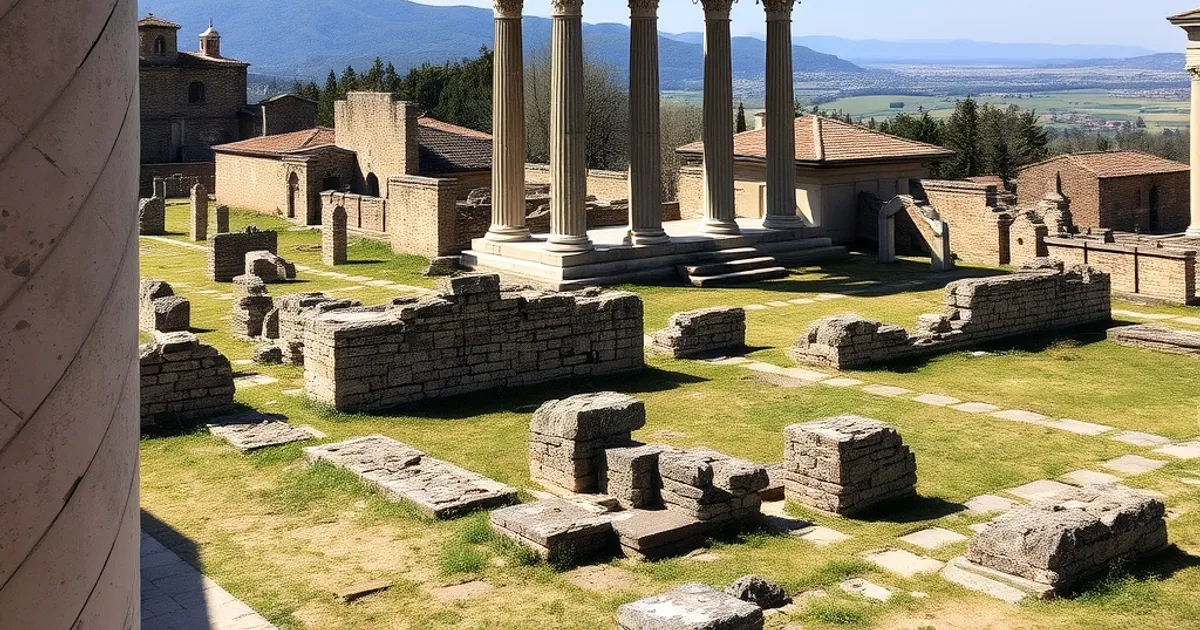
- The UNESCO-listed Roman and Longobard monuments — including the first-century Capitolium — are among the best-preserved in northern Italy
- Brescia sits directly on the Milan-Venice rail line, making it a logical addition to any northern Italy itinerary rather than a detour
- Two days is the comfortable visiting window; a long single day from Milan is workable if you prioritize the main sites
Brescia does not carry the name recognition of Milan, Venice, or Verona, and that works in its favor. The city in Lombardy's eastern corridor earned UNESCO World Heritage status in 2011 for its Roman and Longobard monuments — ruins that stand in better preservation than many of Italy's more crowded sites — without the visitor pressure that makes the major destinations feel like managed experiences rather than real places. For the South Asian traveler, there is an additional draw: a community of South Asian immigrants has established a network of restaurants across the city that gives the visiting traveler practical and familiar options without having to hunt.
Brescia's character is fundamentally industrial. Known historically for steel production and firearms manufacturing, and more recently for automotive and mechanical work, it is a working city with a serious civic culture. The medieval and Renaissance historic center sits at its core, but the city around it is busy, unglamorous, and entirely functional — an Italian city where Italians actually live rather than a preserved showcase for outside visitors.
Where to Eat: South Asian and Halal Dining in Brescia 🍽️
Finding food that feels recognizable is one of the practical realities of traveling South Asian in Europe. Brescia handles this more thoroughly than many Italian cities twice its size.
Ristorante The Boss at 76 Via San Zeno is one of two restaurants in the city that positions itself explicitly as an Indian kitchen. For travelers arriving who want a proper sit-down meal — rice, dal, curry — this is the natural first stop. The Via San Zeno address places it within reach of the city center.
Al Nawab at 78a Via Corsica is the other dedicated Indian restaurant in the city. The name signals North Indian culinary influence — Mughlai technique, spiced gravies, the register of Lucknow or Delhi cooking. Via Corsica runs through a mixed residential-commercial stretch of the city.
Ristorante Haveli at 1c Via Chiusure brings Pakistani and kebab cooking into the mix. "Haveli" — the word for a traditional mansion in both Pakistan and North India — is a common name for Pakistani restaurants across the diaspora, and the kitchen here draws from that tradition. The dry-spiced preparations and karahi-style dishes of Punjabi and Pashtun cooking form the likely reference point.
Hiru Ristorante Srilankese at 84 Via Indipendenza is the most distinctive entry on the list. It positions itself as Sri Lankan with an Indian overlap — a combination that makes culinary sense, since both traditions share a coconut milk base, rice-centered meals, and overlapping spice profiles, while Sri Lankan cooking adds its own elements: hoppers, kottu roti, pol sambol, kiri bath. For South Asian travelers accustomed to subcontinental cooking, Hiru offers a meal that is simultaneously familiar and genuinely different.
Gondal Kebab Ristorante at 13 Via Vincenzo Foppa serves the quick-meal end of the market, with Pakistani-influenced kebab cooking in a casual setting. Reliable for a fast stop.
L'oasi Pizza & Kebab at 31 Viale Duca degli Abruzzi is a hybrid that has become a fixture of northern Italian street food culture: pizza alongside kebab, reflecting the way South Asian culinary influence has folded into Lombard cities over the past two decades. A practical option between sightseeing rather than a destination meal.
Borgo Kebab at 32 Via IV Novembre rounds out the seven. Via IV Novembre is a central address in Brescia, which makes this a convenient stop for a quick meal during the day.
Insider Tip: For a sit-down meal at Al Nawab or Ristorante The Boss, a lunch visit gives a quieter experience than dinner. Italian dining culture runs heavily toward long evening meals, so South Asian restaurants in smaller Italian cities see their heaviest traffic after 7 p.m. At lunch you are more likely to have unhurried service and space to settle.
What to See in Brescia
The historic center is tight enough to cover on foot across a half-day. Start at Piazza del Duomo, where the Old Cathedral — La Rotonda, a circular Romanesque structure dating from the eleventh century — stands directly alongside the seventeenth-century New Cathedral in an architectural dialogue spanning six hundred years.
From there, Via dei Musei leads east through the archaeological strata of the city to the site that anchors the UNESCO designation: the Capitolium, a first-century Roman temple preserved to a height that most Italian ruins do not reach. The adjacent Roman forum ruins, the archaeological museum, and the Monastero di Santa Giulia — itself a UNESCO site in its own right — collectively fill several hours without repetition.
The Castello di Brescia rises on the hill above the historic center, reached by a manageable walk up through the old town. The view from the castle grounds takes in the Lombard plain toward Milan to the west and Lake Garda and the Alps to the east. On a clear day it is one of the better free views in northern Italy.
The Pinacoteca Tosio Martinengo holds the city's main art collection, centered on the Brescian school of Renaissance painting — Moretto da Brescia, Romanino, Vincenzo Foppa. These names appear less frequently in general art history than the Venetians, but the work is serious and the collection well-presented. For a South Asian traveler unfamiliar with the Brescian school, it provides a genuinely local perspective on the Italian Renaissance rather than its most exported version.
Getting There and Getting Around
Brescia sits on the direct Milan-Venice rail line. From Milan Centrale, trains arrive in approximately 50 to 65 minutes. From Verona, the journey takes roughly 30 to 45 minutes. The station is a short distance from the historic center, reachable on foot or by the city's metro line.
Within the city, the metro connects the station to the center; from there, the main monuments are walkable. The compact geography of the historic zone means no taxis or additional transit are needed once you are in it.
FAQ
Is Brescia worth a stop on a northern Italy trip? Yes, particularly if the itinerary already passes through Lombardy or connects Milan and Verona. The Roman monuments are impressive and far less visited than comparable sites elsewhere in Italy.
Which South Asian restaurant is best for a full sit-down meal? Ristorante The Boss on Via San Zeno and Al Nawab on Via Corsica are both positioned as full Indian restaurant experiences. Hiru Ristorante Srilankese on Via Indipendenza is worth visiting specifically if Sri Lankan cooking is of interest.
How many days does Brescia require? Two days is comfortable for covering the main sites without rushing — the Roman quarter, a museum, the Castello, and the Pinacoteca. A long single day from Milan is possible if you center on the Via dei Musei corridor.
Is Italian useful in Brescia? More so than in Milan or Rome. Away from the main tourist sites and in smaller restaurants, some Italian or a translation app makes a practical difference.
What is the South Asian community like in Brescia? Brescia has had an Indian and Pakistani immigrant presence since at least the 1980s, tied to the city's industrial workforce. The seven restaurants listed here reflect that community's establishment over decades and its gradual integration into the city's broader food culture.
Bottom Line
Brescia is an honest city — it does not perform Italy for visitors, and its monuments do not require queuing past a gift shop to reach. The Roman Capitolium and the Monastery of Santa Giulia justify the UNESCO designation rather than merely carrying its badge. For South Asian travelers who want to eat well and familiarly, the seven restaurants across the city — from Gondal Kebab Ristorante near Via Vincenzo Foppa to Hiru Ristorante Srilankese on Via Indipendenza — mean the city requires no dietary compromise. Two days here tends to deliver more than two days in a busier Italian city often does.