
Cambridge South Asian Community Shines Across Arts, Academia, Tech, and Medicine
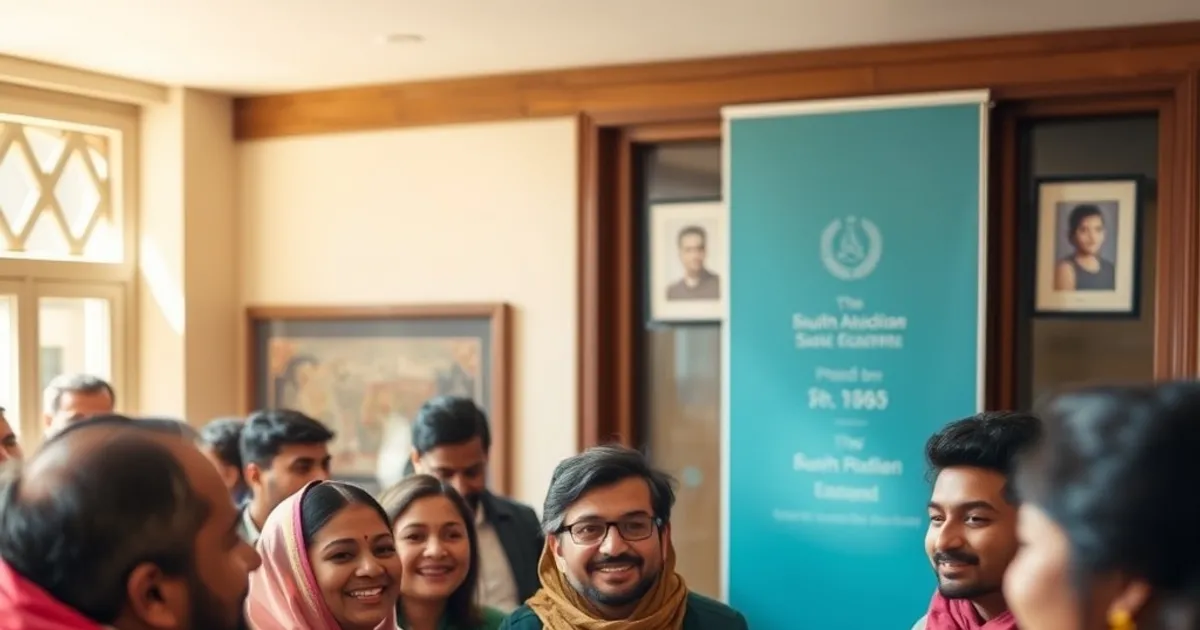
Cambridge's South Asian community marked a standout stretch spanning university stages, national competitions, biotechnology boardrooms, and public library shelves. From Harvard's South Asian Association drawing 800 to its cultural showcase to MIT's Indian Students Association claiming a national business case title, and a Cambridge-based startup raising $4.5 million to serve the Desi diaspora, the community's reach across the city's institutions has never been more visible.
Harvard SASA Cultural Showcase Raises Funds for Bangladesh Relief
Harvard University's South Asian Association staged its annual cultural showcase at Sanders Theatre to an audience of 800, delivering a program that ranged from Bollywood fusion dance to Pakistani ghazal singing and a Sri Lankan drumming performance. The event raised $12,000 for flood relief in Bangladesh, with organizers channeling the proceeds through a vetted humanitarian organization working in the affected regions. New SASA president Riya Kapoor described the showcase as the single largest South Asian cultural event in Cambridge each year, a gathering that draws students from Harvard, MIT, and area universities alongside longtime South Asian residents of Cambridge and neighboring Somerville. The breadth of the performance program — spanning South Asian traditions from the subcontinent's west to its east and south — reflected the association's deliberate effort to represent the full diversity of the diaspora rather than defaulting to a single national or regional identity. Kapoor said the Bangladesh relief fundraising was proposed by student members who wanted the event to carry weight beyond campus, connecting cultural celebration to humanitarian responsibility. Planning for next year's showcase is expected to begin in the fall semester. [3]
MIT ISA Claims National South Asian Business Case Competition Title
A team from MIT's Indian Students Association won the National South Asian Business Case Competition in Chicago, claiming the organization's third national title in five years and cementing MIT ISA's reputation as one of the strongest South Asian student business organizations in the country. The four-member team — Aryan Bose, Kavitha Nair, Priya Sharma, and Dev Patel — presented a sustainable supply chain solution for the Indian pharmaceutical export sector, earning top marks from judges for their technical depth and practical applicability. The competition drew teams from universities across the United States and Canada, and the MIT team's win was described by organizers as one of the most decisive victories in recent years. Team members credited months of preparation, mentorship from MIT Sloan faculty, and collaboration with South Asian pharmaceutical industry professionals who provided domain expertise during the development phase. The win adds to a growing record of South Asian student achievement at MIT that spans engineering competitions, entrepreneurship challenges, and academic honors. ISA leadership said the competition result has already generated interest from incoming MIT students who want to join the organization's case competition track. [4]
Cambridge Earns Its Place on the South Indian Food Map
Cambridge and neighboring Somerville have quietly become a destination for modern South Indian cuisine, with a cluster of restaurants along Massachusetts Avenue and the surrounding streets drawing food lovers from across the Boston area. Dosa Factory on Mass Ave, Tiffin Box on Hampshire Street, and Chennai Garden in Central Square anchor the neighborhood's South Indian dining scene, each offering distinct takes on dosas, idlis, curries, and rice-based dishes. Harvard Square's Indian Accent pop-up, operating as a rotating tasting menu concept, has attracted long queues and strong reviews for its elevated approach to the cuisine. The long-running Punjabi Dhaba in Inman Square continues to serve its role as a late-night institution, a reliable stop for MIT and Harvard students seeking affordable, satisfying Desi food at any hour. Food writers attribute much of Cambridge's South Indian restaurant culture to the MIT community, noting that Indian students, faculty, and alumni have been consistent early adopters and steady customers for Desi food entrepreneurs in the area. The concentration of restaurants in a walkable area has made Cambridge an unusual case: a mid-size city with a South Indian food corridor that rivals neighborhoods in much larger metros. [2]
Cambridge Library Launches South Asian Literature and Culture Series
The Cambridge Public Library has launched a South Asian Literature and Culture Series in partnership with the Cambridge South Asian Community Council, bringing author talks, film screenings, and cooking demonstrations to one of the city's most accessible public institutions. The series will run through December with six events, beginning with author Shilpa Agarwal discussing her novel set in colonial Calcutta. The library's South Asian collection has grown to 2,400 volumes, a reflection of years of investment in materials that serve the city's substantial South Asian population. Librarians involved in the series said the programming is designed to be accessible to longtime residents and newly arrived immigrants alike, with events that address both historical and contemporary South Asian experience. The Cambridge South Asian Community Council, which co-developed the series, represents organizations spanning Indian, Pakistani, Bangladeshi, Sri Lankan, and Nepali communities in the city. Community partners said the library's commitment to South Asian culture through a sustained series rather than a single event signals a meaningful shift in how the institution sees its role in serving a diverse population. The series is free and open to the public, with events in multiple languages planned for later in the year. [5]
IIT Alumni Raise $4.5M for South Asian Diaspora Remittance Platform
Cambridge-based startup RemitFlow, co-founded by IIT Bombay alumni Vikash Kumar and Arjun Sinha, has closed a $4.5 million Series A to build a faster, lower-fee remittance platform targeting the South Asian diaspora. The platform focuses on the US-to-India and US-to-Bangladesh corridors, two of the highest-volume remittance routes in the world, where fees and transfer times have long frustrated users despite a decade of fintech innovation. RemitFlow is headquartered at MIT's The Engine accelerator, which specializes in backing startups with long development horizons. Investors in the round include South Asian diaspora venture capitalists and family offices with experience in financial services. Kumar and Sinha said RemitFlow's approach differentiates from existing platforms through direct banking partnerships in India and Bangladesh, blockchain-based settlement rails that reduce intermediary costs, and a customer experience designed for diaspora users who send money regularly rather than occasionally. The founders plan to use the Series A to expand the engineering team in Cambridge, accelerate regulatory approvals in both destination markets, and begin marketing campaigns targeting South Asian communities in Houston, New York, and the San Francisco Bay Area. [6]
Kendall Square Biotech Elevates South Asian Scientists to C-Suite
A major Kendall Square biotechnology firm has elevated two South Asian scientists to its executive leadership team, appointing Dr. Meena Iyer as Chief Scientific Officer and Dr. Rajan Pillai as Chief Medical Officer. Both executives trained at institutions in India before completing their doctoral work at MIT and Harvard respectively, a career path that reflects the deep pipeline of South Asian scientific talent flowing from elite Indian institutions into Boston's life sciences ecosystem. The promotions were welcomed by the South Asian biotech community in Cambridge and Boston, where representation at the C-suite level has historically lagged behind the community's significant presence at the researcher and principal investigator levels. Colleagues described both Iyer and Pillai as scientifically rigorous and collaborative leaders who have built strong research teams and mentored a generation of younger South Asian scientists at their firm. The Kendall Square biotech hub, home to some of the world's leading pharmaceutical and genomics companies, has seen growing South Asian representation at the senior level over the past five years, driven in part by the maturation of a generation that arrived as graduate students in the 1990s and 2000s. Industry observers say more C-suite appointments are likely as that cohort continues to advance. [7]
Sources: [3] Cambridge Day · [4] NBC Boston · [2] Eater Boston · [5] WBZ NewsRadio 1030 · [6] INDIA New England News · [7] Cape Cod Times