
Onam 2026 in Chicago: Events, Puja & Where to Celebrate
Onam 2026 in Chicago: Events, Puja & Where to Celebrate
TL;DR
- 🌺 Onam 2026 falls in late August; Chicago's Malayali and South Asian diaspora is gearing up for Kerala's beloved harvest festival
- The Hindu Temple of Greater Chicago and Sri Venkateswara Swami Temple of Greater Chicago host sadya lunches, puja, and cultural performances for the community
- Chinmaya Mission Chicago brings philosophical depth to the celebration, exploring the mythology of King Mahabali and the Vamana avatar
- The city's August calendar includes Raksha Bandhan 2026, Krishna Janmashtami 2026, and BOLLYWAVE Bollywood Night, creating a full festive season
- Families can expect pookalam competitions, classical dance showcases, and authentic Onam sadya spreads across community gatherings
Onam is Kerala's grandest harvest festival, and for Malayalis spread across the United States, Chicago offers one of the most vibrant South Asian communities in the Midwest to celebrate it with. The ten-day festival, anchored by Thiruvonam — the main celebration day — commemorates the mythological return of the beloved King Mahabali and marks the end of the paddy harvest season back home. In Chicago, this translates into a packed August calendar of puja, sadya feasts, cultural programs, and community gatherings that let Keralites and fellow South Asians reconnect with their roots despite being thousands of miles from Kerala's backwaters.
The Spirit of Onam in the Chicago Diaspora
Onam in Chicago carries a particular emotional weight. For first-generation Malayali immigrants, the festival is a bridge between memory and the present — a moment to recreate, however imperfectly, the feel of a monsoon-laced August morning in Thrissur or Ernakulam. For second-generation Indian Americans who may never have experienced Onam in Kerala, the Chicago celebrations are often their most direct connection to that heritage.
The community here tends to organize well in advance. Malayali associations, temple cultural committees, and informal neighborhood groups begin planning pookalam (floral carpet) competitions, sadya cooking, and classical performance lineups months before the festival arrives. The sadya — a multi-course vegetarian feast served on a banana leaf — is the centerpiece of any Onam gathering, and Chicago cooks go to considerable effort to source the right varieties of banana, the correct pickles (mango, lime, ginger), and the specific payasam varieties that make the meal feel complete. Showing up at the right time means you get every dish in the correct sequence on the leaf, which matters to anyone who grew up with the tradition.
The Malayali community in Chicago includes professionals who came during various waves of South Asian immigration since the 1960s, and the multi-generational depth of the local Kerala Samajam and similar organizations means Onam celebration culture has genuine institutional memory behind it. These are not first-time efforts to figure out how to make avial in a foreign country — they are practiced, refined annual traditions that have grown more elaborate over time.
Where to Celebrate: Temples and Cultural Centers
The Hindu Temple of Greater Chicago stands as one of the most established South Asian religious institutions in the region, and its facilities make it a natural anchor for Onam programming. The temple's cultural committee typically coordinates with Malayali associations to host sadya lunches, pookalam workshops, and classical arts performances. Its community hall can accommodate large gatherings, which matters for Onam, where the whole point is eating together on banana leaves in good company.
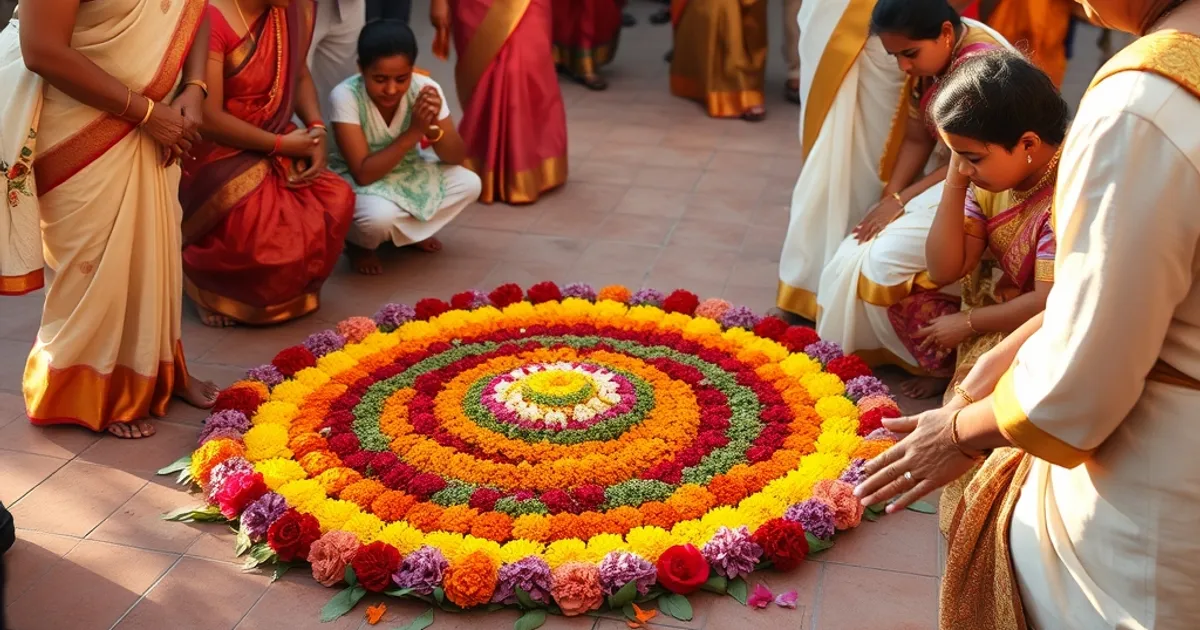
Sri Venkateswara Swami Temple of Greater Chicago similarly draws significant participation from the South Indian community, including a meaningful Malayali contingent. South Indian festivals including Onam find a welcoming home in its calendar. Puja services tied to Thiruvonam often take place here, and the temple grounds see pookalam displays during the celebration days, with families contributing flower designs that transform outdoor spaces into temporary gardens.
Chinmaya Mission Chicago runs a robust cultural and spiritual education calendar, and Onam typically appears in its programming as a moment to explore the philosophical dimensions of the festival — the story of Mahabali as a lesson in dharma, devotion, and the humility of cosmic order. Study circles and satsang sessions around Onam often explore the Vamana avatar of Vishnu, tying mythology to devotional practice in the style that Swami Chinmayananda made his hallmark.
Shree Ganesh Temple of Chicago serves a broad cross-section of the South Asian community and participates in major Hindu festivals throughout the year. For Onam, the temple provides a space for prayer and blessing alongside the more community-centric celebrations happening at cultural halls and association venues nearby. Smaller temples and cultural centers in the south and northwest suburbs also host Onam programming, so families in the Chicago metro area rarely need to travel far to find a celebration.
Insider Tip: If you want the most authentic sadya experience in Chicago, connect directly with local Kerala Samajam or Malayali association networks — they often host members-and-guests sadya lunches that rival anything at a restaurant, with all twenty-six-plus side dishes served in the traditional banana-leaf sequence and in the correct order.
The August Festival Calendar Around Onam
Chicago's South Asian community has a packed August-September calendar that overlaps productively with Onam season. Raksha Bandhan 2026 draws family-oriented crowds and often happens at the same temples and cultural centers that later host Onam events — a good way to connect with the community before the main harvest festival. Krishna Janmashtami 2026, the birth celebration of Lord Krishna, falls close to Onam on the Hindu calendar and creates a festive atmosphere across Chicago's Indian community in late August. Many temples hosting Janmashtami will also carry Onam-adjacent programming in the same period, making late August an almost continuous festival stretch for South Asian families.
BOLLYWAVE International Bollywood Night featuring DJ Shadow takes the secular-entertainment side of the South Asian calendar and gives the broader diaspora a chance to celebrate together outside temple walls. Events like these draw mixed crowds from across the Indian subcontinent's diaspora communities — Malayali, Punjabi, Tamil, Bengali — united by music rather than regional identity. For Onam's spirit of inclusive community joy, these cross-cultural moments feel entirely in keeping.
The JSMC Walk 2026 represents another kind of community gathering, oriented around health, solidarity, and South Asian civic participation in the Chicago metro. And Guru Purnima 2026 earlier in the season sets a devotional tone for the entire summer, with spiritual programming at multiple Chicago temples including BAPS Swaminarayan Sanstha Temple and Shree Swaminarayan Gurukul Chicago. By the time Onam arrives, the community has already spent months gathering.
Pookalam, Sadya, and Onakkodi: The Traditions That Travel
What makes Onam distinctive, and what Chicago's Malayali community works hard to preserve, is the specificity of its traditions. Pookalam — the elaborate floral rangoli designs made with fresh flowers — becomes a community art project when Keralites gather in Chicago. Families bring children to help arrange petals, and competitions reward the most elaborate and harmonious designs. Getting young people involved in making the pookalam is one of the most effective ways the diaspora transmits the aesthetic sensibility of Kerala's festival culture.
Onakkodi, the tradition of wearing new clothes for Onam, adapts easily to Chicago: many families take the occasion to wear Kerala kasavu sarees or mundu. For children born in the US, this can be a meaningful first encounter with the tactile reality of that textile tradition. The visual effect of a community sadya where families have arrived in traditional Kerala dress is one of the markers that distinguishes a properly organized Onam from a generic Indian cultural event.
The sadya itself is a logistical undertaking wherever it happens. The classic Onam sadya includes rice, sambar, rasam, avial, thoran, olan, erissery, kichadi, pachadi, pickle varieties, papadum, and multiple payasam desserts. Getting all of this right in Chicago, far from specialty Kerala grocers, takes planning — but the community has long since figured it out, with South Asian supermarkets in Devon Avenue and the western suburbs stocking most ingredients by August.
FAQ
When is Onam 2026? Thiruvonam, the main day of Onam, falls in August 2026. The ten-day festival begins roughly ten days earlier with Atham and builds in intensity each day through the final celebration.
Do I need to be Malayali to attend Onam events in Chicago? Not at all. Onam celebrations at Chicago-area temples and cultural halls are generally open to the broader South Asian and non-South-Asian community. The sadya in particular welcomes anyone curious about Kerala's food culture.
What should I bring to an Onam community event? Fresh flowers for pookalam contributions if available, a dish to share if it is a potluck sadya, and modest attire appropriate for the temple portions of any program.
Are there kids' activities at Chicago Onam events? Yes. Pookalam competitions, folk dance demonstrations, and storytelling sessions about King Mahabali are standard features designed with children in mind.
Where can I find specific event dates and registration for 2026? Check with the Hindu Temple of Greater Chicago, Sri Venkateswara Swami Temple of Greater Chicago, or local Malayali association social media pages for confirmed 2026 scheduling and registration details.
Bottom Line
Chicago's Onam 2026 celebrations offer the Malayali diaspora — and any South Asian who wants to join — a genuine slice of Kerala's harvest festival culture. With the Hindu Temple of Greater Chicago, Sri Venkateswara Swami Temple of Greater Chicago, and Chinmaya Mission Chicago anchoring the religious and cultural programming, and a surrounding August festival calendar creating a festive backdrop from Guru Purnima through Janmashtami, the city comes alive with Kerala's spirit in late August. Put Thiruvonam on your calendar, find your local Malayali association, and show up hungry.