
Onam 2026 in Chittagong: Events, Puja & Where to Celebrate
TL;DR
- 🌸 Onam 2026 falls in August-September — the Thiruvonam nakshatra in the Malayalam month of Chingam
- Chittagong's Hindu community gathers at temples including Kali Bari and Tapoban Shiv Temple for seasonal pujas and community observance
- Onam originated as a Kerala harvest festival but its spirit of renewal resonates with Hindu communities across South Asia
- The festival season overlaps with Guru Purnima, Pradosh Vrat, Ekadashi, and Purnima — a dense and meaningful ritual stretch
- Community observance in Chittagong reflects a minority religious community maintaining vibrant traditions across generations 🪔
Onam Beyond Kerala: A Festival That Crosses Borders
Onam is native to Kerala. The ten-day harvest festival marks the legendary return of King Mahabali — the benevolent king whose memory lives in the hearts of Malayali people — to bless his former kingdom. The imagery is vivid and specific: elaborate pookkalam (flower carpets laid in concentric rings), the Onasadya feast served on banana leaves, and the spirit of abundance and equality that Mahabali came to represent across centuries of tradition.
But Onam's reach extends beyond the state where it was born. Across South Asia, Hindu communities — including those far from Kerala's coast — observe the festival in forms shaped by their own local traditions and circumstances. The spirit of the original: gratitude for the harvest, renewal of community bonds, and collective remembrance of something good — these are not uniquely Malayali values. They travel.
In Chittagong, Bangladesh, Onam 2026 is observed within the particular context of a Hindu minority community that has maintained its religious and cultural practices across generations. This is the story of how that community marks the season — which temples anchor the observance, how the calendar unfolds, and what the festival means in this specific place.
The Temples That Anchor Chittagong's Hindu Community
Chittagong has a network of Hindu temples and religious institutions that form the infrastructure of community life, particularly during major festival seasons. Several of these spaces carry histories that stretch back well before Bangladesh's independence.
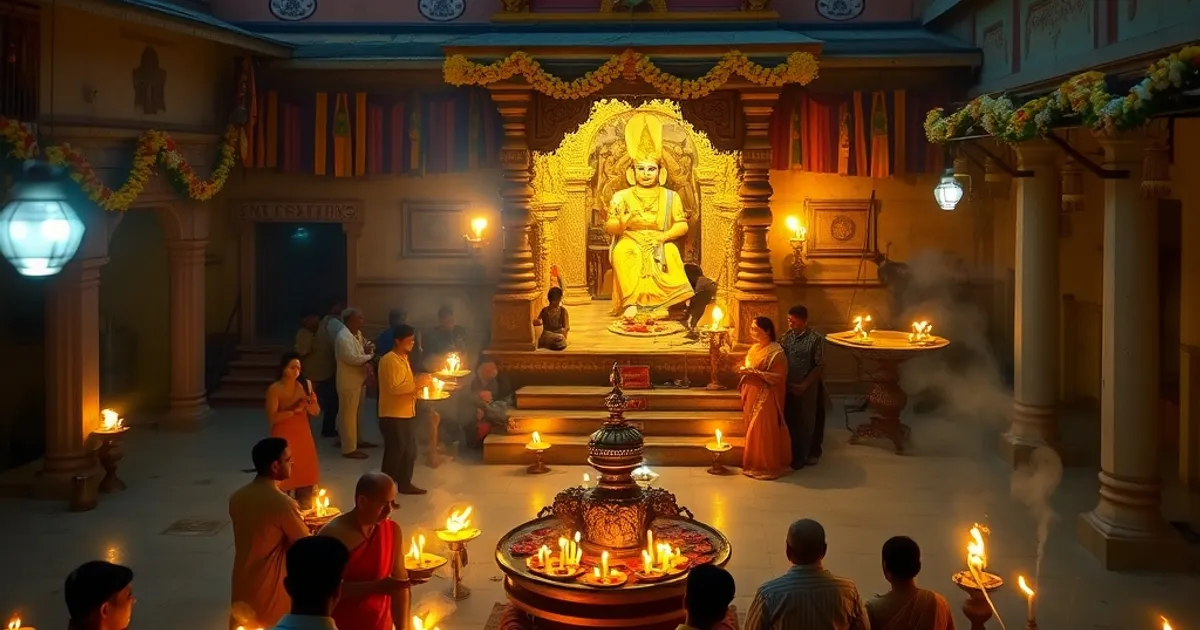
Kali Bari is among the most central Hindu worship sites in Chittagong, dedicated to the goddess Kali. On major festival days and puja seasons, Kali Bari draws large numbers of devotees. The temple's energy during festival periods — the sound of drums, the smell of incense and marigolds, the press of families in their best clothes — reflects the collective religious life of a community for whom these moments carry significant weight. During the Onam season, Kali Bari is active and welcoming.
Tapoban Shiv Temple offers a different spiritual focus, centered on Lord Shiva. The Shravana month — which overlaps with the Onam season — is sacred to Shiva, making Tapoban Shiv Temple especially active during this period. Devotees observe Pradosh Vrat on the designated days, mark Purnima with extended puja, and fast on Ekadashi. For many families, Tapoban Shiv Temple is the anchor of their Shravana observance, with Onam integrated into an already-dense ritual schedule.
Sri Sri Ma Magadeswari Mandir serves Chittagong's Hindu community through the goddess tradition — the protective and maternal dimensions of Hindu devotion that have always been central to Bengali Hindu practice. The mandir hosts pujas and community gatherings that bring worshippers together across the festival season, providing a space for collective observance that individual family rituals cannot replace.
Parboti Pokir Para Hindu temple and Krishna kanta bari extend the reach of organized Hindu worship across different neighborhoods in Chittagong, ensuring that community members across the city have access to a temple that feels local. In a minority religious context, this geographic distribution matters — it means worship does not require traveling across the city, and the community's presence is visible across multiple neighborhoods rather than concentrated in one.
Basudeb Orphanage (বাসুদেব অনাথ আশ্রম) reflects a dimension of Hindu community life that goes beyond ritual worship. The orphanage's name carries religious significance — Basudeb is another name for Lord Vishnu — and the institution has historically provided care for some of the community's most vulnerable members. During festival seasons, such institutions often receive heightened attention and community support, and Onam's spirit of collective abundance finds expression in these practical acts of care.
Insider Tip: The Onam season overlaps with one of the busiest stretches of the Hindu festival calendar — Guru Purnima, Pradosh Vrat, Ekadashi, and Purnima all fall within this window. If you plan to attend puja at Kali Bari, Tapoban Shiv Temple, or any other Chittagong temple during Onam, expect significantly larger crowds on Purnima days. Early morning visits — before 8 a.m. — offer a quieter and more contemplative atmosphere.
Onam 2026: The Calendar and What to Expect
Onam 2026 falls in August-September, with the main celebration on Thiruvonam — the most auspicious day of the ten-day festival. In the Malayalam calendar, this corresponds to the Thiruvonam nakshatra in the month of Chingam. The festival begins with Atham and builds through ten days to the Thiruvonam climax.
For Chittagong's Hindu community, Onam observance may not include the elaborate Onasadya and multi-day pookkalam of Kerala. But the season carries genuine meaning. Temple pujas during this period are shaped by the same impulse — gratitude, renewal, community gathering — that drives Onam in its original home. The feast may look different, the flower arrangements may be simpler, but the intention is recognizably the same.
The surrounding calendar adds depth to the season. Guru Purnima, typically falling in July, brings reverence for spiritual teachers and is observed at temples across Chittagong with special programs. Pradosh Vrat days are marked with Shiva puja at Tapoban Shiv Temple and other Shaiva institutions. Ekadashi fasting and prayer cycles through the month. The cumulative effect is a stretch of weeks in which religious life intensifies, community bonds are renewed, and the temples of Chittagong become more central to daily experience than at other times of year.
Hindu Cultural Life in Chittagong: Continuity and Context
Chittagong's Hindu community is a minority within Bangladesh. Maintaining cultural and religious traditions in this context requires both deliberate effort and sustained community solidarity. The presence of multiple active temples — from Kali Bari to Tapoban Shiv Temple to Sri Sri Ma Magadeswari Mandir — is evidence of a community that has invested in the infrastructure of continuity.
Festival seasons like Onam carry extra significance in this context. They are moments when the community's presence becomes visible and collective — through lights, processions, the sounds of puja spilling into the street, and the gathering of families who do not always see each other during ordinary weeks. For younger generations growing up in Chittagong, these observances are a connection to a cultural identity that extends beyond the immediate environment.
The institutions that support Hindu community life in Chittagong — temples, orphanages, community halls — do more than host rituals. They function as the architecture of belonging: places where a shared identity is practiced, celebrated, and passed on.
FAQ
When is Onam 2026? Onam 2026 falls in August-September. The main day, Thiruvonam, corresponds to the Thiruvonam nakshatra in the Malayalam month of Chingam.
Is Onam celebrated in Chittagong, Bangladesh? Yes, in forms adapted to the local Hindu community's traditions. Temple pujas and community gatherings mark the season, though the Onasadya feast and pookkalam traditions specific to Kerala may differ.
Which temples are active in Chittagong during the Onam season? Kali Bari, Tapoban Shiv Temple, and Sri Sri Ma Magadeswari Mandir are among the most active. Parboti Pokir Para Hindu temple and Krishna kanta bari also serve neighborhoods across the city.
Is Onam only a Kerala festival? Onam originated in Kerala as a harvest festival tied to the legend of King Mahabali, but its underlying spirit of gratitude and communal renewal resonates with Hindu communities across South Asia.
How does the Onam season affect temple schedules in Chittagong? The season overlaps with multiple significant calendar observances — Guru Purnima, Pradosh Vrat, Ekadashi, and Purnima. Temples are considerably busier than usual; early morning visits are recommended to avoid the largest crowds.
The Bottom Line
Onam 2026 in Chittagong is observed within the particular context of a Hindu community maintaining vibrant traditions as a religious minority in Bangladesh. The city's temples — Kali Bari, Tapoban Shiv Temple, Sri Sri Ma Magadeswari Mandir, and a broader network including Parboti Pokir Para Hindu temple and Krishna kanta bari — form the framework for both the festival observance and the community's year-round religious life. The season's overlapping calendar of Guru Purnima, Pradosh Vrat, and Purnima adds layers of meaning that extend well beyond a single festival day. Onam's core message — gratitude, abundance, and the renewal of communal bonds — finds a genuine home here, far from Kerala's coast but close to the spirit of the original tradition.