
Visiting Chittagong? A Local Food & Culture Guide
TL;DR
- Chittagong's biriyani culture is distinct from anywhere else in Bangladesh — Haji Biriyani House and Hotel New Zaman are the two reference points 🍛
- The Karnaphuli River defines the city's geography, trade history, and daily atmosphere 🌊
- Patenga Beach at the river's mouth is the easiest natural escape from the urban center ⛱️
- The Shrine of Bayazid Bostami in Nasirabad is one of the city's most unusual and widely visited sacred sites 🕌
- Foy's Lake in Khulshi offers a quieter, reflective afternoon away from the port city's noise 🌿
Chittagong is Bangladesh's second-largest city and its primary seaport — a place where trade, religion, topography, and a fiercely local food tradition have created something genuinely distinct from the capital. The Karnaphuli River bisects the city before meeting the Bay of Bengal, and the port has made Chittagong a crossroads for centuries: Arab traders, Portuguese merchants, Mughal governors, and Burmese migrants have all left traces here. The hills to the east rise toward the Chittagong Hill Tracts, home to indigenous communities with languages and traditions entirely separate from the Bengali mainstream.
This guide covers what to eat, where to go, and what makes Chittagong worth more than a transit stop.
The Food: Biriyani, Mezban, and What Sets Chittagong Apart
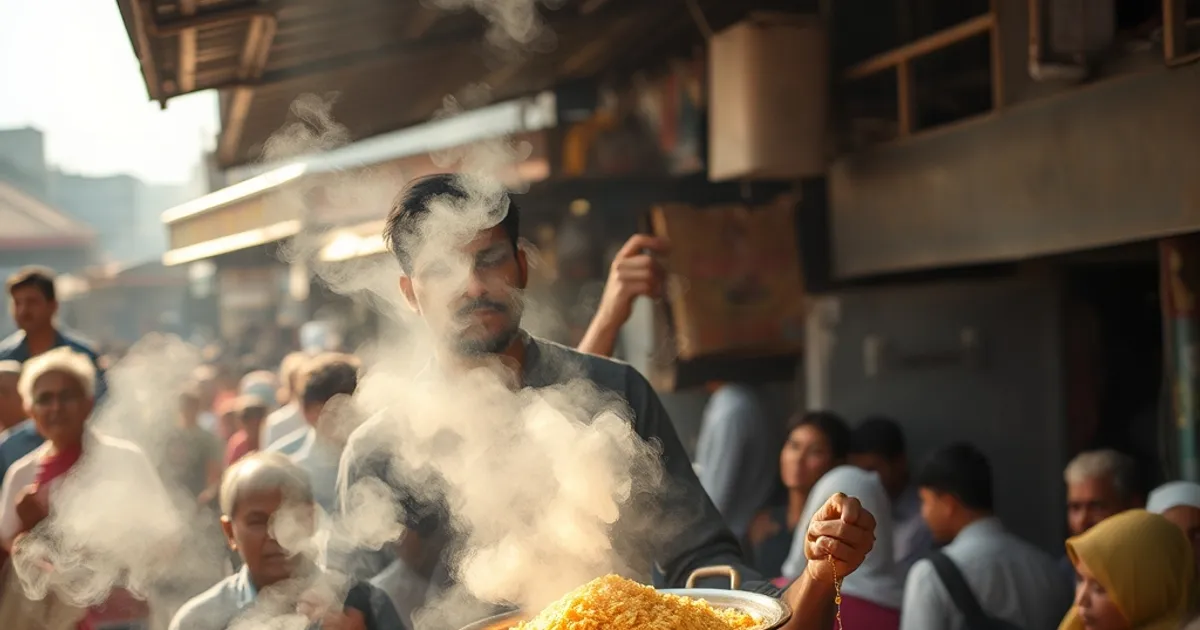
To understand Chittagong's food culture, start with the biriyani — not as a category but as a local art form with its own standards and its own internal competition.
Haji Biriyani House in Chawk Bazar is the name most visitors encounter first, and for good reason. It represents one school of Chittagong biriyani: dense spicing, a particular fragrance from the oil used in cooking, and a slow-cooked quality in the meat that marks the dish clearly as local. The Chawk Bazar location puts it in the oldest commercial part of the city, and the crowd on any given afternoon — working people, families, traders from the nearby market — is a reliable indicator that this is not tourist food. Arriving before the lunch rush is advisable; popular biriyani houses in this neighborhood often exhaust their supply well before evening.
Hotel New Zaman and Biriyani House on Jubilee Road represents what some regulars would describe as a competing school. The spicing is calibrated differently, the portions are substantial, and the atmosphere is the kind of no-ceremony setting where quality is the only decoration. Long-term Chittagong residents tend to have a position on which of these two houses they prefer, and that position is usually held with some conviction. Both are worth visiting on the same trip — the comparison itself is instructive.
Mezban House in Chawk Bazar offers a different register entirely. Mezban-style cooking is specific to Chittagong and associated with large community feasts. The preparation centers on beef, cooked with heavy spicing, dried red chilies, and a notable use of fat that produces a texture and heat unlike anything in mainstream Bangladeshi cooking. Mezban feasts are a social institution in this city — hosted for religious occasions and communal gatherings — and Mezban House gives at least an approximation of what that tradition tastes like in a sit-down setting.
Bonjour Restaurant at GEC Circle fills a practical role as a comfortable midday option in the western part of the city. Sub Kebab in Agrabad serves kebab-style preparations — a useful counterpoint to the biriyani-heavy options for anyone spending multiple days. Sadia's Kitchen in Khulshi has the feel of a neighborhood place where regulars know each other. Abakash Restaurant and Sahin Restaurant round out the dining landscape for those who want to explore beyond the main commercial corridors.
Insider Tip: Ask a local driver or shopkeeper which biriyani house they personally prefer and you will get a confident answer and a brief argument for why theirs is correct. This is not a debate with a consensus — it is a city-wide conversation that has been running for decades. The right move is to try both.
Sacred Sites: Centuries of History, Side by Side
Chittagong's position as a port city means its religious landscape reflects centuries of arrival and settlement. The result is a city where mosques, Hindu temples, and Sufi shrines sit within a few kilometers of each other.
The Shrine of Bayazid Bostami in Nasirabad is one of the city's most distinctive destinations. It honors a ninth-century Sufi saint, and the site's atmosphere is unlike anything else in Chittagong. The tank surrounding the shrine is home to a population of large soft-shelled turtles, regarded as sacred and believed locally to be the transformed spirits of sinners who sought the saint's intercession. Pilgrims and visitors feed them. It is genuinely unusual, and worth the trip.
Anderkilla Shahi Mosque in the Anderkilla neighborhood is one of Chittagong's older mosques, sitting in an area whose name — inner fort — references the old Portuguese-era fortifications that preceded Mughal control. The surrounding streets are worth walking.
Boro Gao Kalibari is a Hindu temple with local significance that speaks to the religious diversity of a port city where Hindu communities have been present for centuries alongside Muslim and Buddhist populations.
Natural Breathing Room: River, Beach, and Hills
Patenga Beach sits where the Karnaphuli River meets the Bay of Bengal — the city's southwestern edge. It gets busy on weekends and evenings, but early weekday mornings are quieter and offer better light. The Bangladesh Navy Museum is nearby on Patenga Road and is worth a stop, particularly for visitors with children or an interest in Bangladesh's post-independence history.
The Karnaphuli River itself is not merely backdrop. The river is the reason Chittagong became a port city, the reason it carries the commercial density and multicultural layering it does. Walking the waterfront near Laldighi Maidan in Sadarghat gives a sense of the older trading geography that made the city a hub long before the current port infrastructure existed.
Foy's Lake in Khulshi is a managed lake and park that offers a slower, greener kind of afternoon. The Khulshi neighborhood has a residential quality that contrasts with the commercial intensity of Chawk Bazar or Agrabad, and the lake suits a post-lunch walk well. CRB Hill in the CRB area provides elevated views over parts of the city and draws people for early morning outings.
The Chittagong Hill Tracts to the east deserve a separate mention. This mountainous, forested region — home to Chakma, Marma, Tripura, and other indigenous communities — is one of the most unusual destinations accessible from Chittagong. Some areas require permits. The journey takes several hours depending on destination. For visitors with additional days, the Hill Tracts represent an experience with no equivalent elsewhere in Bangladesh.
Culture, Museums, and the City's Interior Life
The Ethnological Museum in Agrabad is one of the few museums in Bangladesh dedicated specifically to the country's indigenous communities — their textiles, musical instruments, and material culture. Chittagong's position as the gateway to the Hill Tracts makes it a logical home for such a collection.
The Zia Memorial Museum near the Court Building area documents a significant period in Bangladesh's post-independence political history. National Art Gallery Chittagong and Deshbandhu Club serve the city's active cultural community. Chittagong Club on Badsha Mia Road carries the atmosphere of a colonial-era institution that has accumulated decades of local social history. Hotel Agrabad in the Agrabad commercial district is one of the city's established accommodation options for visitors staying in the business area.
FAQ
Is Chittagong biriyani different from Dhaka biriyani? Yes, meaningfully so. Chittagong biriyani uses a distinct spice combination, a different balance of oil, and slow-cooking methods that produce a texture and fragrance specific to this city.
What is mezban cooking? Mezban is a feast tradition specific to Chittagong, associated with large communal celebrations. The food centers on beef prepared with heavy spicing and dried chilies — richer and more intensely flavored than everyday Bengali cooking.
Do visitors need a permit for the Chittagong Hill Tracts? Some areas require permits for foreign nationals. Requirements can change, so checking current guidelines before planning a visit is advisable.
How far is Patenga Beach from the city center? Roughly 14 kilometers south, reachable in 30 to 45 minutes depending on traffic.
What are the two most distinctive food experiences in Chittagong? Biriyani from Haji Biriyani House or Hotel New Zaman and Biriyani House, and mezban-style beef from Mezban House. Neither is easily replicated elsewhere in Bangladesh.
Bottom Line
Chittagong rewards visitors who take time to eat where locals eat and walk where locals walk. The biriyani at Haji Biriyani House and Hotel New Zaman and Biriyani House is the clearest single expression of the city's food identity. The Shrine of Bayazid Bostami and Anderkilla Shahi Mosque carry centuries of religious history. Patenga Beach, Foy's Lake, and the Karnaphuli River waterfront offer the city's natural atmosphere in three different registers. The Ethnological Museum and the Chittagong Hill Tracts open toward a part of Bangladesh most visitors never reach. Plan at least two full days, eat early at the biriyani houses, and let the city show you what it is.