
Ganesh Chaturthi 2026 in Cincinnati: Events, Puja & Where to Celebrate
Ganesh Chaturthi 2026 in Cincinnati: Events, Puja & Where to Celebrate
TL;DR
- Cincinnati's Indian American community observes a full festival calendar from Guru Purnima 2026 in July through Ganesh Chaturthi 2026 on September 14. 🪔
- A close-knit desi community means major observances like Krishna Janmashtami 2026 and Raksha Bandhan 2026 often become shared neighborhood and association events.
- The July-to-September stretch contains more than a dozen significant Hindu observances — this guide breaks each one down.
- Community associations and local mandirs anchor the group celebrations that define festival life in the Cincinnati metro.
- Home puja and communal gatherings complement each other throughout the season, making this a time of layered connection.
Cincinnati's Indian Community and the Festival Calendar
Cincinnati may not be the first city that comes to mind when people think of South Asian America, but the Indian American community here has been building roots for decades. From medical professionals to engineers to small business owners, the desi population has grown steadily, bringing with it a living festival calendar that spans the full arc of the Hindu year.
The July-to-September stretch is especially rich. The observances during this period range from quiet personal fasts to communal celebrations that fill event halls and temple courtyards. For Indian families in Cincinnati, this season is a way of maintaining connection — to tradition, to each other, and to the rhythms of a calendar rooted far from Ohio but kept alive with real intention.
What makes this community distinctive is precisely its scale. Cincinnati's South Asian community is large enough to organize meaningful events, yet close-knit enough that individual families are known to one another. Major festivals here tend to have a warm, personal quality that larger metros sometimes lose.
July: Opening the Season
Ekadashi on July 24 marks the beginning of the festival stretch. This bimonthly fast dedicated to Lord Vishnu is maintained by families across various regional backgrounds — Gujarati, Marathi, North Indian, and South Indian alike. The shared observance is a quiet reminder of how many practices cross regional lines within the Indian diaspora.
Pradosh Vrat follows on July 26 and 27, honoring Lord Shiva at dusk. In Cincinnati, Shiva devotees may gather for a small aarti at a local temple or observe at home. The two-day span of Pradosh Vrat — a characteristic of certain lunar months — makes it feel like a slightly longer devotional pause in the week.
The month closes with a genuinely significant moment: July 29 is both Purnima (the full moon) and Guru Purnima 2026. This is one of the most spiritually resonant days in the Hindu calendar, honoring teachers in the fullest sense — from classroom instructors to spiritual guides to parents who passed down culture. In Cincinnati's Indian community, cultural organizations sometimes arrange special prayer gatherings or satsangs for Guru Purnima, giving the observance a communal dimension beyond the home.
August: Fasts, Bonds, and Community
Sankashti Chaturthi on August 2 is the monthly Ganesha fast — a devoted practice that takes on added meaning as families begin anticipating Ganesh Chaturthi 2026 nearly six weeks out. Families who observe Sankashti Chaturthi regularly often use it as a way to introduce younger children to Lord Ganesha, building a foundation of familiarity before the big festival.
Ekadashi on August 8 and Pradosh Vrat on August 10 continue the devotional rhythm. Then Amavasya on August 12 — the new moon — arrives as a day for ancestor remembrance. Many Cincinnati families observe a quiet Pitru Tarpan, making offerings to departed ancestors. For families with elders still in India, Amavasya often sparks phone calls and conversations that bridge the distance.
Nag Panchami 2026 on August 17 is observed across Indian regional communities in the metro. Some families draw a traditional snake design at the home threshold; others visit a local mandir for a special puja. It is a festival that reflects the ecological roots of Hindu tradition and has a particular resonance in regions where the monsoon season coincides with this date.
The sequence continues with Ekadashi on August 23 and Pradosh Vrat on August 25. Then comes August 27 — one of the most anticipated dates in Cincinnati's Indian calendar. Raksha Bandhan 2026 and Purnima share this day. Sisters tie rakhi for brothers, brothers pledge their protection, and the emotional weight of the occasion is felt especially strongly in diaspora communities where family members may be scattered across continents. In Cincinnati, Raksha Bandhan sometimes becomes a community event organized by local Indian associations, allowing families without siblings nearby to share the day with others.
Sankashti Chaturthi returns on August 31, closing out the month with one final act of devotion to Lord Ganesha.
September: Janmashtami and the Grand Arrival
Krishna Janmashtami 2026 on September 4 is the high point before Ganesh Chaturthi. The midnight birth of Lord Krishna is marked with bhajans, a decorated jhula for Krishna's murti, fasting until midnight, and breaking the fast with panchamrit and sweets. Cultural organizations in Cincinnati often arrange large Janmashtami programs, and these events draw genuinely broad participation — Janmashtami is one of the festivals where the community, regardless of regional origin, tends to show up in force.
After the intensity of Janmashtami, the calendar offers a brief passage of quieter observances: Ekadashi on September 7, Pradosh Vrat on September 8, and Amavasya on September 10. These days provide a reflective interval before the season's peak.
Then: Ganesh Chaturthi 2026 on September 14.
How the Cincinnati Community Celebrates Ganesh Chaturthi
This is the day the entire season has been building toward. Ganesh Chaturthi — the birthday of Lord Ganesha, remover of obstacles — is celebrated across household and community settings.
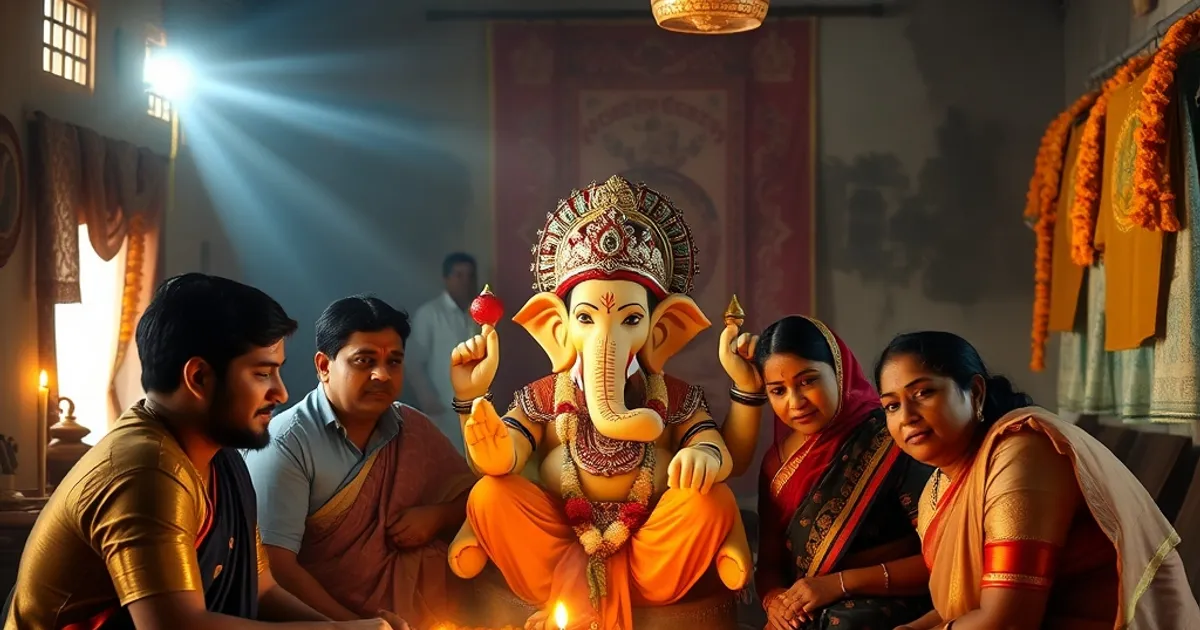
In Cincinnati, Ganesh Chaturthi celebrations typically happen across multiple layers. Home puja with a family murti is the foundation: an altar is prepared, the Ganesha Atharvashirsha is recited, modaks and durva grass are offered, and the aarti brings the family together morning and evening. Community programs organized by local associations — particularly those with Maharashtrian membership — often take the celebration into shared spaces, with devotional music, classical performances, and communal prasad.
The close-knit nature of Cincinnati's Indian American community means that Ganesh Chaturthi has a neighborly quality here. Families visit each other's homes to see the Ganesha installation, share sweets, and join the aarti. When the community is the right size, the festival feels genuinely familial.
Insider Tip
Cincinnati's Indian grocery stores stock puja essentials throughout the festive season. For Ganesh Chaturthi specifically, eco-friendly clay murtis and fresh flowers like marigolds and hibiscus should be sourced two to three weeks before September 14 — supply in smaller markets can be limited during peak demand, and early shoppers have the best selection.
FAQ
When is Ganesh Chaturthi 2026? September 14, 2026.
Which festivals in this season are observed broadly across Indian regional communities? Guru Purnima 2026, Raksha Bandhan 2026, Krishna Janmashtami 2026, and Ganesh Chaturthi 2026 draw participation from across the Indian diaspora regardless of regional background.
What is the difference between Sankashti Chaturthi and Ganesh Chaturthi? Sankashti Chaturthi is a monthly fast dedicated to Lord Ganesha, observed on the fourth day of the dark fortnight. Ganesh Chaturthi is the annual birthday celebration of Ganesha — a full festival with murti installation, extended puja, and community gatherings.
How can Indian families in Cincinnati find community events for these festivals? Connect with local Indian cultural associations, Hindu temples in the greater Cincinnati area, and South Asian community groups on social media platforms.
Is Nag Panchami 2026 widely observed in diaspora communities? Observance varies by family and regional background, but many Indian American families continue this tradition at home or at a local mandir.
Bottom Line
For Cincinnati's Indian American families, the festival season running from Guru Purnima 2026 through Ganesh Chaturthi 2026 is more than a series of religious dates — it is the community's shared heartbeat. Each observance, from the quiet Amavasya to the joyful intensity of Janmashtami and the grand arrival of Lord Ganesha on September 14, strengthens the bonds that hold this diaspora together. Plan ahead, connect with the community around you, and let the season unfold with intention.