
Janmashtami 2026 in Corona: Events, Puja & Where to Celebrate
TL;DR
- 🎉 Krishna Janmashtami 2026 falls on Thursday, September 4 — the midnight puja is the centerpiece of the entire celebration
- 📅 Six weeks of Indian festival observances precede it: Guru Purnima 2026 (Jul 28), Nag Panchami 2026 (Aug 16), and Raksha Bandhan 2026 (Aug 27) all arrive before the big night
- 🪔 Dahi handi, jhankis (life-of-Krishna tableaux), and all-night bhajan sessions define how the Indian diaspora in Corona honors the occasion
- 🏡 With no dedicated mandir listed locally, home pujas and rented cultural halls are the community's primary venues
- 📍 Ganesh Chaturthi 2026 on September 14 follows ten days later, giving families back-to-back festival weekends
The Sacred Calendar That Builds Toward Janmashtami
Krishna Janmashtami does not arrive without preparation. For the Indian community in Corona, the weeks before September 4, 2026 are already dense with observances that build spiritual momentum and give families time to arrange supplies, coordinate family gatherings, and settle into a devotional mindset.
The season opens with Guru Purnima 2026 on July 28, the full-moon day of Ashadha dedicated to honoring teachers — both spiritual and educational. Many households reach out to elders and mentors, and some observe a short puja or katha in the evening. The Purnima energy carries into July 29 by certain panchang reckonings depending on when the tithi crosses midnight in the Pacific time zone.
Sankashti Chaturthi on August 2 is a Ganesha-dedicated vrat observed by families seeking the removal of obstacles before a major undertaking. It is a monthly observance, but in the lead-up to Janmashtami it feels especially apt. The Ekadashi on August 8 and Pradosh Vrat on August 10 follow — bimonthly fasting and prayer days that punctuate the lunar calendar and keep households in a steady devotional rhythm.
Amavasya on August 12 is the new-moon night, traditionally reserved for ancestor remembrance and charitable acts. Nag Panchami 2026 arrives on August 16, when serpent deities are honored with milk offerings and prayers for household protection. By the time Raksha Bandhan 2026 falls on August 27, the community has already been in a festive mode for nearly a month — and Janmashtami is just eight days ahead.
The Ekadashi on August 23 and Pradosh Vrat on August 25 serve as natural final-preparation windows. Many observant families use these days to tidy the puja room, finalize the dahi handi venue, and batch-cook the correct fasting foods.
What Janmashtami Means for the Indian Diaspora in Corona 🕉️
Corona's Indian American community spans multiple generations and regional backgrounds — Gujarati, North Indian, South Indian, and Marathi families all gather in this part of Riverside County. For nearly all of them, Krishna Janmashtami is among the year's most emotionally resonant celebrations, partly because of Krishna's central place across so many regional traditions, and partly because the midnight format is genuinely dramatic in a way few other festivals match.
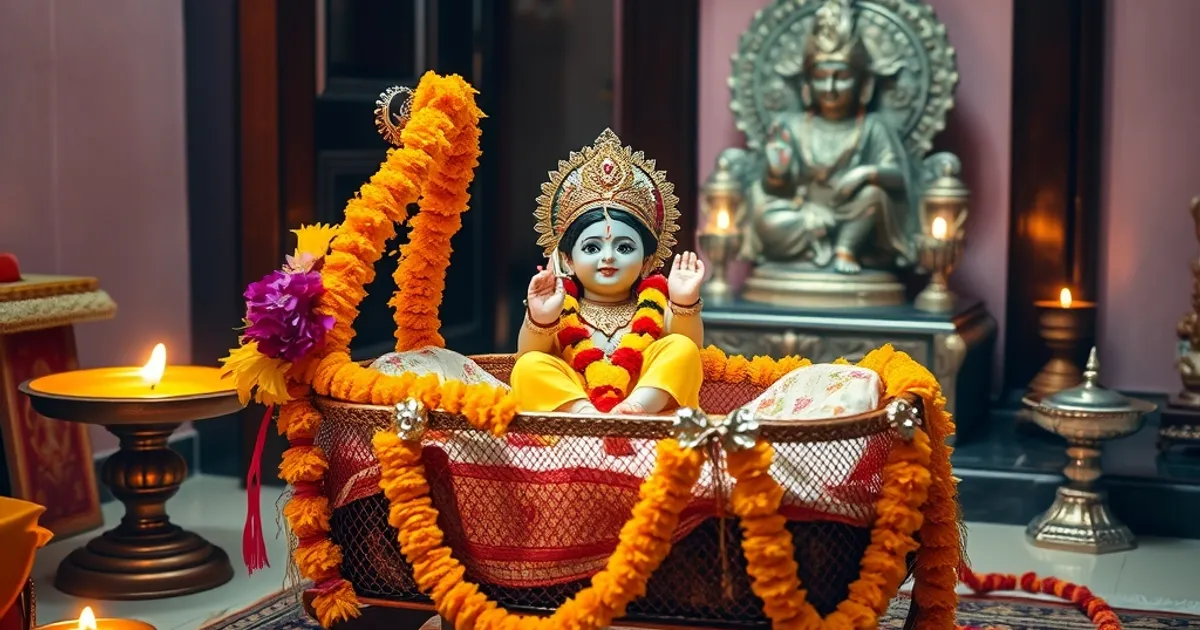
The observance follows the belief that Krishna was born at the stroke of midnight in Mathura. Devotees fast through the day and break the fast only after a ceremonial abhishek (bathing) of a baby Krishna idol at midnight. In joint-family households in Corona, this often turns into a full home program: jhankis (decorative tableaux depicting scenes from Krishna's childhood in Vrindavan) arranged in the living room, bhajan recordings or live singing, and a decorated cradle strung with marigolds that the youngest child in the family gets to swing — symbolizing Krishna in the jhoola.
Dahi handi is another layer of celebration with deep roots in Maharashtra. A clay pot filled with curd, butter, and sweets is suspended overhead, and teams of young men form human pyramids to break it — a re-enactment of young Krishna's legendary butter-stealing. Community cultural associations sometimes organize dahi handi events at parks or open spaces on the day of or after Janmashtami, creating a social gathering that draws families who may not observe the midnight fast at home.
For children growing up in Corona, Janmashtami is often the festival where the mythology becomes vivid and personal. Dressing as Radha and Krishna, acting out scenes from Vrindavan, and staying up past midnight for the first time all become memories that anchor the diaspora identity in a city far from India.
Planning Your Janmashtami in Corona 📋
With Krishna Janmashtami 2026 on September 4, here is a practical timeline built around the actual dates in this year's festival calendar.
Raksha Bandhan 2026 on August 27 is a Thursday. If family is traveling in for that occasion, consider planning for both festivals in the same extended visit. The cluster from August 27 through September 4 is demanding: it involves rakhi ceremonies, then a week of fasting-food prep, then the all-night Janmashtami vigil. Batch-cooking sabudana khichdi, phalahari cutlets, and fruit-based dishes in advance reduces the kitchen burden significantly.
The day of September 4 is the fast day. The puja typically begins around 11:30 PM and peaks at midnight with the abhishek, the singing of traditional bhajans like "Nand Ke Ghar Anand Bhayo," and the sharing of panchamrit (a sacred mixture of milk, honey, curd, ghee, and sugar) before the full meal is served. For families with young children, an abbreviated midnight ceremony — where kids participate in the earlier jhanki viewing and bhajan singing, then go to sleep before the abhishek — is entirely common.
Ganesh Chaturthi 2026 on September 14 is just ten days after Janmashtami. Purchasing clay Ganesha idols before the festival shops are depleted is worth doing in the first week of September.
Insider Tip: The Indian grocery corridor along Magnolia Avenue in Riverside is typically the most accessible destination for Corona families sourcing Janmashtami supplies — crystallized sugar (mishri), fresh white butter, panchamrit ingredients, and the small silver-plated baby Krishna idols used for abhishek. The best window to shop is right after Raksha Bandhan 2026 on August 27, when the Janmashtami stock has arrived but demand has not yet peaked. Waiting until September 2 or 3 risks finding the specialty items sold out.
Frequently Asked Questions
What date is Krishna Janmashtami 2026 in Corona? Krishna Janmashtami 2026 is on Thursday, September 4, 2026. The midnight puja takes place in the hours spanning September 4 into September 5.
Do I need to fast the entire day? Fasting practices vary by family and regional tradition. Many devotees observe a nirjala (no water) fast; others allow fruits and milk. The fast is broken after the midnight abhishek.
Is there a local mandir in Corona for Janmashtami? Our current records do not list a dedicated mandir in Corona. Local Indian cultural associations and community halls are typically the venue for organized group celebrations in this area.
What is the significance of dahi handi? Dahi handi re-enacts Krishna's childhood butter-stealing by having teams form human pyramids to break a suspended clay pot filled with curd and sweets. It is especially popular in Maharashtra and is organized as a community event the day of or after Janmashtami.
What should children wear to Janmashtami? Dressing children as Radha (in a blue-yellow ghagra-choli) and Krishna (in yellow dhoti with a peacock feather crown and flute) is the classic choice. The costume photo session or pageant usually happens before the midnight puja, when young children are still awake.
Bottom Line ✨
Janmashtami 2026 in Corona centers on September 4 — a midnight vigil that the Indian diaspora here carries forward with genuine devotion. The six weeks prior bring Guru Purnima 2026, Nag Panchami 2026, and Raksha Bandhan 2026 in quick succession, building both the spiritual mood and the practical calendar pressure. Whether your family observes with a full home jhanki, a dahi handi gathering, or simply a quiet midnight abhishek, prepare early, stock your puja room after August 27, and make room for Ganesh Chaturthi 2026 on September 14 — the season does not pause after Janmashtami.