
Best Temples & Mandirs in Delhi (2026)
TL;DR
- 🕌 Swaminarayan's Akshardham Temple is Delhi's grandest spiritual complex, requiring a dedicated half-day visit
- 🕍 Gurdwara Rakab Ganj Sahib opposite Parliament House marks the site where Guru Tegh Bahadur Ji was cremated — one of the most historically significant Sikh shrines in the country
- 🙏 Gurudwara Bangla Sahib on Ashoka Road offers langaar, a sacred sarovar, and a calm unlike most central-Delhi locations
- 📿 Ramakrishna Mission on Ramakrishna Ashram Marg functions as a center for Vedanta study, seva, and prayer in equal measure
- 🛕 Neighborhood mandirs — from Sheetla Mata Mandir to Shri Shiv Mandir in Mukherjee Nagar — sustain the city's daily devotional rhythm
The Grand Icons: Akshardham and the Major Gurdwaras
Delhi's spiritual geography spans centuries and faiths, with a concentration of landmarks that would take weeks to visit thoroughly. At one end of the scale are places that draw pilgrims from across the country — and Swaminarayan's Akshardham Temple stands firmly at the top of that list.
Akshardham is a monument to craft and devotion, built by the Bochasanwasi Akshar Purushottam Sanstha and consecrated in 2005. The carvings, the intricacy of the pink sandstone and white marble work, the sheer scale of the complex — this is the kind of place that demands more time than most visitors plan for. Security protocols at the entrance are strict: no cameras, no phones inside the main monument. The management requests visitors set aside at least three to four hours, and that is not an overestimate. The website akshardham.com has information for planning your visit.
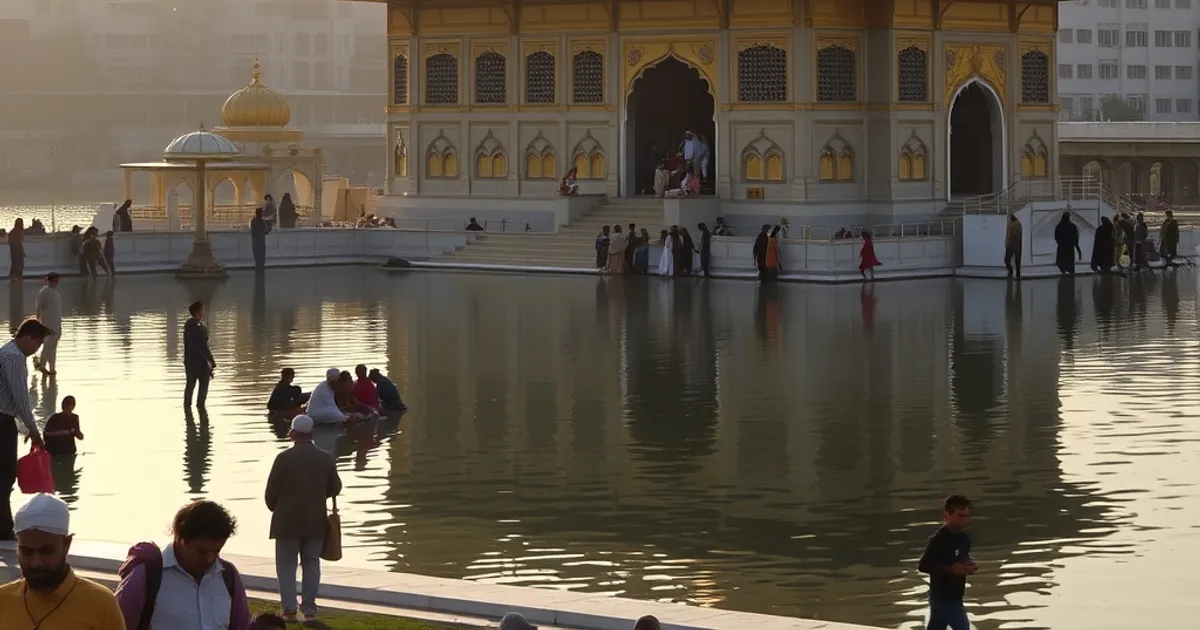
On the Sikh side of the city's spiritual map, Gurudwara Bangla Sahib on Ashoka Road is one of the most visited gurdwaras in north India. The gilded dome is visible from a distance, and the sarovar — the sacred pool — lends the complex a stillness unusual for such a central location. Langaar runs throughout the day, and the kitchen serves thousands. The gurdwara is managed by the Delhi Sikh Gurdwara Management Committee, reachable at info@dsgmc.in. Sri Bangla Sahib Gurudwara is also listed at Hanuman Road and can be reached at +91-11-23340177.
Insider Tip: If you are visiting Gurudwara Bangla Sahib for the first time, go on a weekday morning rather than a weekend afternoon. The crowds are manageable, the atmosphere is more contemplative, and you will have space to sit quietly by the sarovar.
🕍 Gurdwara Rakab Ganj Sahib: History in Stone
A short distance from Parliament House stands Gurdwara Rakab Ganj Sahib, one of the most historically significant Sikh shrines in Delhi. The site marks where Guru Tegh Bahadur Ji, the ninth Sikh Guru, was cremated by his devoted follower Bhai Lakhi Shah after the Guru's martyrdom in 1675. Bhai Lakhi Shah, at enormous personal risk, brought the Guru's remains here and set his own house alight to perform the last rites without drawing attention. The gurdwara built on this site carries that history with quiet dignity.
Gurdwara Rakab Ganj Sahib also serves as the headquarters of the Delhi Sikh Gurdwara Management Committee (DSGMC). The phone line for the DSGMC is 011-23712580, and the email is info@dsgmc.in. The location opposite Parliament House places this gurdwara at a crossroads that is simultaneously one of the most historically layered spots in Delhi — a shrine marking sacrifice and faith, beside the seat of government.
Vedanta, Jain Devotion, and Interfaith Spaces
Delhi's spiritual landscape is not limited to Hindu temples and Sikh gurdwaras. The Ramakrishna Mission on Ramakrishna Ashram Marg maintains one of its key centers here, rooted in the Vedanta philosophy of Swami Vivekananda and Sri Ramakrishna. The Mission runs educational programs, a library, medical services, and regular spiritual discourses in addition to temple worship. The website rkmdelhi.org carries details about ongoing programs and how to engage with the center's activities.
Sri Digambar Jain Mandir serves the Jain community and is open to visitors who approach with appropriate respect for the quiet observation the space requires. The Jain tradition's emphasis on non-violence, truthfulness, and ascetic practice gives this mandir a particular atmosphere of stillness. Uttara Guruvayur Temple is a Kerala-tradition temple in Delhi's devotional mix, dedicated to Lord Krishna in the Guruvayur style — bringing a southern form of puja and offerings into a northern city.
Neighborhood Mandirs and Shrines
Much of Delhi's spiritual life happens not at grand landmarks but at the locality level. Sheetla Mata Mandir on Sheetla Mata Road is one of the city's well-established goddess temples. Sheetla Mata is traditionally associated with protection from illness, and the temple draws consistent devotion particularly during summer months. The website is sheetlamatamandir.com.
Shani Dham Temple and Shani Temple serve devotees of Shani Dev, the deity associated with Saturn. Saturday is the primary day for Shani worship, and both temples will see heavier footfall then — plan accordingly if you prefer a quieter visit.
Shiv Mandir and Shri Shiv Mandir in Mukherjee Nagar round out the roster of locality Shiva temples where residents maintain regular puja and observe festivals. For those in south and west Delhi, Peer Baba Dham in Uttam Nagar is a dargah-style space that serves as a point of devotion for both Hindu and Muslim residents of that neighborhood, reflecting the syncretic devotional traditions that survive in many parts of the city.
Visiting Practical Notes
Delhi's temples are spread across a large city, and no single route covers them all efficiently. Akshardham is best visited as a standalone trip given its size and the time it demands. Gurdwara Rakab Ganj Sahib and Gurudwara Bangla Sahib can be paired on a central Delhi day. The Ramakrishna Mission on Ramakrishna Ashram Marg is nearby enough to add to that circuit.
For the neighborhood mandirs — Sheetla Mata Mandir, Shani Dham Temple, Peer Baba Dham in Uttam Nagar, Shri Shiv Mandir in Mukherjee Nagar — plan visits around where you are in the city rather than making special trips. These are places that reward regular visits more than a single tourist pass-through.
FAQ
Is photography allowed at Akshardham? Cameras and phones are not permitted inside the main Akshardham monument. Check akshardham.com for current guidelines before visiting.
What is the historical significance of Gurdwara Rakab Ganj Sahib? Gurdwara Rakab Ganj Sahib marks the site where Guru Tegh Bahadur Ji was cremated by devotee Bhai Lakhi Shah after the Guru's martyrdom. It is also the headquarters of the DSGMC.
How do I contact Gurudwara Bangla Sahib or the DSGMC? The DSGMC manages both gurdwaras and can be reached at info@dsgmc.in. Sri Bangla Sahib Gurudwara on Hanuman Road is reachable at +91-11-23340177. The DSGMC main line is 011-23712580.
What does the Ramakrishna Mission in Delhi offer? Beyond worship, the Ramakrishna Mission on Ramakrishna Ashram Marg offers educational programs, a library, medical services, and regular Vedanta discourses. Visit rkmdelhi.org for current programming.
What day is best for Shani temple visits? Saturday is the primary day for Shani Dev worship. Shani Dham Temple and Shani Temple will see more visitors on Saturdays.
Can non-Sikhs visit the gurdwaras? Gurdwaras in Delhi welcome visitors of all faiths. Cover your head before entering, remove footwear at the entrance, and observe the langaar if you are present during meal hours.
Bottom Line
Delhi's temples, gurdwaras, and shrines form one of the most diverse spiritual landscapes of any city in the country. From the architectural ambition of Swaminarayan's Akshardham Temple and the historical gravity of Gurdwara Rakab Ganj Sahib to the quiet Shani temples and neighborhood mandirs in Mukherjee Nagar and Uttam Nagar, the city covers every tradition and temperament. For lifelong residents and newcomers alike, carving out time for this circuit is worthwhile — not just for the faith, but for the history and community embedded in each of these places.