
Delhi youth protesters mass at Jantar Mantar as High Court probes police crackdown
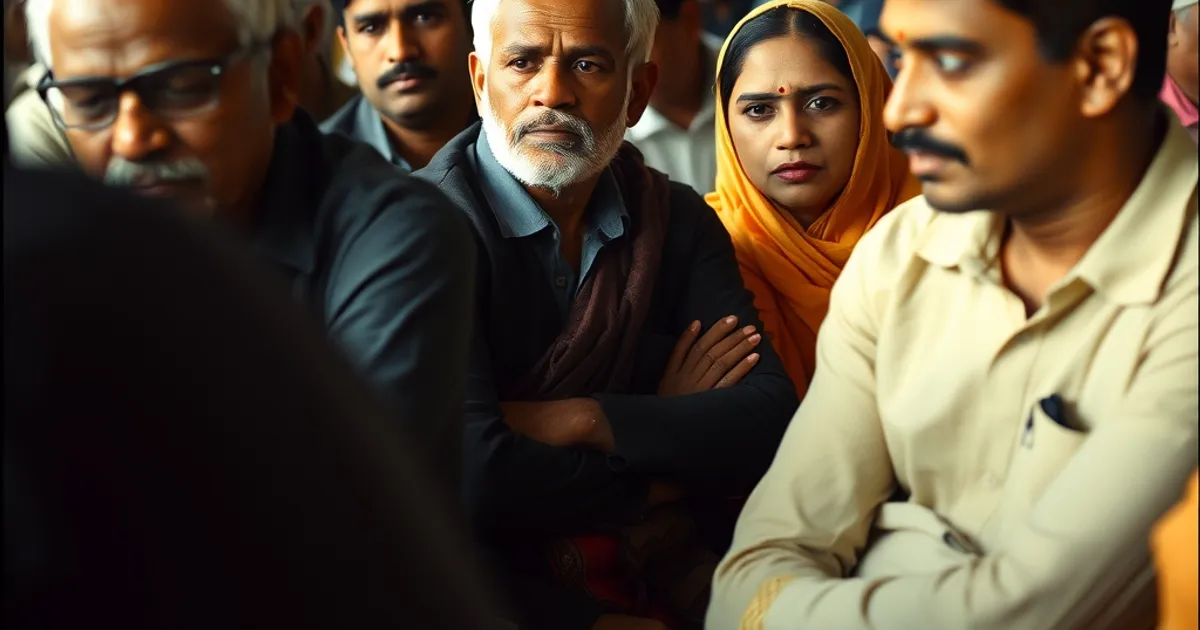
Tens of thousands of young demonstrators affiliated with the Cockroach Janta Party marched on Parliament from Jantar Mantar on 20 July, in one of the largest protests in Delhi in recent years, demanding the resignation of the Education Minister over exam paper leaks. Police responded with tear gas and baton charges, injuring protesters and officers alike, and the Delhi High Court has since ordered the Centre and Delhi Police to respond to petitions alleging excessive force. The movement, which grew within weeks from a satirical online platform to a national political force, continues to hold Jantar Mantar under heavy security.
🗳️ From Google form to mass march: how the CJP movement took hold
The Cockroach Janta Party (CJP) is a youth-led movement that grew from a satirical online platform into one of the country's most visible Gen Z campaigns within weeks. Led by Abhijeet Dipke, a 30-year-old political communications strategist and former Boston University student, the movement began when he posted a Google form inviting people to join — receiving tens of thousands of responses. On 9 July, the CJP announced a march to Parliament for 20 July, and tens of thousands turned out in Delhi. Hundreds more attended protests and candlelit vigils in Mumbai, Bengaluru, and Goa. The central demand is the resignation of Education Minister Dharmendra Pradhan over examination paper leaks. The movement gained additional momentum when Sonam Wangchuk, a well-known engineer and activist, began a hunger strike at Jantar Mantar from 28 June in support of the CJP. On 19 July, Wangchuk — aged 59 — was forcibly removed to hospital, prompting outrage among supporters and drawing sharper national attention to the protests. The CJP's name itself references comments by India's Chief Justice, Surya Kant, who allegedly compared unemployed young people to cockroaches during a court hearing in May — a label the protesters adopted defiantly as their own identity. [2]
Tear gas, baton charges, and a flood of memes: the crackdown and its aftermath
On 20 July, as tens of thousands of CJP supporters marched toward Parliament, police fired tear gas and charged demonstrators with batons near Jantar Mantar. Authorities suspended mobile internet around the protest site. By evening, protesters said scores had been beaten, while police reported that several officers had also been injured. The demonstrators demanded the resignation of Education Minister Dharmendra Pradhan over exam paper leaks and recruitment scandals; Pradhan refused to resign, accusing the opposition of exploiting students for political gain. When protesters regained internet access, the response was immediate: thousands of reels, memes, and first-person video dispatches flooded Instagram. Some were raw with anger; others were breathless or quietly defiant; many used sardonic humour. One protester, 20-year-old Chhavi, filmed a lighthearted outfit video before the march, joking about being beaten by police; hours later she was still posting — posing beside riot officers and flashing victory signs. The clips became emblematic of a generation using social media not only to document events but to reclaim them. The BBC described the 20 July march as one of the largest anti-government demonstrations against Prime Minister Narendra Modi's government in Delhi in recent years. A movement that began over exam irregularities had broadened into a campaign for broader government accountability. [8]
🗳️ High Court orders Centre and police to respond to excessive force petitions
The Delhi High Court has sought responses from the Centre and Delhi Police to petitions alleging excessive use of force during the Cockroach Janta Party's march toward Parliament House on 20 July 2026. The court also directed authorities to preserve all relevant records relating to the police action that day, including CCTV camera footage and any videography captured during the demonstration. Police personnel were photographed detaining protesters during the march, which moved from Jantar Mantar to Parliament House in connection with the alleged NEET examination paper leak and broader concerns about failures in the education system. The HC's demand for a government and police response came as accounts of heavy-handed crowd control circulated widely in the aftermath of the 20 July march. Security at Jantar Mantar was reinforced in the days following the initial demonstration as the CJP protest movement continued. The court's directive to preserve CCTV footage and other records signals that the legality of specific police actions during the march may be subject to further judicial examination. The order came on 22 July, with a hearing update published on 23 July. The HC proceedings add a formal judicial dimension to what began as a street demonstration and has since become a wider public reckoning over the government's handling of education reform, examination integrity, and the rights of demonstrators exercising lawful protest. [5]
Sources: [2] BBC · [8] BBC · [5] The New Indian Express