
Janmashtami 2026 in Duluth: Events, Puja & Where to Celebrate
TL;DR 🪘
- 🌙 Krishna Janmashtami 2026 falls on September 4 — the midnight birth celebration of Lord Krishna observed by millions worldwide
- Duluth, Georgia is part of the Atlanta metro's South Asian corridor, home to one of the largest and most vibrant Indian communities in the United States
- 📅 Janmashtami follows a packed festive stretch: Guru Purnima 2026 (July 29), Nag Panchami 2026 (August 17), Raksha Bandhan 2026 (August 27)
- 🎊 Ganesh Chaturthi 2026 arrives just ten days later on September 14, keeping the celebration momentum going
- Duluth's Little India character — especially along the Buford Highway corridor — makes it one of the most natural homes in America for grand Janmashtami observances
Midnight in Duluth: Why Janmashtami Hits Different Here
There are places in America where Krishna Janmashtami is a private household observance — a family puja, a fast until midnight, a few devotional songs before the children go to sleep. Duluth, Georgia is not one of those places. Duluth sits in the Atlanta metropolitan area, in Gwinnett County, and it has become one of the most densely South Asian communities in the entire United States. When Krishna Janmashtami 2026 arrives on September 4, the celebration here will be organized, layered, and genuinely communal in a way that few American cities outside of the coasts can match.
The Buford Highway corridor and the surrounding areas of Duluth, Lawrenceville, and Suwanee have developed a character that local residents and visitors often call Georgia's Little India. South Asian grocery stores, Indian restaurants, Hindi film theaters, sari shops, sweet shops — the infrastructure of daily Indian life has taken root here over decades of steady migration. Indian families who came to work in Atlanta's technology, healthcare, and business sectors found Gwinnett County to be an affordable, safe, and culturally congenial place to build lives and raise children.
For Krishna Janmashtami 2026, that infrastructure means something specific: the community has the temples, the volunteer networks, the cultural organizations, and the numbers to do the festival right.
What Janmashtami Actually Looks Like at Midnight
Krishna Janmashtami celebrates the birth of Lord Krishna, which according to tradition occurred at midnight. The observance is therefore unusual among Hindu festivals — it reaches its devotional peak after dark, when most American holidays have long since concluded.
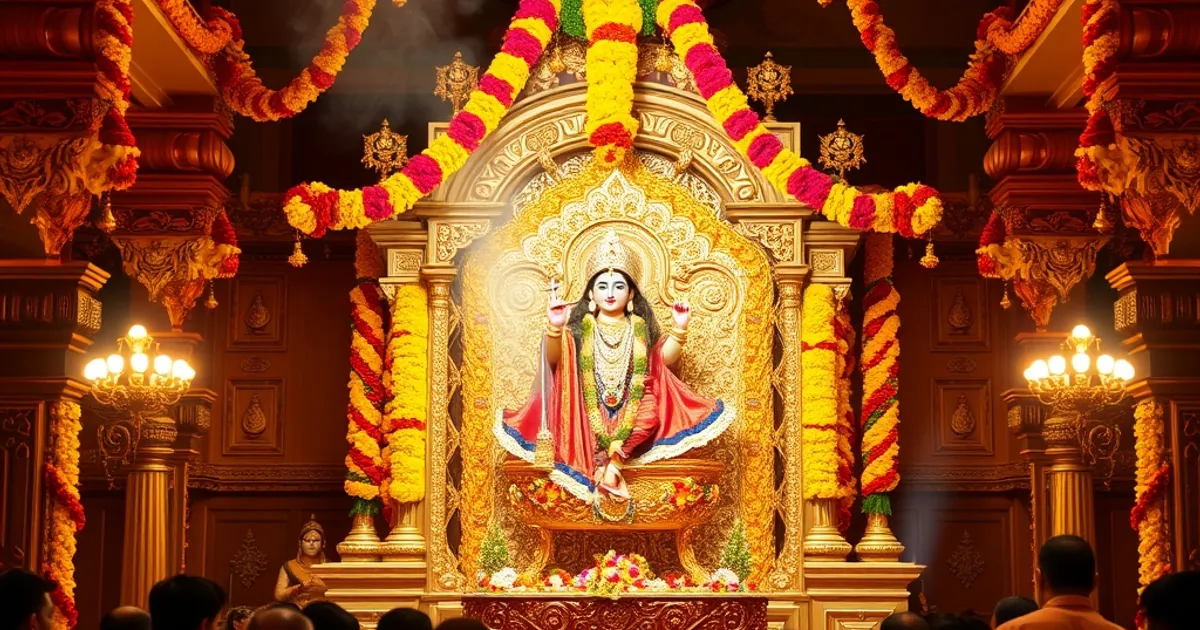
In Duluth and the surrounding Gwinnett County South Asian community, the midnight moment is central. Temples organize all-day and all-night programs: kirtans, discourses on Krishna's life and teachings, enactments of scenes from the Bhagavata Purana, and the elaborate decoration of Krishna's cradle that will be symbolically rocked at midnight when the birth moment arrives. Devotees who have been fasting through the day break their fast after the midnight puja.
The energy in a Duluth temple on Janmashtami night is unlike any other festival. By the time midnight approaches, the devotional intensity has been building for hours. The air is thick with incense and music. Children who have been kept up past their bedtime understand, even without being told explicitly, that something important is happening. The midnight abhishek — the ritual bathing of the Krishna idol — draws crowds that spill out of the inner sanctum into the corridors and the courtyard outside.
For diaspora families who grew up attending Janmashtami celebrations in Indian cities, the Duluth observance is recognizable in the ways that matter most. For their American-born children, it is often the Janmashtami they grow up with, the reference point against which all future observances will be measured.
Insider Tip: Parking near major Duluth temples on Janmashtami night can be extremely limited. Many families coordinate carpools from surrounding neighborhoods or arrive in the early evening to secure a spot. If you plan to stay for the midnight puja, bring snacks for children and a light layer — temple halls can alternate between very warm and air-conditioned cold depending on crowd density.
The Festival Season That Leads Here
Krishna Janmashtami 2026 does not arrive without context. The Hindu calendar in the weeks before September 4 has been building momentum.
Guru Purnima 2026 opens the season on July 29, the first Purnima of the monsoon months, honoring the tradition of spiritual teachers. The next full moon — also a Purnima — falls on August 27, which is Raksha Bandhan 2026. For families observing both, the summer of 2026 offers two full-moon festivals in quick succession before Janmashtami arrives.
Nag Panchami 2026 on August 17 brings its own household rituals. In many South Indian and North Indian traditions, Nag Panchami is observed with specific foods and prayers, and in Gwinnett County's diverse Indian community, the variety of regional observances makes festival season a mosaic of practices.
Pradosh Vrat falls on August 25 and then again on September 8 — the latter just four days after Janmashtami, making that first week of September particularly dense for devout households. Sankashti Chaturthi falls on August 31, keeping the devotional rhythm active in the days immediately before the main event.
Then, ten days after Janmashtami, Ganesh Chaturthi 2026 arrives on September 14. In Duluth and across Gwinnett County, Ganesh Chaturthi is among the most publicly celebrated festivals of the year — temples install large Ganesha idols, cultural organizations organize multi-day programs, and families who have been in an almost continuous state of festive preparation since late July find one more reason to gather.
Duluth's South Asian Community and What It Has Built
The size of the South Asian population in Duluth and Gwinnett County is not incidental to the scale of Janmashtami celebrations here. Community density enables the kind of festival infrastructure that an isolated family cannot create alone.
The temples in this corridor are among the largest and best-resourced South Asian religious institutions in the American Southeast. Their volunteer networks are substantial. Their programs for Janmashtami typically include cultural performances — classical dance, devotional music, dramatizations of Krishna's childhood episodes — alongside the strictly devotional program. Families who bring children find an experience that is both entertaining and genuinely spiritual.
The Indian community in Duluth is also notably diverse in regional origin. Families from Tamil Nadu, Andhra Pradesh, Gujarat, Maharashtra, Karnataka, Uttar Pradesh, and Punjab all have presences here. Janmashtami, which holds significance across most of these regional traditions, becomes one of the rare occasions when the community celebrates as a whole rather than in separate cultural silos.
There is also the food. The prasad served at midnight after the fast is broken — typically including panchamrit, fruits, and sweets — is prepared in quantities that reflect the community's size. Krishna's traditional favorites — makhan, mishri, panjiri — appear in the offerings. The communal meal that follows, shared among families who have been fasting together for hours, is one of the warmest moments of the festive year.
FAQ
When is Krishna Janmashtami 2026? Krishna Janmashtami 2026 is observed on September 4, 2026. The festival marks the birth of Lord Krishna, which tradition places at midnight during the Hindu month of Bhadrapada. The fast observed through the day is typically broken after the midnight puja.
What festivals come before Janmashtami in 2026? The season leading up to Janmashtami includes Guru Purnima 2026 (July 29), Nag Panchami 2026 (August 17), Raksha Bandhan 2026 (August 27), and Pradosh Vrat on August 25. Sankashti Chaturthi falls on August 31, just days before the main event.
What follows Janmashtami on the 2026 calendar? Pradosh Vrat returns on September 8, four days after Janmashtami, and then Ganesh Chaturthi 2026 arrives on September 14 — keeping the festive season in full swing through mid-September.
Why is Duluth, Georgia considered an important South Asian community hub? Duluth is part of the Gwinnett County corridor in metro Atlanta, which has developed one of the largest South Asian populations in the United States. The area includes significant Indian cultural infrastructure: temples, South Asian grocery stores, restaurants, and cultural organizations that make it possible to observe major festivals with genuine scale and community participation.
Do I need to be Hindu or Indian to attend Janmashtami events in Duluth? Janmashtami celebrations at many temples in the Duluth area are open to anyone interested in the tradition. Dress modestly, remove shoes before entering the temple, and follow cues from the community around you.
Bottom Line
Krishna Janmashtami 2026 on September 4 is the kind of celebration that Duluth's South Asian community does exceptionally well. After a festive season running from Guru Purnima 2026 through Raksha Bandhan 2026 and Nag Panchami 2026, the community arrives at Janmashtami with its devotional momentum already built. When midnight comes and the cradle is rocked in temple after temple across Gwinnett County, you are watching one of America's largest South Asian communities celebrate at full strength.