
Raksha Bandhan 2026 in Durban: Events, Puja & Where to Celebrate
TL;DR
- 🎉 Raksha Bandhan 2026 falls on August 27 — a beloved celebration of sibling bonds observed with deep feeling by Durban's Indian diaspora community.
- 🛕 Durban is home to one of the most vibrant Hindu communities outside South Asia, shaped by 160 years of diaspora history.
- 📅 The lead-up season includes Guru Purnima on July 29, Nag Panchami on August 17, and continues through Ganesh Chaturthi on September 14.
- 🌺 Local sabha halls and temples — including Shallcross Hindu Sabha Shiv Mandir and Reservoir Hills Hindu Seva Samaj Hall — serve as anchors for community celebrations.
- 🙏 Sri Sarada Devi Ashram, a Ramakrishna Mission institution, also plays a meaningful spiritual role for Durban's Hindu community through this festive season.
Durban, South Africa holds a distinction shared by no other city on the African continent: it is home to the largest Indian diaspora community outside of South Asia. The story of how that community came to be is one of extraordinary perseverance. Between 1860 and 1911, more than 150,000 indentured laborers were brought from India to the Colony of Natal — present-day KwaZulu-Natal — to work on sugar plantations. They came from Tamil Nadu, Andhra Pradesh, Bihar, Uttar Pradesh, and other regions, carrying with them their languages, their faiths, their festivals, and their family structures. Their descendants, now numbering in the hundreds of thousands in and around Durban, have kept those traditions alive across generations in ways that are remarkable by any measure.
Raksha Bandhan, the festival celebrating the bond between siblings, is one of the celebrations that has traveled across the Indian Ocean and taken root in KwaZulu-Natal with genuine devotion. In 2026, Raksha Bandhan falls on August 27 — and for Durban's Indian community, the weeks surrounding it form a festive season rich with puja, community gathering, and cultural observance.
The Festive Season: From Guru Purnima to Ganesh Chaturthi
Raksha Bandhan does not arrive in isolation. It is part of a longer arc of Hindu observances that runs through the height of the southern hemisphere's winter and into the first weeks of spring — a season that Durban's Indian community marks with particular devotion.
The season opens with Ekadashi on July 24, followed by Pradosh Vrat on July 27 — a sacred day of fasting observed in devotion to Lord Shiva. Then comes Purnima on July 29, which in 2026 coincides with Guru Purnima — one of the most significant observances in the Hindu calendar, a day dedicated to the veneration of spiritual teachers and lineage. Durban's temples and ashrams typically mark Guru Purnima with special programs, bhajans, and discourse.
Sankashti Chaturthi on August 2 brings devotion to Lord Ganesha — a natural prelude to the Ganesha-centered festivals later in the season. Then, on August 17, Nag Panchami arrives — the day of serpent worship, observed with offerings at temples and quiet household pujas. Nag Panchami has particular resonance in communities with roots in Maharashtra and North India, and Durban's diverse Indian population observes it with genuine dedication.
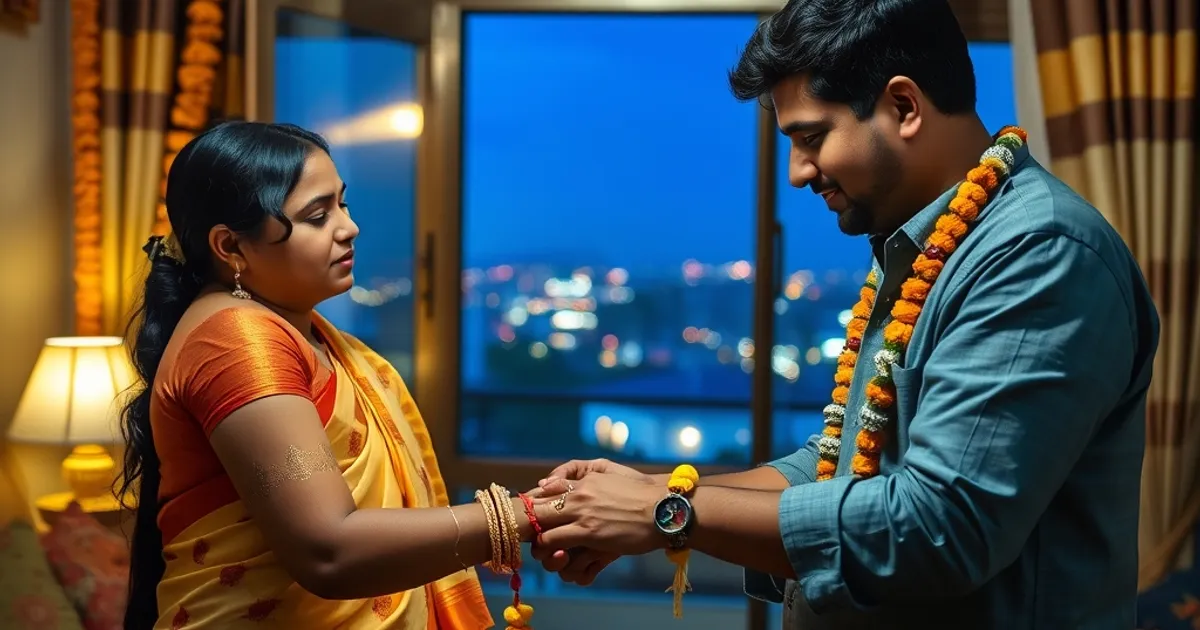
Raksha Bandhan on August 27 is the emotional centerpiece of this stretch. Sisters tie rakhis on the wrists of brothers, brothers pledge their protection, and sweets are shared. For many Durban families, the day is also marked by visits to temples, community gatherings at local sabha halls, and the kinds of family meals that are themselves an act of cultural preservation.
The festive season extends further into Krishna Janmashtami on September 4 — the celebration of Lord Krishna's birth, observed with midnight pujas and bhajans across Durban — and concludes with Ganesh Chaturthi on September 14, a multi-day festival of joyful communal celebration.
Temples and Community Venues in Durban
The institutional heart of Durban's Hindu community lies in its temples, sabha halls, and cultural organizations. Several venues have served as community anchors for decades, preserving practices that link South African Indians to their ancestral homeland.
Shallcross Hindu Sabha Shiv Mandir at 42 Andes Street is one of Durban's established Shaivite temples — dedicated to Lord Shiva, it serves the Shallcross community and beyond. The Shallcross Hindu Sabha grounds at the same address at 42 Andes Street function as a broader community gathering space, hosting cultural events, religious programs, and sabha meetings that bring families together outside of formal puja times. For Raksha Bandhan and the broader festive season, the Shallcross area's sabha grounds often become gathering points for community programs.
Reservoir Hills Hindu Seva Samaj Hall at 9 Battersea Avenue serves the Reservoir Hills neighborhood, one of Durban's historically significant Indian residential areas. The seva samaj — literally a society for service — model of Hindu community organization has long been central to how Durban's Indian community maintains its cultural infrastructure. These halls host everything from religious classes and bhajan sessions to cultural events and community meetings.
Saligram Hall on Clare Road serves its local congregation with a name that carries a distinctly devotional character — a saligram being a sacred stone representing Lord Vishnu. Harinagar Hindu Dharma Sabha at 59 Rameshvar Drive rounds out the community's institutional presence, its very name — Harinagar, city of Hari (Vishnu) — reflecting the depth of devotional identity embedded in Durban's Indian neighborhoods.
Sri Sarada Devi Ashram, located at 27/29 Abelia Road and reachable at +27 31 209 1703, represents a different but deeply meaningful dimension of Durban's Hindu spiritual life. As a Ramakrishna Mission institution — named for Sri Sarada Devi, the spiritual consort of Sri Ramakrishna — the ashram carries a tradition of Vedanta philosophy, universal spiritual inquiry, and practical service. The Ramakrishna Mission has had a presence in South Africa for generations, and the Durban ashram is a place of meditation, study, and quiet observance that draws practitioners from across the community. During the Guru Purnima season in particular, Ramakrishna Mission institutions hold special significance.
Insider Tip: If you are planning to attend community programs at Reservoir Hills Hindu Seva Samaj Hall or the Shallcross Hindu Sabha grounds for the Raksha Bandhan season, connect with the organizations in advance — these venues often host programs that are announced within community networks and WhatsApp groups rather than through broad public advertising. Reaching out to the sabha directly ensures you receive accurate program details and timing.
Celebrating Raksha Bandhan in the Durban Context
What makes Raksha Bandhan in Durban genuinely moving is the layering of meaning it carries. This is not a festival imported from a homeland the community still visits freely. For many South African Indian families, especially those whose ancestors arrived as indentured laborers in the 1860s and 1870s, India is a homeland known primarily through stories, through language preserved in family speech, through food, and through exactly these festivals. Tying a rakhi in Durban in 2026 is an act that connects a sister and brother not only to each other but to generations of ancestors who kept this tradition alive across a colonial labor system, apartheid, and the profound dislocations of South African history.
The community celebrations that surround the day — the puja at the mandir, the gathering at the sabha hall, the sweets shared with neighbors — are all expressions of a culture that chose, generation after generation, to remember and transmit what it carried across the ocean.
FAQ
Q: When exactly is Raksha Bandhan 2026? Raksha Bandhan 2026 falls on August 27, 2026. The rakhi tying traditionally takes place in the morning, following the Shravan Purnima puja.
Q: Are the temples and sabha halls open to all members of the community, or only to members? Most Hindu sabha halls in Durban welcome all members of the Indian community and often broader guests for major festival events. For specific programs during the Raksha Bandhan season, contact the individual venue for confirmation.
Q: How can I reach Sri Sarada Devi Ashram for program information? Sri Sarada Devi Ashram at 27/29 Abelia Road can be reached directly at +27 31 209 1703. The ashram can provide information on Guru Purnima and other seasonal programs.
Bottom Line
Durban's Indian community has one of the most extraordinary relationships with Hindu festival culture of any diaspora community in the world. The festive arc from Guru Purnima on July 29 through Raksha Bandhan on August 27 to Ganesh Chaturthi on September 14 is a season that this community observes with genuine devotion and communal warmth. Venues like Shallcross Hindu Sabha Shiv Mandir, Reservoir Hills Hindu Seva Samaj Hall, Harinagar Hindu Dharma Sabha, Saligram Hall, and Sri Sarada Devi Ashram provide the institutional grounding for celebrations that have been sustained across more than 160 years of diaspora life. However you observe — tying a rakhi at home, attending a puja at the mandir, or joining a community gathering at the sabha grounds — Raksha Bandhan 2026 in Durban is a moment to honor both the bond between siblings and the culture that carries those bonds forward.