
What's Happening in Durban's Desi Community
TL;DR
- 🌍 Durban is home to Africa's largest Indian community, with roots going back to the first indentured laborers who arrived in 1860
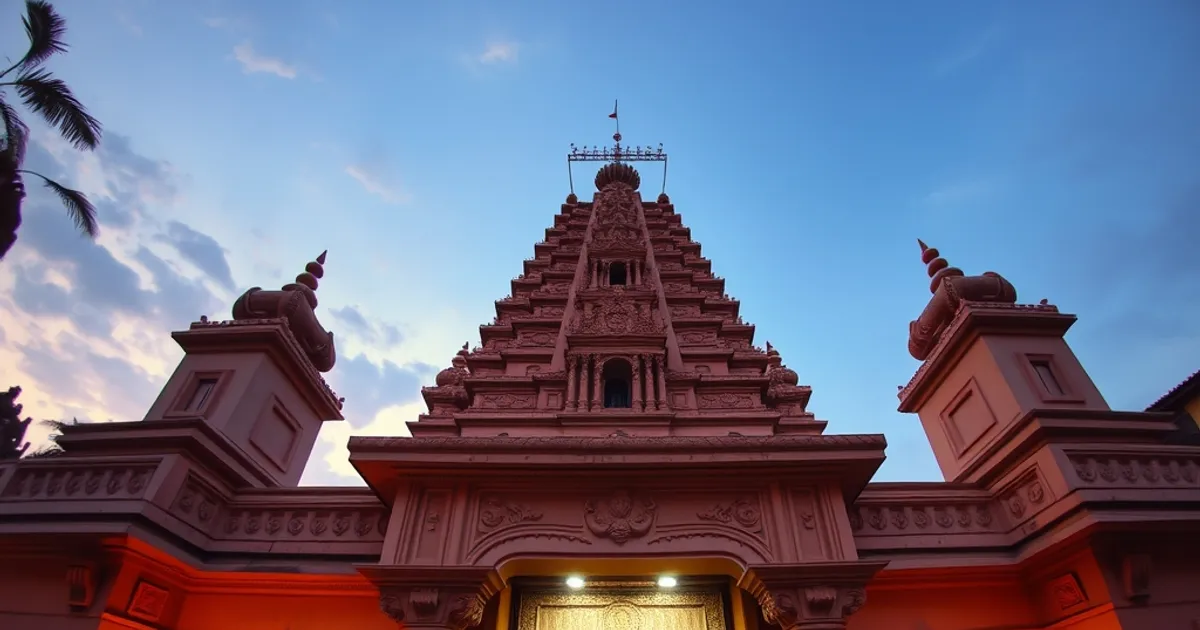
- 🛕 The Durban Hindu Temple has served the city's South Asian community for over 125 years
- 🛒 Victoria Street Market blends South Asian and African commerce in one of the continent's most distinctive shopping destinations
- 📅 Six events run from late September through early October, anchored by the Navratri season
- 🌺 The Umbilo Shree Ambalavaanar Alayam Temple stands as the oldest Hindu temple on the African continent
Africa's Most Vibrant Desi Community
Durban holds a distinction that few cities outside South Asia can claim: it is home to what is widely considered Africa's largest community of South Asian descent. The story begins in 1860, when the first indentured laborers from India arrived in Natal to work the sugarcane fields. What followed was a century and a half of cultural persistence — temples built, festivals maintained, languages preserved, and a community identity forged under conditions no one would have chosen. Today that identity is a source of deep pride, and Durban's Desi community expresses it through one of the richest cultural calendars on the continent.
The events running from late September through early October — on the 22nd, 24th, 26th, and 30th of September and the 6th and 8th of October — fall in a period the community has long treated as significant. Navratri, the nine-night festival of the goddess, is the dominant cultural anchor of this season, and Durban's temples and community halls program accordingly. For anyone with roots in the subcontinent, this stretch of the calendar will feel immediately familiar, even if the setting — KwaZulu-Natal in early spring — could not look more different from the cities the original settlers left behind.
Durban Hindu Temple: 125 Years of Community Life
The Durban Hindu Temple, established in 1898, has been at the center of Hindu religious life in the city for over a century. Its longevity is remarkable given the disruptions the South African Indian community endured — forced removals, the Group Areas Act, and the sustained pressures of the apartheid era. The temple's survival through all of that speaks to the depth of communal commitment that sustained it generation after generation. Today it runs a full schedule of ritual observances, devotional evenings, and seasonal festivals. Navratri programming at the Durban Hindu Temple draws families from across the city and is one of the season's most anticipated community gatherings.
Umbilo Shree Ambalavaanar Alayam Temple: Africa's Oldest Hindu Site
The Umbilo Shree Ambalavaanar Alayam Temple carries a specific and remarkable distinction: it stands on the lineage of what is recognized as the first public Hindu temple to be erected on the African continent, originally built in 1875 by indentured laborers shortly after their arrival. The current structure on Bellair Road in Cato Manor was built in 1946 and declared a national monument in 1980. It is also known as the "mother temple" in Durban's Hindu community, because it was the first to establish the firewalking tradition — Kavadi — that became a defining expression of Tamil Hindu identity in South Africa. The temple celebrated its 150th anniversary in 2025, and its significance is felt across the entire South African Indian community, not just in Durban.
Victoria Street Market: Where Two Worlds Meet
Victoria Street Market dates to 1890, growing from traders who set up near the Grey Street Mosque in what was then the heart of Durban's South Asian commercial district. Today it remains one of the city's most distinctive destinations: over 170 stalls offering spices, textiles, traditional medicines, crafts, and street food, where South African and South Asian traditions have merged into something entirely their own.
The spice stalls are particularly remarkable. The aromas carry the memory of the ocean crossing that brought the first settlers here, and many of the traders running them come from families that have worked the same stalls for generations. Victoria Street Market is not a heritage project — it is a functioning commercial space that serves both visitors and the daily shopping needs of Durban's Desi and broader community. A visit on a weekday morning, when the stalls are fully stocked and the light comes in at an angle through the upper windows, offers one of the more atmospheric experiences the city has to offer.
Chatsworth and the Sri Sri Radha Radhanath Temple
In the Chatsworth area south of central Durban — a suburb with the highest concentration of South African Indians outside India — the Sri Sri Radha Radhanath Temple of Understanding stands as one of the province's most recognizable cultural and religious landmarks. Its North Indian temple architecture, ornate interiors, and year-round festival calendar make it a center of devotional life for thousands of families. Navratri, Janmashtami, and Diwali all bring large crowds to the temple, and its community programming extends well beyond the ritual calendar into education, music, and cultural preservation.
Chatsworth itself is worth understanding as a community: created under apartheid as a forced relocation site for South African Indians displaced from other parts of Durban, it has become one of the most cohesive and culturally rich Desi neighborhoods in the southern hemisphere. Walking through Chatsworth during a festival period is an experience in how a community can transform a place that was imposed on it into something deeply its own.
Insider Tip 💡
For the Navratri season events in late September, arrive early. Garba dancing typically begins after the puja, and the best spots on the floor fill quickly. Most events are organized as community gatherings rather than paid performances — the informality is part of the appeal. Dress to dance, expect to stay late, and do not be surprised if you leave with more invitations than you arrived with.
FAQ
Q: When did Indians first arrive in Durban? A: The first indentured laborers from India arrived in Natal in November 1860. Their descendants, along with later waves of passenger Indians who came voluntarily for trade, form the basis of today's Desi community.
Q: Is Chatsworth easy to visit from central Durban? A: Chatsworth is about 20–25 minutes south of central Durban by road. It is best explored by car, as it is a large residential suburb rather than a compact urban district.
Q: What language do most Desi residents of Durban speak? A: English is the primary language for most South African Indians today. Tamil, Hindi, and Urdu are maintained in various communities as heritage languages, particularly in temple and religious contexts.
Q: Are the Victoria Street Market and the Grey Street Mosque close to each other? A: Yes. They are in the same precinct in central Durban, both part of what is often called the Casbah — the historic hub of Durban's South Asian commercial and religious life.
Q: When are the biggest festivals in Durban's Desi community? A: Navratri and Diwali in October–November, Kavadi during Thaipusam in January–February, and Holi in March are among the most widely celebrated, with Eid marking a significant occasion in the Muslim South Asian community as well.
Bottom Line
Durban's Desi community is one of the world's great cultural stories: a people removed from their homeland by colonial labor markets who built — over 165 years — temples, markets, neighborhoods, and an identity that is unmistakably South African and unmistakably rooted in the subcontinent at once. The six events from late September through early October give a small window into that ongoing life. To understand Durban's Desi scene properly, the Durban Hindu Temple, the Umbilo Shree Ambalavaanar Alayam Temple, and Victoria Street Market are the three places that tell the story most completely and most honestly.