
Durban Desi Roundup: Temple Heritage Under Threat as New Shrine Makes History
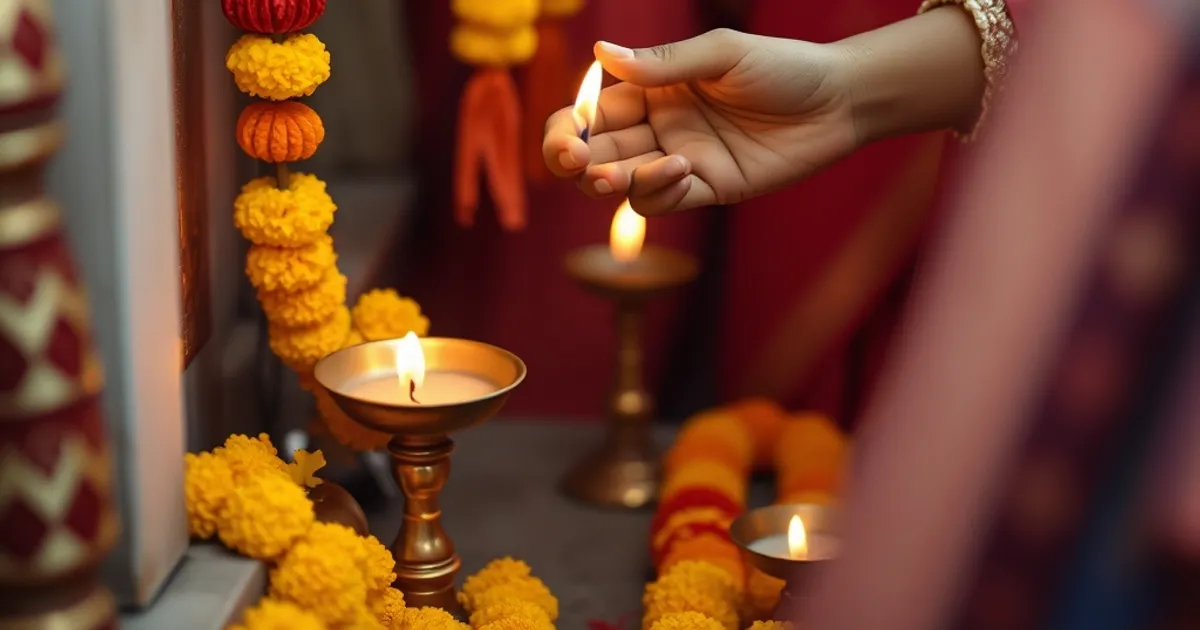
Durban's Indian community is navigating a moment of striking contrasts — with South Africa's oldest Hindu temple fighting for financial survival and a newly consecrated world-first shrine marking a historic milestone for the faith. Cricket World Cup ambitions and the enduring cultural legacy of bunny chow complete a week of significant stories from KwaZulu-Natal.
🍛 Bunny Chow Takes Center Stage in South African Indian Cooking Experience
Durban's most celebrated culinary contribution — the bunny chow — has been featured in an immersive South African Indian cooking experience, bringing the iconic dish to audiences well beyond KwaZulu-Natal. The event, listed on Maine Public's community calendar, offered participants a hands-on encounter with a food inseparable from the identity of Durban's Indian community. Bunny chow — a hollowed-out loaf of white bread filled with curry — originated in Durban among Indian workers and traders, likely during the apartheid era when racial segregation prevented South African Indians from dining in mainstream restaurants. Over the decades it evolved from a practical working meal into a beloved street food and cultural emblem, with family curry recipes fiercely guarded and affectionately debated across the city's Indian neighborhoods. The dish is more than food: it is a tangible expression of how Durban's Indian community adapted and created something wholly their own from the circumstances of their arrival and the restrictions of the colonial era. Events that bring bunny chow to broader audiences help preserve and share the culinary heritage of a community whose ancestors arrived in South Africa as indentured laborers beginning in 1860, transforming hardship into a living, flavorful legacy enjoyed across the country. [2]
🎉 eThekwini Moves Toward Cricket World Cup 2027 Host City Agreement
Durban's eThekwini Municipality is in active negotiations to formalize its role as a host city for the ICC Cricket World Cup 2027, moving toward a formal host city agreement according to a report from IOL. The development carries particular resonance for Durban's large Indian community, for whom cricket occupies a central role in cultural life — a legacy of the sport's deep roots in South Asian culture and its enthusiastic embrace by South African Indians across generations. Hosting World Cup matches at Durban's international-standard venues would bring global cricket attention to a city already well regarded among followers of the sport for its distinctive playing conditions and atmosphere. The eThekwini Municipality's active pursuit of hosting rights reflects broader ambitions to position Durban as a premier sports tourism destination on the African continent. For the Indian diaspora in KwaZulu-Natal — which comprises one of the world's largest concentrations of people of Indian descent outside the subcontinent — a Cricket World Cup featuring India among the competing nations would be an occasion of enormous communal celebration and civic pride, uniting generations of South African Indians around a sport that has long served as an emotional and cultural touchstone. [3]
🪔 South Africa's Oldest Hindu Temple Battles Financial Crisis at 165 Years
South Africa's oldest Hindu temple — the Umbilo Shree Ambalavaanar Alayam in Durban — is facing a serious financial crisis that has raised grave concerns about its future, according to reporting by Hinduism Today. Established in 1860 by Indian indentured laborers who arrived in Durban from South India, the temple complex in Cato Manor stands as a living monument to the founding generation of South Africa's Indian community. Declared a National Heritage Site in 1980, the Alayam is also known as the Cato Manor Second River Temple and houses three places of worship: the main Ambalavaanar temple dedicated to Lord Shiva, the Sri Draupadi Alayam, and the Phutu (Phutuvan) Temple. The crisis came to light when temple authorities disclosed an outstanding municipal bill of approximately US$30,446 owed to the eThekwini Municipality, arising from what they described as poor management and the mishandling of funds within the non-profit organisation. Allegations that donations were redirected to private bank accounts prompted an announcement of a forensic audit. The South African Hindu Maha Sabha called on the broader community to rally to the institution's defense. Long described as 'the temple that refused to die,' the Alayam now faces one of the gravest governance challenges in its 165-year existence, testing the community's resolve to preserve a site of deep ancestral and spiritual significance. [6]
🪔 Durban Consecrates World's First Annapoorna Devi Temple Outside India
A historic milestone was achieved in Durban on December 1, 2025, with the Prana Pratishtha consecration of the Shri Chinmaya Annapoorna Devi Temple — the world's first dedicated Annapoorna Devi Temple outside the Indian subcontinent. The ceremony fell on the auspicious Mokshada Ekadashi and was attended by nearly 4,000 devotees, led by Swami Abhedananda Saraswati, Spiritual Head of Chinmaya Mission South Africa. Vedic priests invited from southern India conducted Abhishekam of the temple's shikhara and of Devi Annapoorna's sacred vigraha. The temple is closely connected to Chinmaya Mission South Africa's 'Nourish to Flourish' initiative, which has served over 250,000 meals to underprivileged families and schoolchildren across Durban since October 2024 and continues to provide more than 2,000 free daily meals from a state-of-the-art industrial kitchen at the Chinmaya Annapoorna ashram. In November, during the G20 Leaders Summit in Johannesburg, India's Prime Minister Narendra Modi met with Swami Abhedananda and gifted a sacred Ashtalakshmi Kalasha containing Shree Anna — millets from both India and South Africa — for placement at the temple as a mark of goodwill. The consecration drew global attention and represented the culmination of a mission rooted in both Hindu devotion and community service. [7]
Sources: [2] Maine Public · [3] IOL · [6] Hinduism Today · [7] Hinduism Today