
Janmashtami 2026 in Floral Park: Events, Puja & Where to Celebrate
TL;DR
- Krishna Janmashtami 2026 falls on September 4, celebrating Lord Krishna's birth at midnight 🌙
- Janmashtami arrives at the peak of a long devotional stretch that includes Guru Purnima 2026, Nag Panchami 2026, and Raksha Bandhan 2026 all within the previous six weeks
- Floral Park's Indian diaspora community observes the festival primarily through home puja, family gatherings, and connections to the broader Queens and Nassau County temple network 🙏
- Fasting through the day and the midnight puja are the devotional core — plan the September 4 evening accordingly
- Ganesh Chaturthi 2026 follows just ten days later on September 14, making early September one of the most concentrated devotional periods of the year
What Janmashtami Is and Why September 4 Matters
Janmashtami marks the birth of Lord Krishna, the eighth avatar of Vishnu, said to have arrived at midnight on the eighth day of the dark fortnight in the Hindu month of Bhadrapada. In 2026, that date falls on September 4. The midnight birth hour is not ceremonial shorthand — it is the theological center of the entire observance. Everything in the day builds toward that moment: the fasting, the puja preparations, the gathering of family, the anticipation that accumulates through the long September evening until the clock finally crosses midnight and the fast breaks.
For the Indian diaspora in Floral Park, Janmashtami sits within a larger devotional sequence that makes the festival's arrival feel earned. Guru Purnima 2026 opened the late-summer season on July 29. Nag Panchami 2026 came on August 17. Raksha Bandhan 2026 landed on August 27. And then, just eight days later, Janmashtami. The Hindu calendar from late July through early September runs without much breathing room for practicing families, and that sustained rhythm is precisely what gives the season its intensity. By the time September 4 arrives, most observing households have already been cycling through fasts and rituals for five weeks.
Understanding this context matters if you are newer to the Indian diaspora community or observing the calendar for the first time. Janmashtami does not drop out of nowhere — it comes at the top of a long arc, as the crescendo before Ganesh Chaturthi 2026 on September 14 closes the month.
The Devotional Rhythm of Late Summer in Floral Park
Floral Park is a residential neighborhood on the eastern edge of Queens, bordering Nassau County. The Indian community here has grown steadily over decades and maintains a character that is notably different from the commercial density of Jackson Heights or the scale of Flushing's South Asian enclaves. Floral Park is quieter, more residential, and its observance culture reflects that: festivals here tend to be organized through family networks, cultural associations, and connections to the broader Queens and Nassau County temple infrastructure.
The late-summer calendar is genuinely demanding for families who observe it fully. Between Guru Purnima on July 29 and Ganesh Chaturthi on September 14, the calendar includes multiple Ekadashi fasting days, three Pradosh Vrat observances, two Amavasya (new moon) dates — on August 12 and September 10 — Nag Panchami, Raksha Bandhan, Janmashtami, and then Ganesh Chaturthi. Each of these observances has its own requirements. Ekadashi fasting happens twice a month. Pradosh Vrat falls on the thirteenth lunar day of each fortnight. Amavasya carries its own puja traditions.
For families who observe the full sequence, late summer is a period of sustained devotional engagement. Janmashtami, as perhaps the most emotionally resonant of these festivals — with its midnight drama and its celebration of Krishna's birth — tends to draw the most elaborate preparation even within a month that is already full.
How to Observe Janmashtami at Home
For households without ready access to a large temple program, home observance is both complete in itself and the norm for many diaspora families. The structure is consistent across regional traditions.
The fast: Most adult observers fast through the day of September 4, either nirjala (no water) or phalahar (fruit, milk, and nuts only). Children, the elderly, and those with health conditions typically take phalahar rather than nirjala. The fast breaks at midnight.
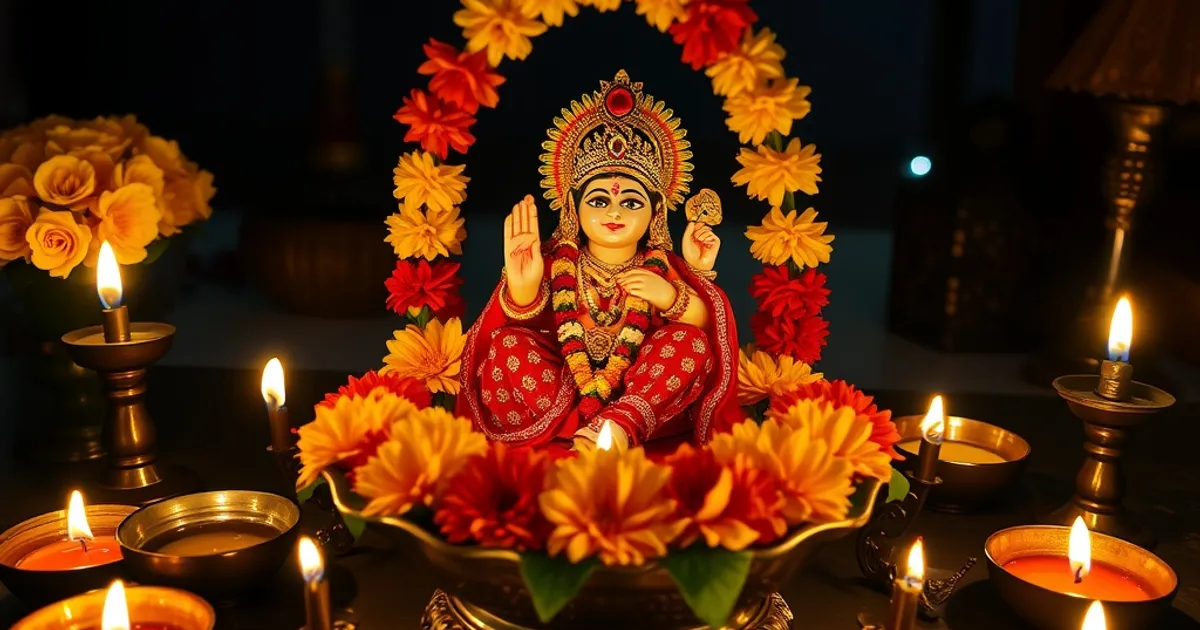
The puja setup: A small jhula (cradle or swing) holds the image or idol of baby Krishna, decorated with flowers and fabric. The idol receives an abhishek — a ritual bath with milk, honey, curd, ghee, and water — then is dressed in new clothes, typically yellow and blue. The offering thali carries fresh fruit, makhan (butter), sugar, and sweets.
The midnight moment: As midnight approaches on September 4, the family gathers for the final portion of the puja. At the moment of Krishna's birth, a conch is sounded, the puja is completed, and the fast breaks with panchamrit — the five-ingredient mixture used in the abhishek — along with fruit and the sweets prepared for the offering.
Dahi Handi: In community settings, Dahi Handi is the celebratory practice — a pot of curd hung at height, broken by a human pyramid of young men representing the young Krishna's legendary love of butter and curd. This is organized by youth groups and community associations rather than households.
Insider Tip: Raksha Bandhan 2026 on August 27 and Janmashtami on September 4 are just eight days apart. If you have extended family visiting from outside the area for either festival, the week between them is a natural window for a combined family gathering. Rather than making two separate visits, many families structure a single stay from around August 25 through September 5, which covers both observances along with the everyday devotional rhythm between them.
Preparation and Shopping in the Queens Corridor
Floral Park's position in eastern Queens gives it ready access to the resources of Jackson Heights and Flushing for all Janmashtami preparations. The Little India corridor in Jackson Heights carries puja supplies, decorative jhulas, Krishna lehenga sets for infants and small children, and sweet shops that prepare Janmashtami specials — particularly milk-based sweets that connect to Krishna's mythology. Go early in the week of August 31; by September 3, the most popular items at the sweets counters will have sold through.
For formal puja items — specific incense, particular flowers associated with Krishna (particularly tulsi), Gangajal, and specialized puja materials — the Queens-area temple shops and religious supply stores that serve the broader Indian community stock up in advance of major festivals. Ordering through community networks or picking up during a temple visit in late August is more reliable than waiting until the final days.
FAQ
When is the Janmashtami puja? The core puja is at midnight on September 4 transitioning to September 5. Most families begin the ritual around 11:30 PM and complete it by 12:15 to 12:30 AM.
Are there community Janmashtami events near Floral Park? Community programs are organized through local cultural associations and temples across the Queens and Nassau County area. Check with Indian community associations and area temples in the weeks before September 4 for specific events.
What do I bring to a Janmashtami gathering? Sweets (particularly milk-based preparations connecting to Krishna's mythology), fresh fruit, or a contribution toward puja materials. Many hosts welcome help with the puja setup itself, especially if you know the ritual sequence.
Is Janmashtami a holiday in the United States? Not a public holiday. Most families take a personal day on September 4 or plan the observance around the evening and midnight hours, returning to regular schedules on September 5.
What is the significance of the Sankashti Chaturthi on August 31? Sankashti Chaturthi is a monthly fasting day dedicated to Lord Ganesha, observed on the fourth day after the full moon. The August 31 observance falls just four days before Janmashtami, which makes the devotional intensity of the first week of September particularly high.
Bottom Line
For the Indian diaspora in Floral Park, Krishna Janmashtami 2026 on September 4 is both a deeply personal religious event and a community moment that arrives after a full month of devotional preparation. Guru Purnima 2026, Nag Panchami 2026, and Raksha Bandhan 2026 all come first, each with its own requirements. Then comes Janmashtami, and ten days later Ganesh Chaturthi 2026. The rhythm of this stretch gives the Indian devotional calendar its particular character in late summer. Plan for midnight, plan for the fast, plan for the family gathering that follows, and plan for the season rather than just the single date.