
Janmashtami 2026 in Ghaziabad: Events, Puja & Where to Celebrate
TL;DR
- 🎉 Krishna Janmashtami 2026 celebrates the midnight birth of Lord Krishna, drawing devotees to temples across Ghaziabad for bhajans and all-night vigils
- 🛕 ISKCON Temple, Ghaziabad delivers one of the most immersive Janmashtami experiences in the city, with extended midnight ceremonies
- 🌙 Fasting from dawn to midnight, followed by panchamrit and mathura peda, is at the heart of the festival's observance
- 🏺 Dahi handi — the human pyramid recreation of Krishna stealing butter — brings neighbourhoods together in spirited community celebrations
- 📅 Raksha Bandhan 2026 falls just days before Janmashtami, making August a richly layered month in the Hindu calendar
The Significance of Janmashtami
Krishna Janmashtami 2026 marks the birth anniversary of Lord Krishna, the eighth avatar of Vishnu, born at midnight on the Ashtami (eighth lunar day) of the Krishna Paksha in the month of Bhadrapad. This is one of the most joyful and widely observed festivals in North India, and Ghaziabad — a major city in Uttar Pradesh — celebrates with devotion and genuine community spirit.
The story of Krishna's birth is a story of divine arrival in times of darkness. Born in a prison cell to Devaki and Vasudeva, with the tyrant Kansa waiting to destroy him, the infant Krishna arrived as the promise of light, protection, and righteousness. Vasudeva carried the newborn through the flooded Yamuna river to safety in Gokul, where he would grow up among the cowherd community of Vrindavan. The proximity of Ghaziabad to Mathura and Vrindavan — the sacred geography of Krishna's childhood — makes Janmashtami feel close and personal here in a way that carries its own quiet significance.
Midnight Puja and the Fasting Tradition
The defining rhythm of Janmashtami is the all-night observance. Devotees begin fasting at dawn, abstaining from grains and in many cases from water, maintaining the fast through the entire day until the moment of Krishna's birth arrives at midnight. Temples remain open through the evening and night, with bhajans and kirtans creating a building atmosphere of anticipation.
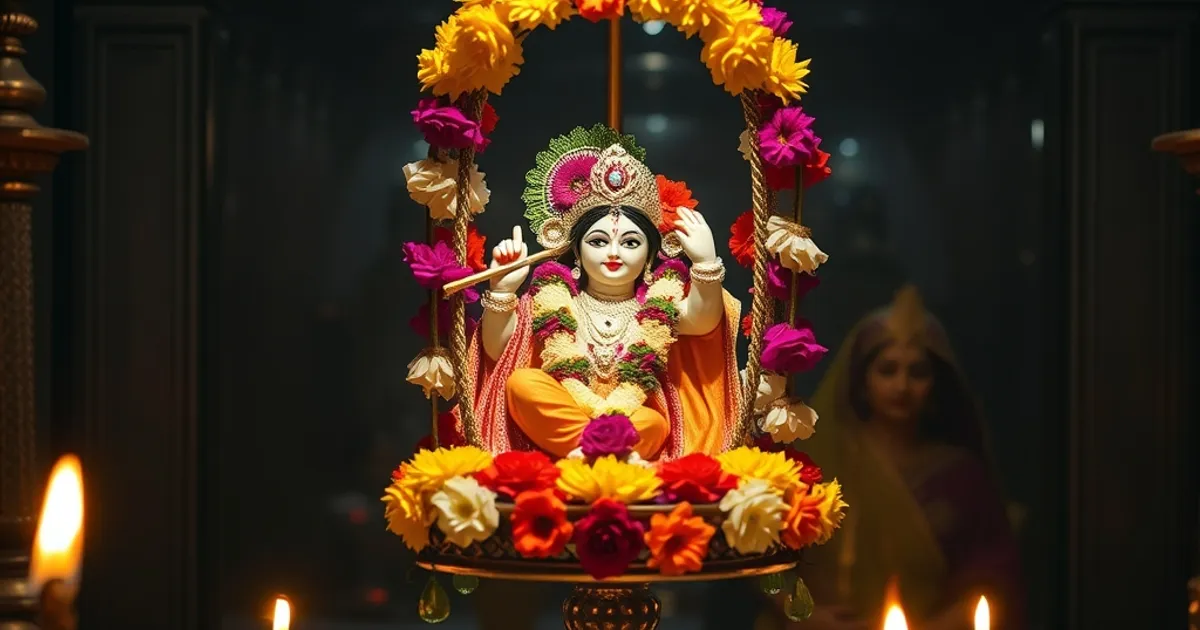
The midnight arti is the emotional centrepiece of the festival. A small image or idol of baby Krishna is placed in a decorated cradle — a jhula adorned with flowers and fabric — and devotees gently swing it while singing lullabies and devotional songs to the newborn deity. The moment carries a tenderness that sets Janmashtami apart from more solemnly observed festivals.
After the midnight ceremony, the fast is broken with panchamrit — the sacred mixture of milk, curd, honey, ghee, and sugar that is first offered to the deity and then distributed as prasad. Mathura peda, the famous milk-based sweet from the city where Krishna was born, is the classic Janmashtami offering. Other dairy preparations — kheer, makhan (fresh butter), dahi — feature prominently, honouring Krishna's legendary love for these foods.
Fasting practices vary across families. A complete nirjala (waterless) fast is observed by the most devoted. Others allow fruit, milk, and sabudana (sago). Children and elderly family members typically follow a lighter version, with the fast concluded after the midnight birth moment.
Dahi Handi: The Community Celebration
One of Janmashtami's most visually striking elements is dahi handi — the recreation of Krishna's famous act of stealing butter from earthen pots that the women of Vrindavan hung high out of reach. Teams of young men, known as Govindas, form human pyramids to reach and break a clay pot filled with curd, butter, and milk suspended at height, while crowds cheer below.
In Ghaziabad, dahi handi events are organised in residential neighbourhoods, housing societies, and public spaces. They combine devotional enthusiasm with physical skill and a spirit of friendly competition. The event draws participants across generations — young men climbing the pyramids, elders watching and encouraging, children following the action from the edges of the crowd. The atmosphere is festive in the full sense of the word.
Temples to Visit in Ghaziabad
Ghaziabad has several temples that serve as focal points for Janmashtami worship, each with its own character.
ISKCON Temple, Ghaziabad, near Little Leaders Play School, is the most internationally recognised centre for Krishna devotion in the city. The International Society for Krishna Consciousness follows an elaborate Vaishnava ritual protocol, and Janmashtami is its most celebrated occasion of the year. The temple offers extended programmes from the early evening through the midnight ceremony and into the early hours, creating a sustained devotional experience.
Kalibari Temple in Sanjay Nagar serves the Bengali Hindu community in Ghaziabad and brings its own cultural tradition to the festival. The Bengali observance of Nandotsav — the celebration of Nanda's joy at the birth of his adopted son Krishna — adds a dimension to the festivities that feels distinct from the broader North Indian tradition.
Shiv Shakti Mandir in C block Shastri Nagar is an active neighbourhood temple that holds Janmashtami programmes in an intimate community setting. For families who prefer a quieter, more local experience than a large institutional temple, this mandir offers something personal and familiar.
Shri Mannan Dham in Morta Village and Mata Mandir on New Seemapuri Road are part of the wider network of Hindu worship spaces across Ghaziabad where puja and community gathering mark the festival with quiet devotion.
Decorations, Bhajans, and Home Preparations
In homes across Ghaziabad, Janmashtami preparations begin a few days before the festival. Blue — the colour most associated with Krishna — appears in fabric decorations, rangoli patterns on the floor, and altar arrangements. Flute motifs, peacock feathers, and images of cows and calves are all common decorative elements.
Bhajan sessions typically begin in the evening and run through the night. Community groups, resident welfare associations, and temple organisations often arrange public bhajan programmes in neighbourhoods. The songs range from classical Vaishnava compositions to devotional kirtan that everyone knows and joins in on. The communal singing through the night is one of the most distinctive sensory memories the festival leaves behind.
Krishna-themed decorations for home altars can be prepared in the days before Janmashtami: a small cradle or jhula for the baby Krishna image, fresh flowers, a cloth backdrop in blue or yellow, and small clay diyas to light at midnight.
Insider Tip
ISKCON Temple, Ghaziabad consistently delivers one of the richest Janmashtami environments in the city. Arriving in the early evening allows you to experience the full arc of the night — the decorations, the building bhajan atmosphere, and the culminating midnight arti — without rushing. The midnight ceremony draws large numbers, so arriving ahead of the peak hours is worth planning for. The temple also typically offers prasad distribution after the midnight puja.
FAQ
When is Krishna Janmashtami 2026? Janmashtami falls on the Ashtami of the Krishna Paksha in Bhadrapad, arriving in mid-August 2026.
Is Janmashtami a public holiday in Ghaziabad? Janmashtami is a gazetted holiday in Uttar Pradesh, so government offices and many businesses close for the day.
What is eaten during the Janmashtami fast? Common fasting foods include sabudana, fruits, milk, dahi, and sendha namak (rock salt). Mathura peda and panchamrit are consumed as prasad after the midnight ceremony.
How is Raksha Bandhan 2026 connected to Janmashtami? Raksha Bandhan 2026 falls just days before Janmashtami in the same Shravan-Bhadrapad transition period. Many families observe both within the same spiritual mood, treating the days between the two as a continuous devotional stretch.
Bottom Line
Krishna Janmashtami 2026 in Ghaziabad is a festival of genuine joy — the midnight vigil, bhajans that build through the night, dahi handi in the streets, and the universal sweetness of mathura peda. With ISKCON Temple, Ghaziabad, Kalibari Temple, and Shiv Shakti Mandir among the places to gather and worship, the city offers a range of ways to observe the occasion. Plan for the midnight arti, prepare the panchamrit offering, and let the festive momentum of the Shravan season — Nag Panchami 2026, Raksha Bandhan 2026, Guru Purnima 2026, and now Janmashtami — carry you through one of the most beautiful passages in the Hindu calendar.