
Raksha Bandhan 2026 in Hamtramck: Events, Puja & Where to Celebrate
TL;DR
- 🎗️ Raksha Bandhan 2026 falls on August 27 — the sibling festival of rakhi, puja, and sweets
- 📅 The summer panchang builds toward it through Guru Purnima 2026 and Nag Panchami 2026
- 🕌 Hamtramck's South Asian community has both Indian and Bangladeshi roots that shape local cultural life
- 🛒 Detroit metro area Indian and South Asian grocery stores carry rakhi supplies in the weeks before August 27
- 🎉 Krishna Janmashtami 2026 and Ganesh Chaturthi 2026 keep the cultural calendar moving through September
Hamtramck is one of Michigan's most ethnically diverse cities — a small municipality surrounded by Detroit with a population shaped by successive waves of immigrant communities. Today, South Asians, primarily Bangladeshi families along with Indian and Pakistani communities, are among the most established groups in the city. Cultural life here sits at the intersection of multiple traditions, and the Indian-origin festivals that mark the lunar calendar find expression both in homes and across the broader Detroit metropolitan area.
Raksha Bandhan 2026, falling on August 27, travels exceptionally well into diaspora life. Unlike observances that require large-scale community infrastructure, Raksha Bandhan centers on one of the most portable relationships in the world: the bond between siblings.
The Meaning of Raksha Bandhan
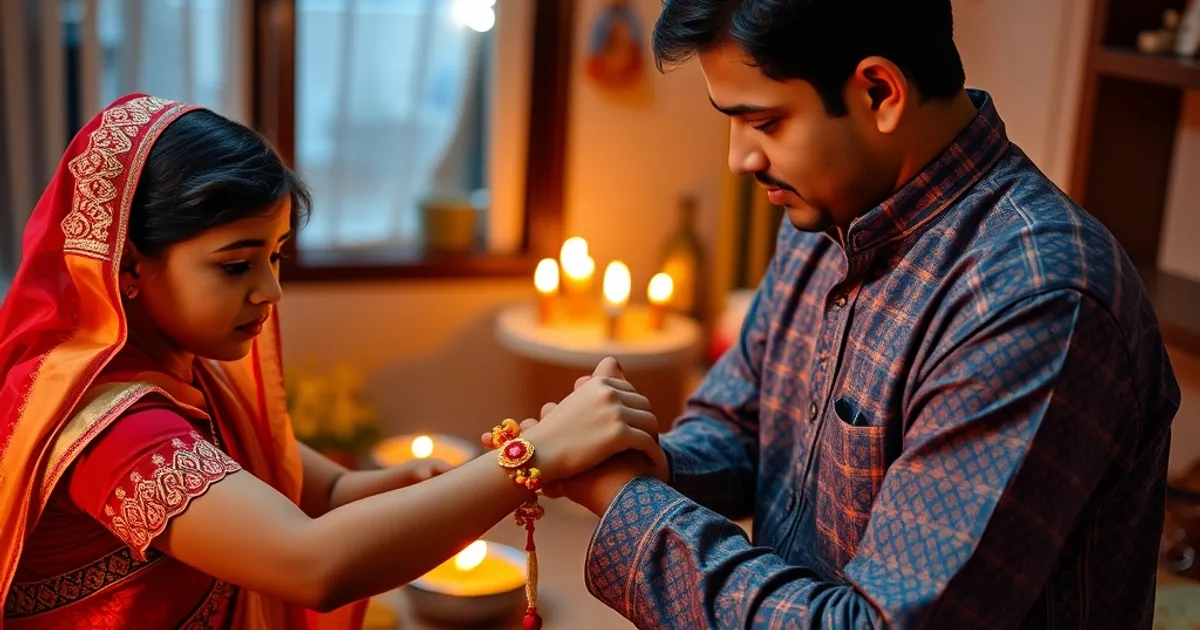
Raksha Bandhan — literally "the bond of protection" — is observed on the full moon day of the Hindu month of Shravana. On this day, sisters tie a rakhi (a thread or bracelet) on their brothers' right wrists, and brothers pledge to protect and look after their sisters. The exchange is accompanied by prayer, sweets, and typically a gift from brother to sister.
The full puja is straightforward: the sister applies a tilak on the brother's forehead, lights a diya, waves it in an aarti gesture, ties the rakhi with a prayer, and offers sweets. The brother accepts the thread and the bond it represents, and gives a gift in return. In many families, this is the moment of the year when sibling relationships are acknowledged openly and formally — not just assumed.
In the Indian diaspora, the festival has expanded its scope. Cousins who grew up together, close friends who feel like family, and symbolic rakhi-tying across different South Asian communities have all become part of how Raksha Bandhan is practiced far from the subcontinent. It is a festival that adapts without losing its emotional core.
The Calendar Leading to August 27
The summer panchang builds meaningfully toward Raksha Bandhan 2026. Guru Purnima 2026 arrives on July 29, a full-moon day that honors teachers and gurus and marks the beginning of the auspicious Hindu sacred season. Families observing Guru Purnima often attend temple, offer prayers to respected elders and instructors, and set intentions for the months ahead.
Nag Panchami 2026 falls on August 17, ten days before Raksha Bandhan. Observed on the fifth day of Shravana — the month considered most auspicious for these observances — Nag Panchami is a day of prayers to serpent deities associated with protection, rain, and prosperity. Milk and flowers are offered at snake shrines or to images of cobras; in many households the day is observed with a simple home puja. The proximity of Nag Panchami 2026 to Raksha Bandhan gives the final two weeks of August a ceremonial momentum that builds steadily toward the full moon.
The full moon on which Raksha Bandhan 2026 is observed — Shravana Purnima — arrives on August 27. Traditional fasting begins in the morning and is broken after the rakhi ceremony is completed.
Celebrating in Hamtramck and the Detroit Area
Hamtramck has an active South Asian social fabric, shaped primarily by its Bangladeshi community but intersecting with Indian and Pakistani families through shared festivals, food markets, and cultural spaces. For Raksha Bandhan 2026, several pathways are available to Desi families in the Detroit metro.
Home observances remain the heart of the festival. If siblings are local, the morning puja can be conducted at home with minimal supplies: a diya, a packet of kumkum or sindoor, sweets, and a rakhi. If siblings are out of state, many families now conduct a brief video-call ceremony and mail rakhis in advance — a practice that started out of necessity and has become its own diaspora tradition.
For supplies, the Detroit metropolitan area has Indian and South Asian grocery stores in communities like Troy and Sterling Heights, along commercial corridors that serve the metro area. In the weeks before Raksha Bandhan, these stores typically stock a seasonal selection of rakhis alongside the usual puja supplies. Styles range from simple cotton threads to elaborate beaded and metallic designs; picking the right rakhi for a sibling has become its own family ritual, as much a part of the day as the ceremony itself.
Community events around Raksha Bandhan vary year to year — check with local Indian cultural organizations and South Asian community groups in the Detroit area for any planned gatherings or temple programs around August 27.
Insider Tip: Mail rakhis to out-of-state or overseas siblings at least two weeks before August 27. International shipping to India can take longer than expected, and the rakhi should reach its recipient before the day, not after. Many families now send one by mail and share a second rakhi ceremony by video call.
What Comes After Raksha Bandhan 2026
The late summer and early fall Indian calendar continues without pause after August 27. Krishna Janmashtami 2026 arrives on September 4, celebrating the midnight birth of Lord Krishna. Fasting through the day, midnight pujas, bhajan evenings, and Dahi Handi events — in communities with enough families to organize them — are all part of Janmashtami observances. In the Detroit area, temples and cultural organizations often plan programs around Janmashtami, and the celebration draws Indian families from across the metropolitan region.
Ganesh Chaturthi 2026 follows on September 14. The festival begins with the installation of Ganesh murtis in homes and community spaces, and in many diaspora communities culminates in a collective puja gathering with shared prasad. For Indian families in Michigan, Ganesh Chaturthi often centers on a temple or cultural association event — the scale is smaller than in Mumbai, but the spirit is full.
Together, Raksha Bandhan 2026, Krishna Janmashtami 2026, and Ganesh Chaturthi 2026 form a six-week stretch of Indian cultural celebration that carries the Hamtramck and Detroit Desi community from late August into mid-September.
FAQ
What time should the rakhi ceremony happen on August 27? Traditional panchang guidance places the auspicious window for tying rakhi in the afternoon hours of Shravana Purnima. Check a 2026 panchang configured for the Eastern Time zone for the exact muhurat window recommended for Michigan.
Can rakhi be tied to someone who is not a biological brother? Yes. In both Indian tradition and diaspora practice, rakhi is commonly tied to cousins, close friends, and any male family member considered a brother-figure. The spirit of the observance extends well beyond blood siblings.
Where can we find rakhi supplies in the Detroit area? Indian grocery stores in Troy and Sterling Heights, and along the Hamtramck-adjacent commercial corridors, typically stock rakhis and puja supplies in the weeks before Raksha Bandhan. Specialty puja stores sometimes carry a wider selection of styles.
Is Raksha Bandhan observed in Bangladeshi culture? Raksha Bandhan is primarily a Hindu observance with deep roots in North Indian tradition. It is not a widely observed festival in Bangladeshi Muslim culture, though in multicultural cities like Hamtramck, awareness of the occasion is often shared across communities.
Bottom Line
Raksha Bandhan 2026 on August 27 is one of the most genuinely transportable Indian festivals — requiring little more than a sibling, a rakhi, a diya, and shared intention. Hamtramck's South Asian families, drawing on both Indian and Bangladeshi community networks, have the local cultural infrastructure to observe it meaningfully. The panchang from Guru Purnima 2026 through Nag Panchami 2026 to Raksha Bandhan 2026 gives the summer a clear cultural arc. And what follows — Krishna Janmashtami 2026 and Ganesh Chaturthi 2026 — means the momentum of the season does not stop at August 27.