
Janmashtami 2026 in Hanover Park: Events, Puja & Where to Celebrate
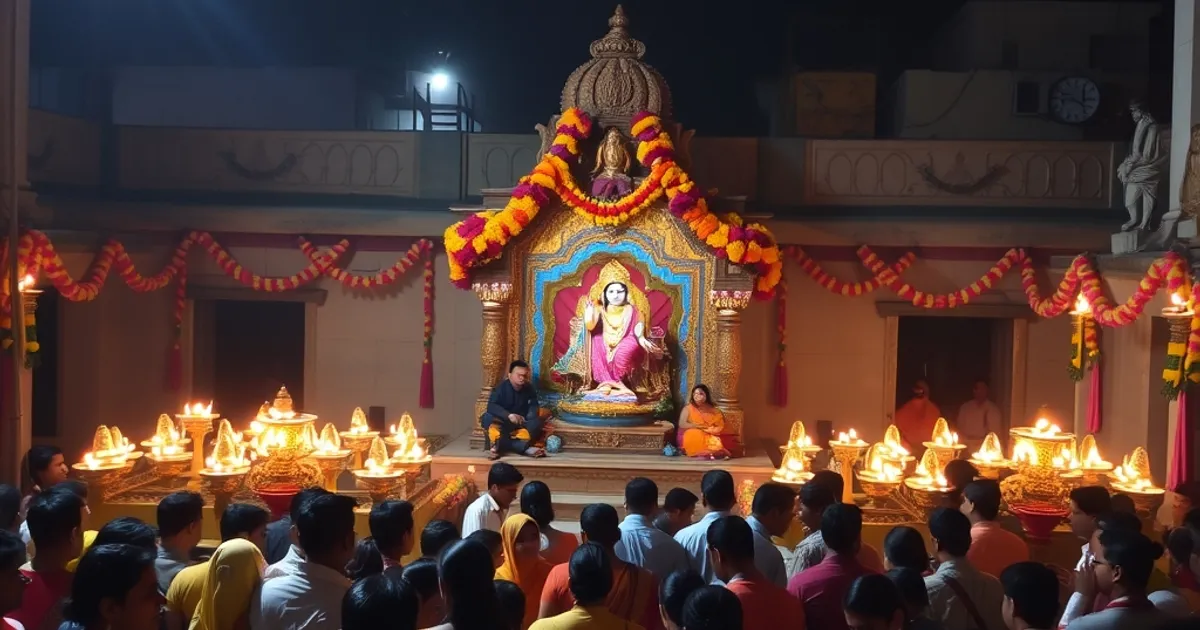
Krishna Janmashtami 2026 in Hanover Park: The Chicago Northwest Desi Community's Midnight Celebration
TL;DR 🪔
- Krishna Janmashtami 2026 falls on Thursday, September 4, 2026 — celebrated past midnight in Indian/Desi temples and community centers across Hanover Park and the Chicago northwest suburbs
- Hanover Park's substantial Gujarati and Punjabi South Asian population brings distinct regional traditions: Dahi Handi competitions in the early evening, bhajans through the night, and a midnight Aarti at the stroke of twelve
- The summer festival season runs from Guru Purnima 2026 on July 29 through Ganesh Chaturthi 2026 on September 14 — Janmashtami sits at the devotional center
- Fasting through the day and breaking the fast only after midnight is a core practice; plan transportation and childcare around a genuinely late night
- First-time attendees: arrive by 7 PM for bhajans, watch for Dahi Handi events in the early evening, and stay through midnight for the Aarti — that sequence is the full arc
What Krishna Janmashtami 2026 Means for Hanover Park's Indian/Desi Community
Krishna Janmashtami 2026 arrives on September 4, 2026 — the Ashtami tithi, or eighth day of the waning moon in the Hindu month of Bhadrapada. This is the night that, according to tradition, Lord Krishna was born at exactly midnight in a prison cell in Mathura, under circumstances charged with divine significance. For the Indian/Desi community in Hanover Park, Illinois, that date on the calendar triggers months of anticipation and days of deliberate preparation.
Hanover Park is a village in the northwest suburbs of Chicago, situated across DuPage and Cook counties. Over the decades it has become home to a significant South Asian population. Gujarati and Punjabi families make up a meaningful share of the local Indian/Desi community, and both groups carry specific regional Janmashtami traditions. Gujarati celebrations often center on devotional garba-style songs unique to this festival; Punjabi communities tend toward kirtan in a sangat format. In practice, many Hanover Park events blend both, reflecting the demographic reality of who actually lives here.
The northwest Chicago corridor gives Hanover Park Indian/Desi residents access to a broad network of temple programs, cultural organization events, Indian grocery stores, and religious supply shops. From mid-August, stores stock peacock-feather crowns and yellow dhotis for children's Krishna costumes, along with jhula sets, puja supplies, and phalahari (fasting-appropriate) food items. The community infrastructure that surrounds Janmashtami in Hanover Park is one of its distinctive strengths.
Dahi Handi: Spectacle, Sport, and Sacred Butter Theft
If there is one element of Janmashtami that makes it a community spectacle as much as a devotional occasion, it is Dahi Handi. The tradition draws on stories of young Krishna — called Makhan Chor, the butter thief — who would organize his cowherd friends into human pyramids to reach pots of butter and curd hung high by neighbors determined to keep them out of his reach. The image is playful, physical, and charged with a particular kind of divine mischief.
In Hanover Park's Indian/Desi community celebrations, Dahi Handi competitions are typically organized in temple courtyards or community center parking lots. A clay or metal pot filled with dahi, milk, and sometimes small prizes is strung at a challenging height. Teams — organized by age group or neighborhood — compete to form the tallest human pyramid and break the pot. The moment of shattering draws a crowd response you feel rather than just hear.
Gujarati communities in the northwest suburbs bring an organized, competitive energy to Dahi Handi; Punjabi families contribute to the kirtan and bhajan programs that run alongside. The combination makes Hanover Park events feel genuinely cross-regional rather than the celebration of any single community's tradition.
The contents of the broken pot — dahi, butter, and any items enclosed — are distributed as prasad afterward. That distribution is not incidental. It completes the ritual logic of the story: the theft is completed, the community shares the spoils, and the divine playfulness of Krishna moves through a real crowd of people eating real food together.
Insider Tip: Many community Janmashtami programs in the Chicago northwest suburbs run Dahi Handi competitions in the early evening (typically between 6 and 9 PM) and then transition into a more devotional program leading toward midnight Aarti. The two halves have very different energy — festive and loud for Dahi Handi, interior and intense for the hours before midnight. If you can attend the full evening, do; the contrast is part of the experience. If you can attend only one, the midnight Aarti is the irreducible center of the festival.
Planning the Full Season: July Through September 2026
Janmashtami 2026 arrives within a dense summer festival calendar that observant Hindu families in Hanover Park navigate carefully. Understanding the sequence helps you plan participation across the whole season.
Guru Purnima 2026 falls on July 29 — a full moon day honoring teachers and spiritual guides. Families observe it with early morning puja, temple visits, and expressions of gratitude toward gurus, mentors, and elders. Nag Panchami 2026 follows on August 17, a festival dedicated to serpents as protectors; many households leave milk offerings or visit temples with naga imagery. Then comes Raksha Bandhan 2026 on August 27, when sisters tie rakhis on brothers' wrists in a ceremony of mutual protection that cuts across regional boundaries. Almost every Indian/Desi household in Hanover Park observes Raksha Bandhan regardless of state of origin or language.
Between these major observances, Pradosh Vrat dates (July 26/27, August 10, August 25, September 8) and Sankashti Chaturthi (August 2 and August 31) mark the lunar rhythm for those who maintain regular vrats. By the time Krishna Janmashtami 2026 arrives on September 4, observant families have already been in an elevated ritual register for more than five weeks.
Then, ten days after Janmashtami, Ganesh Chaturthi 2026 on September 14 carries the festive energy forward into autumn with its own elaborate multi-day celebration and immersion ceremonies. The arc from Guru Purnima 2026 to Ganesh Chaturthi 2026 is one of the fullest stretches of the Hindu calendar year, and Janmashtami is its luminous center.
For Indian/Desi families managing Chicago-area school schedules, Krishna Janmashtami 2026 falls on a Thursday night. The midnight celebration extends well into Friday morning, September 5, which is a regular school day in most Illinois districts. Many families arrange a planned absence or late arrival for children on September 5; planning ahead makes the celebration more relaxed for everyone.
FAQ
What time does the midnight Aarti happen? The Aarti is timed to midnight — to the traditional moment of Krishna's birth. Community programs in Hanover Park typically begin around 7 PM and build through bhajans and kirtans to the midnight climax. Arrive early to experience the full arc.
How do families observe the Janmashtami fast? The fast varies by family tradition. Some observe nirjala (no water), others allow fruit and milk, others abstain only from grains and legumes. Most participants break their fast after the midnight Aarti, not before.
Is Janmashtami a school holiday in Illinois? No. September 5, 2026 is a regular school day in most Illinois districts. Many Indian/Desi families make advance arrangements for children who will celebrate through midnight.
What do children wear to Janmashtami events? Children traditionally dress as young Krishna — yellow dhoti, peacock-feather crown, small flute. Indian/Desi stores in the Chicago northwest suburbs typically stock these costumes from mid-August onward.
Are community Janmashtami events open to non-Hindu visitors? Most Hindu temples and cultural organization events in the area welcome respectful visitors of all backgrounds. Remove footwear at the entrance, dress modestly, and follow the lead of those around you.
Bottom Line
Krishna Janmashtami 2026 on September 4 is a genuinely unusual kind of festival — a midnight vigil, a community spectacle, and a day-long fast all folded into one. For Gujarati and Punjabi Indian/Desi families in Hanover Park and the Chicago northwest suburbs, it is Dahi Handi and midnight Aarti and bhajans in a crowded room and prasad distributed after the pot breaks. The full season from Guru Purnima 2026 in late July through Ganesh Chaturthi 2026 in mid-September provides the ritual context. Janmashtami is the center of it.