
Ganesh Chaturthi 2026 in High Point: Events, Puja & Where to Celebrate
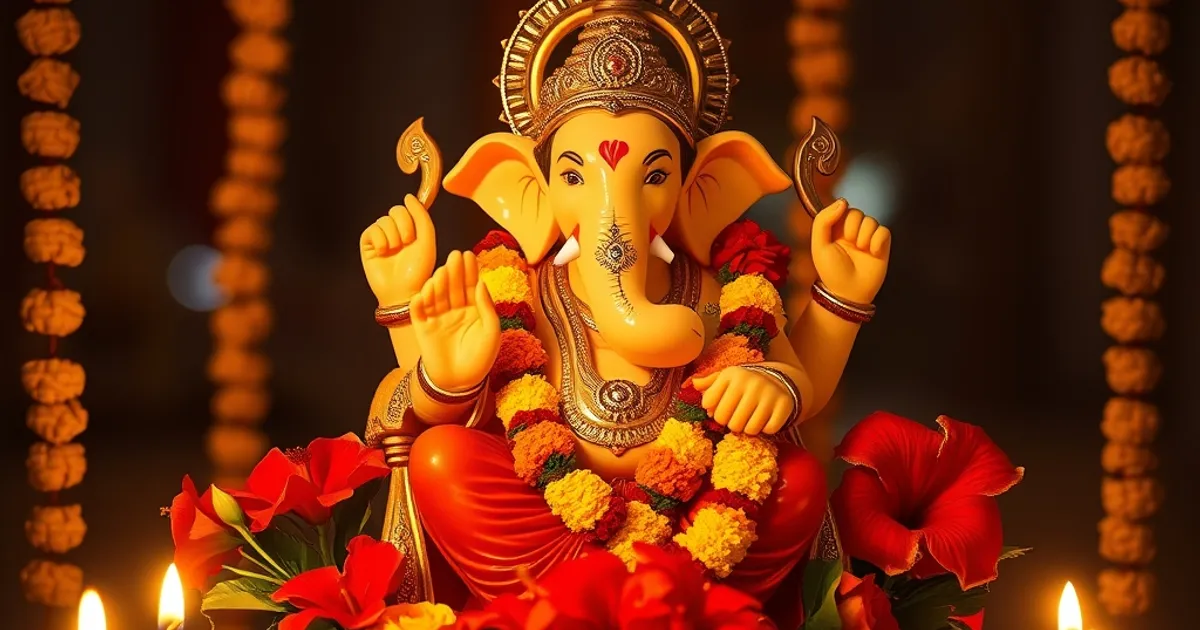
TL;DR 🐘
- Ganesh Chaturthi 2026 falls on September 14, arriving as the devotional peak of a packed late-summer Hindu festival season.
- The weeks before it bring Guru Purnima 2026 (Jul 29), Nag Panchami 2026 (Aug 17), Raksha Bandhan 2026 (Aug 27), and Krishna Janmashtami 2026 (Sep 4) — each its own full observance. 🌙
- High Point's diaspora community marks Ganesh Chaturthi through home puja, community gatherings, and the Visarjan immersion ceremony that closes the festival.
- The canonical offering to Ganesha is modak — steamed dumplings filled with coconut and jaggery — along with durva grass and red hibiscus flowers.
- Source your murti and puja supplies at least a week before September 14; demand spikes sharply in the days just before Chaturthi. 🪷
Ganesh Chaturthi and the Hindu Calendar
Ganesh Chaturthi marks the birthday of Lord Ganesha, the elephant-headed son of Shiva and Parvati. On the Hindu lunisolar calendar it falls on Bhadrapada Shukla Chaturthi — the fourth day of the bright fortnight of the month Bhadrapada, which typically lands in late August or mid-September on the Gregorian calendar. In 2026, Ganesh Chaturthi 2026 is observed on September 14.
The festival carries substantial cultural weight, particularly for communities with roots in Maharashtra, Karnataka, Andhra Pradesh, Telangana, and Tamil Nadu — states where Ganesh Chaturthi is among the year's most significant public celebrations. In Maharashtra, the festival's public dimension was greatly amplified in the late nineteenth century as a vehicle for community gathering, and that civic energy has carried into the diaspora. Across the United States, Ganesh Chaturthi has long since transcended regional boundaries, drawing participation from Hindu families across the full spectrum of regional backgrounds.
For the High Point community — part of the Piedmont Triad metro that stretches from Greensboro to Winston-Salem — the festival represents one of the most attended observances of the South Asian calendar year.
The Festival Season Leading Into Chaturthi
Understanding Ganesh Chaturthi means understanding the weeks surrounding it. The Hindu calendar from late July through mid-September runs dense with observances, each building toward the next.
Guru Purnima 2026 on July 29 opens the late-summer festival arc — the full moon (Purnima) dedicated to honoring teachers across spiritual, academic, and familial lineages. Sankashti Chaturthi on August 2 is itself a monthly Ganesha observance: a sunset-to-moonrise fast dedicated to the deity whose annual birthday arrives six weeks later. Ekadashi (Aug 8) and Pradosh Vrat (Aug 10) follow, before Amavasya on August 12 — the new moon traditionally observed as a day for ancestral remembrance and shraddha rituals.
Nag Panchami 2026 arrives August 17, when serpent deities are honored with milk offerings and prayers. This festival has deep agrarian roots and remains widely observed by diaspora households even where the agricultural context has faded. Another Ekadashi on August 23 and Pradosh Vrat on August 25 precede the full moon of August 27, which this year carries double weight: Purnima coincides with Raksha Bandhan 2026 — the sibling-bond festival in which sisters tie rakhis on brothers' wrists, and brothers pledge their protection in return.
Sankashti Chaturthi on August 31 closes the pre-Chaturthi stretch. Then, just four days later, Krishna Janmashtami 2026 arrives on September 4 — Lord Krishna's birthday, celebrated with overnight fasting, bhajan singing, scriptural reading, and the dramatic enactment of Krishna's birth at midnight. Dahi Handi, the curd-pot-breaking event, typically follows the morning after.
With Krishna's birthday observed, the community has ten days before Ganesha's own arrives. The late-summer season is not a series of disconnected occasions but an accumulating current of devotional energy.
How High Point Celebrates: Home Puja and Community Gatherings
In High Point, as in most mid-sized American metros, Ganesh Chaturthi celebrations happen across two registers: the private home puja and the community event organized by cultural or religious associations active in the Triad area.
Home puja begins with the installation of a Ganesha murti — a clay or plaster idol purchased from an Indian grocery, ordered online, or made by hand. The idol is welcomed through a pranpratishtha (consecration) ceremony and then honored through a sixteen-step shodashopachar puja sequence covering bathing, clothing, flower offerings (especially red hibiscus and blades of durva grass), incense, a lit lamp (deepam), and food. Modak — steamed rice-flour dumplings filled with coconut and jaggery — are the canonical offering associated specifically with Ganesha, and households either prepare them from scratch or source them from a South Asian sweet shop. Coconut, bananas, and betel leaves are also standard offerings.
Community gatherings vary by the size and organization of local diaspora networks. Cultural associations and temple-affiliated groups in the Triad coordinate bhajan sessions, cultural performances, and communal aarti that draw families together across individual household observances. The collective dimension of the festival matters: Ganesh Chaturthi is specifically associated with public celebration, and the community puja or aarti amplifies what might otherwise stay enclosed within individual homes.
The festival runs for 1.5, 3, 5, 7, 10, or 21 days depending on household tradition, culminating in Visarjan — the immersion of the idol in a body of water, symbolizing Ganesha's departure and return to Mount Kailash. For diaspora families without access to a river, eco-friendly immersion in a bucket of water at home is a widely accepted and encouraged practice.
Insider Tip: Plan to purchase your Ganesha murti and puja supplies at least a week before September 14. Sankashti Chaturthi (Aug 31) typically triggers a surge in murti purchases, and South Asian grocery stores in the Greensboro-High Point area tend to sell out of the more popular clay idol sizes quickly. Eco-friendly clay idols dissolve cleanly and are strongly preferred over plaster-of-Paris alternatives, which can be harmful to water bodies.
Frequently Asked Questions
Q: When is Ganesh Chaturthi 2026? Ganesh Chaturthi 2026 is on September 14, 2026.
Q: What is Sankashti Chaturthi, and how does it relate to Ganesh Chaturthi? Sankashti Chaturthi is the monthly Ganesha fast observed on the fourth day of the waning lunar fortnight each month. It is a recurring observance dedicated to the same deity whose annual birthday is Ganesh Chaturthi. The Sankashti on August 31 falls just two weeks before the main festival.
Q: How long does the festival last? By tradition, the full observance runs ten days, ending on Anant Chaturdashi. Many diaspora households mark 1.5, 3, or 5 days. Individual family practice and regional custom determine the duration.
Q: Is Visarjan required at the end of the festival? Visarjan is the traditional conclusion of the observance. For diaspora households, an eco-friendly home immersion — dissolving the clay idol in a bucket or tub of clean water — is a widely accepted alternative to natural water bodies.
Q: Can neighbors and colleagues from outside the Hindu community attend community events? Generally yes. Diaspora community events for Ganesh Chaturthi are typically open and welcoming. Check with local cultural associations in High Point for specific event details.
Bottom Line ✨
Ganesh Chaturthi 2026 on September 14 arrives as the culmination of a six-week festival arc that runs through Guru Purnima 2026, Nag Panchami 2026, Raksha Bandhan 2026, and Krishna Janmashtami 2026. For High Point's diaspora community, the festival calls for both personal puja practice and communal participation. Source eco-friendly murtis early, prepare the shodashopachar puja supplies, and connect with local South Asian cultural associations for community event details. Ganapati Bappa Morya.