
Amit Shah Inaugurates Jamnagar Cooperative Bank HQ as Cyanide Murder Investigation Expands
Union Home Minister Amit Shah visited Jamnagar to inaugurate the new headquarters of the District Central Cooperative Bank, underlining the central government's push to modernize cooperative banking infrastructure across Gujarat. Simultaneously, Jamnagar police moved forward in a cyanide murder investigation that had concealed a homicide inside a two-year-old missing-person complaint, following excavations at an industrial site that recovered human remains buried 15 feet underground.
🗳️ Amit Shah Opens District Cooperative Bank Headquarters
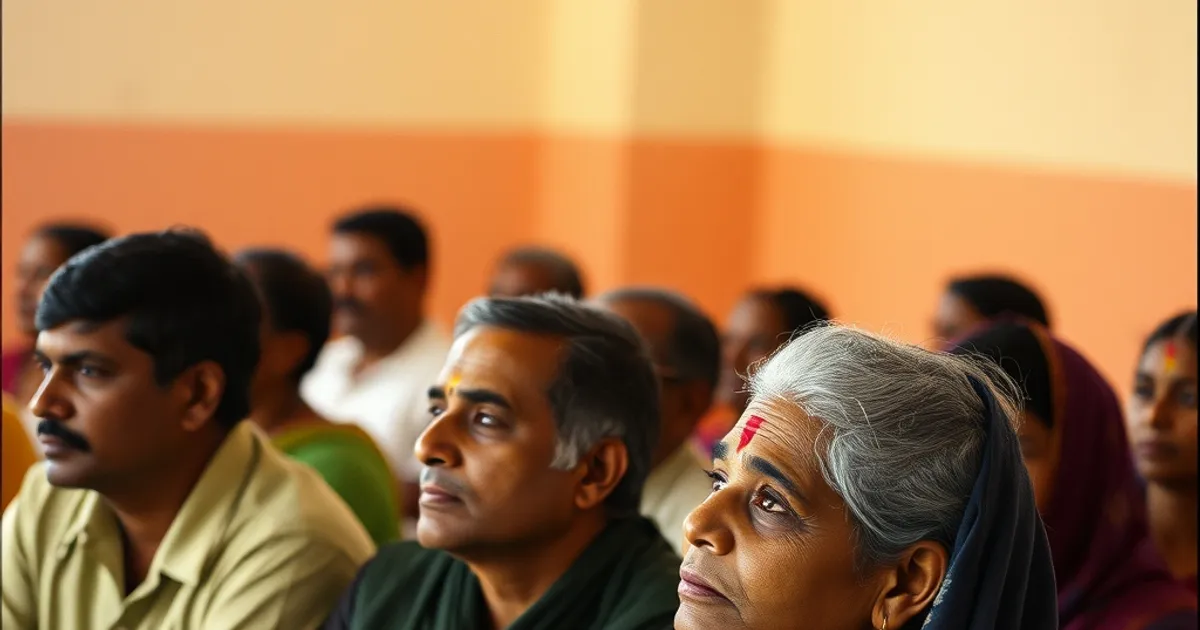
Union Home Minister Amit Shah visited Jamnagar to inaugurate the newly constructed headquarters of the Jamnagar District Central Cooperative Bank, named Sahakar Bhavan. Speaking at the event, Shah underscored the central government's commitment to overhauling cooperative banking infrastructure across Gujarat and the country, highlighting how district cooperative banks serve as the primary institutional credit channel for farmers, artisans, and rural households who lack access to large commercial bank networks. The inauguration is part of a broader push by the Ministry of Cooperation — which Shah heads alongside the Home Ministry — to modernize governance, accelerate digitization, and strengthen the financial health of the country's cooperative banking sector. The new building is designed to accommodate expanded banking services and provide the district cooperative bank with infrastructure suited to delivering technology-enabled financial products to its member base. Shah addressed an audience of cooperative society members, elected representatives, and banking officials, stressing that the government sees cooperatives as a vital instrument of grassroots economic democratization and rural financial inclusion. Jamnagar District Cooperative Bank, which serves a substantial portion of the district's agricultural credit needs in the Saurashtra region, has been working to expand its loan portfolio and improve credit delivery to small and marginal farmers. The inauguration drew significant public attention given Jamnagar's position as a priority district under the national cooperative policy framework and the Home Minister's personal focus on the cooperative sector. [9]
🏢 NHAI Opens 27-Km Deogarh-Gujarat Border Stretch on Amritsar-Jamnagar Corridor
The National Highways Authority of India opened a 27.1-kilometer stretch on the Deogarh-Gujarat border section of the Amritsar-Jamnagar economic corridor, marking a significant milestone in the development of one of the country's most ambitious national highway projects. The newly opened stretch improves road connectivity between the Rajasthan-Gujarat border region and the Saurashtra hinterland, reducing travel time for freight and passenger vehicles moving between Punjab, Rajasthan, and the port-linked industrial zones of Jamnagar. The Amritsar-Jamnagar corridor is envisioned as a transformative road artery connecting the border regions of Punjab with Gujarat's expansive petrochemical complex and port infrastructure — among the country's most significant industrial clusters — enabling faster movement of goods, industrial inputs, and agricultural produce across five states. NHAI officials confirmed that the newly opened stretch meets four-lane national highway standards and is equipped with wayside amenities and emergency communication infrastructure aligned with current safety and service norms. The opening is expected to benefit several districts in Rajasthan and Gujarat by improving logistics access for businesses and reducing transportation costs for farmers marketing produce to wholesale centers in Jamnagar and Rajkot. Authorities indicated that the remaining sections of the corridor are under active construction with phased completion timelines, making the full Amritsar-Jamnagar route a high-priority national infrastructure deliverable with direct implications for Jamnagar's economic connectivity and port-linked freight movement. [3]
Two-Year-Old Missing-Person Case Becomes Cyanide Murder Investigation
A two-year-old missing-person complaint was reclassified as a murder investigation after Jamnagar police uncovered evidence that a man reported missing by his family had been killed and his body disposed of at an industrial site in the Dared area of the city. The case unraveled when investigators, acting on a tip received during a separate inquiry, conducted excavations at the site and recovered human remains buried approximately 15 feet underground. Forensic teams were brought in to confirm the identity of the deceased through DNA and physical evidence, while Jamnagar police registered charges of murder and criminal conspiracy against the accused parties. The investigation revealed that the victim had been poisoned with cyanide — a highly lethal compound obtained through access to industrial sources — before being interred clandestinely at the factory premises. For two years, those responsible had maintained a fabricated account that the victim had traveled abroad for employment, a story accepted by relatives and neighbors who had no reason to suspect foul play. When inconsistencies in this account prompted a closer look, the concealment rapidly unraveled under police scrutiny. The case has drawn wide attention across Gujarat for the extraordinary nature of the deception and the length of time during which investigators had no indication a homicide had occurred. Police have appealed for public cooperation as they pursue additional leads, and the matter has been referred for forensic analysis to confirm the precise cause of death and timeline of events. [6]
🪔 BAPS Swaminarayan Mandir Marks Diwali and Annakut Festival
BAPS Shri Swaminarayan Mandir in Jamnagar hosted Diwali and Annakut celebrations that drew hundreds of devotees to the temple complex on Pramukh Swami Maharaj Marg. The Annakut festival — meaning a mountain of food — is one of the most significant observances in the Swaminarayan tradition, celebrated the day after Diwali as an elaborate offering of vegetarian food preparations placed before the presiding deities. At the Jamnagar mandir, the Annakut featured a vast spread of sweets, savories, grains, and seasonal produce artistically arranged as a devotional offering, a tradition that commemorates the lifting of Mount Govardhan by Lord Krishna as described in the Bhagavata Purana. The festival drew families, satsangis, and visitors from Jamnagar and surrounding areas of Saurashtra, who gathered for arti, kirtan, and the opportunity to receive blessings and participate in the communal celebration. BAPS mandirs across Gujarat organized similar events during the Diwali season, reinforcing the region's deep roots in the Swaminarayan devotional tradition, which has been a central pillar of Jamnagar's social and spiritual fabric for generations. The Jamnagar temple shared an extensive photographic gallery of the celebration with its congregation network, capturing richly decorated deity shrines, the festive illuminations adorning the mandir complex, and the devotional gatherings that marked the two-day observance. The event exemplifies the mandir's role as a community anchor for religious life and civic belonging in Jamnagar. [8]
Govt Auditor and Middleman Caught in Rs 14,000 Bribery Trap
Vigilance officers from the Anti-Corruption Bureau in Jamnagar arrested a government auditor and a middleman after catching them accepting a bribe of Rs 14,000 in connection with the official audit of a private entity. The trap was laid after a complainant approached anti-corruption authorities alleging that an official had demanded payment in exchange for a favorable audit report — a practice that subverts the integrity of government oversight processes that businesses and citizens depend upon. ACB officers set up and monitored a sting operation, verified the transaction, and made the arrests at the point of payment with the bribe amount recovered as evidence. Cases were registered against both the auditor and the middleman under the Prevention of Corruption Act, and preliminary inquiries are underway to determine whether the accused may have engaged in similar transactions involving other auditees during their tenure. The auditor, who worked with a government department responsible for financial oversight of businesses operating under state licenses, was produced before a court and remanded pending further proceedings. Anti-corruption officials stressed that even relatively small-value bribery cases fundamentally undermine public trust in government accounting systems and that the bureau treats such cases with the same seriousness as larger corruption offenses. The Jamnagar ACB has reported an increase in trap operations during the current fiscal year, which officials attribute partly to a growing willingness among citizens to report demands for illegal gratification through the bureau's complaint channels. [1]
Sources: [9] DD India · [3] India Today · [6] GujaratSamachar English · [8] BAPS Swaminarayan Sanstha · [1] The Times of India