
Johannesburg's South Asian Community in Focus: BAPS Mandir Milestones and PM Modi's Diaspora Visit
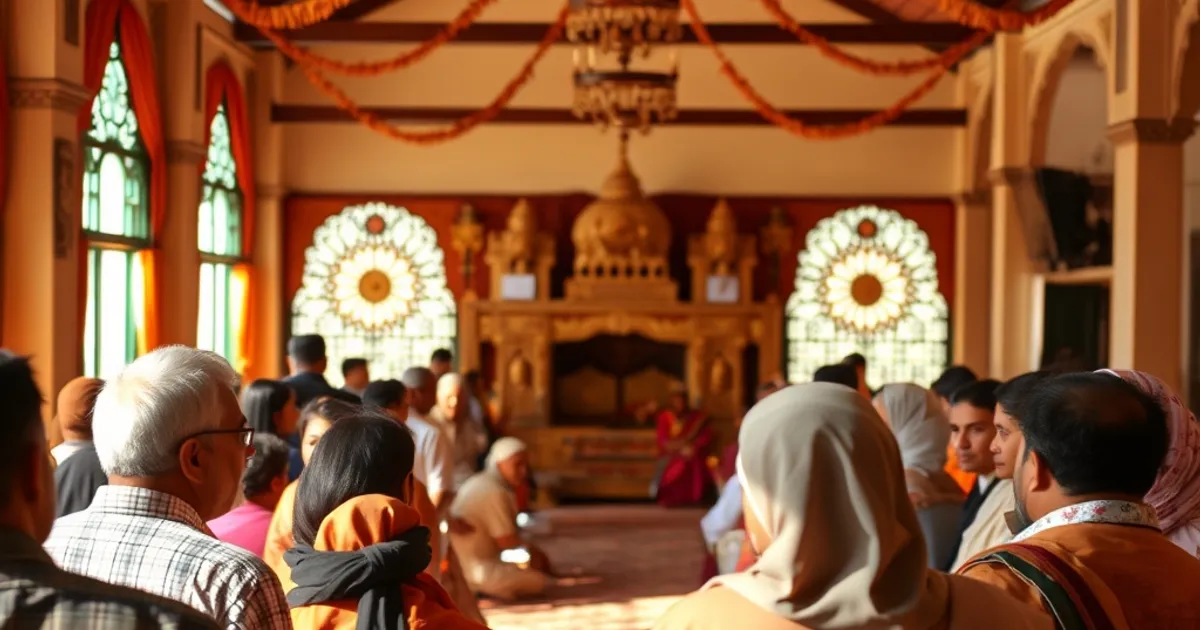
Johannesburg's South Asian community has commanded national and international attention through two landmark developments: the inauguration and ongoing celebrations at the BAPS Swaminarayan Sanstha's expansive Hindu Mandir and Cultural Complex in Northriding — the largest Hindu temple in the entire Southern Hemisphere — and a historic visit by Indian Prime Minister Narendra Modi, who took time during his Johannesburg stay to personally engage with Indian-origin residents, entrepreneurs and community members. Together, these events illuminate the vitality and growing confidence of South Africa's Indian diaspora.
Southern Hemisphere's Largest Hindu Temple Opens Its Doors in Northriding
The BAPS Swaminarayan Sanstha, a global spiritual and humanitarian organisation, has achieved a landmark milestone in Johannesburg with the opening of what has been confirmed as the largest Hindu temple in the Southern Hemisphere. The complex is situated in the Northriding area of Johannesburg, spans over nine acres of land, and features a 27,000 square-foot temple intricately crafted using traditional Indian architectural techniques. Phase one of the temple and broader cultural complex was opened to the public, drawing dignitaries from across multiple sectors of South African society. Present at the opening ceremony was His Holiness Mahant Swami Maharaj, the global spiritual leader of BAPS, alongside senior South African government officials. BAPS spokesperson Hemang Desai outlined the vision behind the project in clear terms, emphasising that the complex is designed to serve communities well beyond those of Hindu faith. "The BAPS Hindu Mandir and Cultural Complex in Johannesburg will be more than a spiritual space," Desai said. "It will be a hub for cultural enrichment, humanitarian service and inter-religious dialogue." Sustainability was built into the construction from the outset: the complex was developed with a deliberate focus on water efficiency, solar readiness and broader environmental conservation practices. Desai also highlighted the complex's role in honouring the long history of the Indian South African community. "It reflects their enduring contributions to South Africa and their confidence in its future as a home for generations to come," he said. In a further marker of the complex's growing stature, the BAPS Johannesburg site has also been the setting for the unveiling of South Africa's tallest bronze statue, an installation reported by Eastern Eye that adds yet another layer of cultural and spiritual significance to this already remarkable landmark for the Indian community in southern Africa. The Diwali and Annakut celebrations held at the site in late 2025 further demonstrated the complex's role as the spiritual and cultural heartbeat of Johannesburg's Hindu population. [6]
PM Modi Meets Indian-Origin Entrepreneurs and Community in Johannesburg
Indian Prime Minister Narendra Modi's visit to Johannesburg proved to be a deeply personal and politically significant moment for the city's Indian diaspora. During the trip, which coincided with the G20 Summit held in South Africa, Modi held a special interaction with Indian-origin technology entrepreneurs and members of the broader Indian community based in the country, calling on them to deepen their engagement with India. The Prime Minister's message signalled a clear strategic priority: keeping the Indian diaspora — estimated to be one of the world's largest and most globally dispersed — actively connected to India's development trajectory, particularly in the technology and innovation sectors in which many South African Indians have built distinguished careers. Modi was reported to have been moved by the reception extended to him, describing himself as "deeply touched" by the warmth of the welcome from community members. The interaction was reported across Indian government media outlets including DD News and News On AIR, reflecting the significance the Indian government placed on the diaspora engagement dimension of the Johannesburg visit. For the Indian community in South Africa — a population whose roots in the country stretch back over a century and a half to the era of indentured labour — the sight of India's head of government taking dedicated time to meet them carried considerable symbolic weight. Diaspora members who attended spoke of the occasion as an affirmation of their continued contributions to South Africa and of the living cultural and economic links that bind generations of South African Indians to the land of their ancestors. [3]
Sources: [6] Hinduism Today · [3] NDTV