
Onam 2026 in Kalyan-Dombivli: Events, Puja & Where to Celebrate
Onam 2026 in Kalyan-Dombivli: Events, Puja & Where to Celebrate
TL;DR
- Onam 2026 is celebrated across Kalyan-Dombivli by a well-established Malayali community alongside Tamil, Kannada, and Maharashtrian neighbours
- All four local temples — Shiv Mandir, Hanuman Mandir, Gaon Devi Mandir, and Datta Mandir — are active through the September festival season 🙏
- September 2026 is the busiest month: Krishna Janmashtami 2026 (Sep 4), Onam, and Ganesh Chaturthi 2026 (Sep 14) fall within days of each other
- Kalyan-Dombivli's twin-city structure means two distinct sets of neighbourhood events and community programmes
- This city's layered South Indian and Maharashtrian identity makes Onam genuinely communal here, not a niche celebration
Kalyan-Dombivli: Twin City, Layered Community
Kalyan-Dombivli is a twin-city in the Mumbai Metropolitan Region, spread across Thane district along the Central Railway line northeast of Mumbai. It is one of the MMR's most densely populated satellite cities — not a bedroom suburb in the usual sense, but a city with its own economic life, markets, educational institutions, and social fabric. What sets it apart from many MMR cities is its specific demographic character: a large, long-established Maharashtrian population sharing space with South Indian communities whose roots in the city go back two and three generations.
Keralite families — many of whom came to work in Mumbai's railways, banking sector, and government offices and settled in Kalyan-Dombivli for its relatively affordable housing — are among the numerically most significant South Indian communities here. Tamil, Kannada, and Telugu families round out the South Indian presence. Together, these communities have built their own ecosystem within the twin city: provision stores stocking tamarind, coconut, curry leaves, and raw plantain; South Indian restaurants and cultural associations; and a festival calendar that runs alongside and intertwined with the Maharashtrian one.
This is what distinguishes Kalyan-Dombivli from Vasai-Virar, another large MMR city with a historically East Indian Catholic character and a different pattern of demographic settlement. Kalyan-Dombivli's South Indian community is older, better-networked, and more institutionally embedded. When Onam comes around, it does not need to be introduced to the city — it is simply the season, understood by the neighbourhood vegetable vendor, the school principal, and the local sweet shop alike.
Onam in Kalyan-Dombivli: The Festival and Its Meaning
Onam is Kerala's harvest festival — a ten-day celebration rooted in the story of King Mahabali, the mythological ruler whose just reign was cut short but who is permitted one annual visit to his beloved people during the Malayalam month of Chingam. Thiruonam, the final and main day, is the apex of the celebration.
In Kalyan-Dombivli, Onam programmes are organised by Kerala Samajam chapters and allied Malayali cultural associations that maintain active membership across both Kalyan and Dombivli. These are multi-day events with several distinct components:
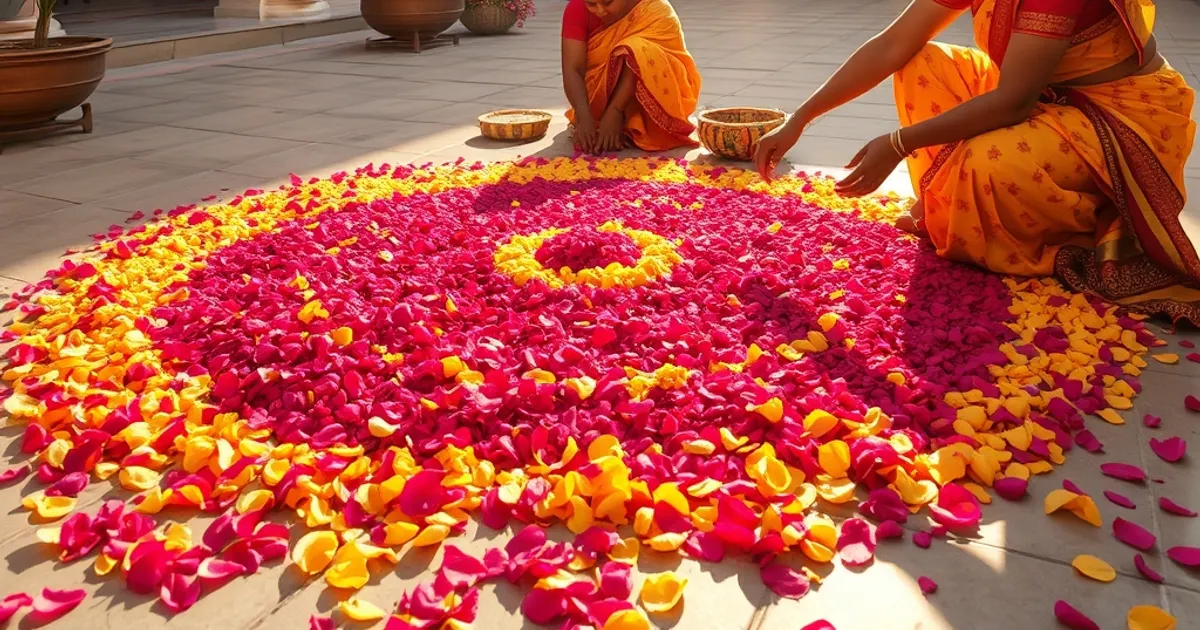
The pookalam — a concentric-ring rangoli made entirely from fresh flower petals — is the most visually distinctive element. Teams from different families and associations compete on size, symmetry, and creativity. In Kalyan-Dombivli, where enough Malayali families live that pookalam culture is genuinely understood, these competitions are taken seriously and attract entries of real craft.
The Onam Sadhya is the culinary centrepiece: 20 to 30 dishes arranged in a prescribed sequence on a fresh banana leaf, eaten without cutlery. Sambar, avial, olan, koottu, thoran, parippu, and multiple payasam varieties are essential. Community kitchens in Kalyan-Dombivli coordinate supply for Kerala ingredients — fresh coconut, raw banana, ash gourd, drumstick, specific rice varieties — sourced from the wholesale markets in Kalyan's main bazaar or through South Indian grocery suppliers in Dombivli's Station Road area.
Cultural programmes run through the festival days: Thiruvathira dance by groups of women, classical and semi-classical performances by children, Onam-themed music, and competitions across age groups. Maharashtrian neighbours attend these programmes as a matter of course — the Onam celebration in Kalyan-Dombivli has long since outgrown the Malayali community itself and become a shared civic event.
September 2026: Janmashtami, Onam, and Ganesh Chaturthi in Quick Succession
The September 2026 festival calendar in Kalyan-Dombivli is strikingly compressed. Raksha Bandhan 2026 opens the sequence on August 28 — Kalyan's main bazaar fills with temporary rakhi stalls weeks in advance, and sweet shops see some of their highest footfall of the year.
Krishna Janmashtami 2026 falls on September 4. In Kalyan-Dombivli, Dahi Handi is the most publicly visible expression of Janmashtami. Each ward has its own govinda pathak — young men who train for weeks and travel between competing pots of yoghurt, forming human pyramids to break them. The Dahi Handi culture here is genuine neighbourhood tradition rather than the large-scale spectacle of central Mumbai. Local govindas are known by name on their streets and cheered on by residents who have watched them practice.
Onam falls in this same window, and Ganesh Chaturthi 2026 on September 14 closes the festival month. Ganesh Chaturthi defines Maharashtra's public life more than any other festival. Across Kalyan-Dombivli, Ganesh mandals — community organisations that spend months preparing — install large Ganapati idols at public pandals. Daily aartis fill the streets with dhol, tashe, and devotional music. The ten-day festival builds to the visarjan procession, when idols are carried to the river with enormous, colourful crowds. For South Indian families in Kalyan-Dombivli, joining the Ganesh Chaturthi 2026 celebrations alongside Maharashtrian neighbours is part of the annual rhythm of city life — many Keralite and Tamil families install their own home Ganesh idols during this period.
Temples of Kalyan-Dombivli
Across both Kalyan and Dombivli, the neighbourhood mandir is an essential social institution. Four local temples anchor the spiritual life of the communities around them:
Shiv Mandir (Shiv Mandir Road): This Shiva temple serves as the focal point for Mahashivratri and the regular Pradosh Vrat observances. Through the month of Shravan — spanning late July and August in 2026 — daily aartis draw a steady neighbourhood crowd of Shiva devotees.
Hanuman Mandir (Rahul Estate Road): Tuesday and Saturday see the Hanuman Mandir at its most active, as these are the days traditionally associated with Hanuman worship. During the August festival season the temple draws heightened attention, with additional worshippers for festival-adjacent observances through this period.
Gaon Devi Mandir (Rahul Estate): A Gaon Devi — literally "village goddess" — temple represents Maharashtra's deep folk religious tradition. These shrines predate the major temple-building periods and are tied to the original settlements and their protective deities. The Gaon Devi Mandir at Rahul Estate anchors the local community's sense of rootedness and place in a way that no pan-Indian temple tradition can replicate. For long-settled Maharashtrian families in the area, the Gaon Devi is not a festival-season destination but a daily spiritual reference point.
Datta Mandir (Datta Mandir, Barave Village): Dedicated to Dattatreya — the divine form combining Brahma, Vishnu, and Mahesh into one triple-headed deity — this temple in Barave Village is part of a strong Datta tradition particular to Maharashtra and Karnataka. The Datta Jayanti festival in winter is the temple's biggest occasion, but a steady flow of devotees visits through the year, including during the September festival season.
Insider Tip: September in Kalyan-Dombivli is festival-dense to an unusual degree. The days between Onam, Krishna Janmashtami 2026, and Ganesh Chaturthi 2026 are very short. Check your local Ganesh mandal's schedule as early as possible — the most impressive pandal reveals and aartis happen in the first two to three days of Chaturthi, well before the peak crowd days around day seven and the final visarjan.
FAQ
When is Onam in 2026 and how is it celebrated in Kalyan-Dombivli? Onam spans ten days with Thiruonam as the main day, falling in late August to early September per the Malayalam calendar. In Kalyan-Dombivli, Kerala Samajam associations organise pookalam competitions, Onam Sadhya, and cultural programmes open to all communities.
When is Ganesh Chaturthi 2026 in Kalyan-Dombivli? Ganesh Chaturthi 2026 is September 14. The festival is observed for ten days with public pandals, daily aartis, and the visarjan procession on the final day.
When is Krishna Janmashtami 2026? Krishna Janmashtami 2026 falls on September 4. Dahi Handi events take place across Kalyan and Dombivli, organised by local govinda pathaks from each ward.
Which temples serve the Kalyan-Dombivli community during the festival season? Shiv Mandir on Shiv Mandir Road, Hanuman Mandir on Rahul Estate Road, Gaon Devi Mandir at Rahul Estate, and Datta Mandir in Barave Village are active local temples through the July-September season.
How is Kalyan-Dombivli different from other MMR cities for Onam? Kalyan-Dombivli has a long-established Malayali community with its own cultural associations, provision stores, and festival infrastructure. Onam here is not a small private gathering — it is a multi-day community event that the broader city participates in, distinct from the newer or smaller South Indian populations in other MMR towns.
Bottom Line
Onam 2026 in Kalyan-Dombivli falls in September's most crowded festival window — between Raksha Bandhan 2026, Krishna Janmashtami 2026, and Ganesh Chaturthi 2026. That compression is no problem for a city this practiced at celebration. The Shiv Mandir, Hanuman Mandir, Gaon Devi Mandir, and Datta Mandir anchor daily spiritual life across the twin city's neighbourhoods, and the Kerala Samajam and allied associations ensure the pookalam, the Sadhya, and the cultural performances are carried out with genuine care and craft. In Kalyan-Dombivli, Onam is not imported — it belongs here, as fully as the dhol of Ganesh Chaturthi 2026 or the midnight vigil of Krishna Janmashtami 2026 that precedes it.