
Raksha Bandhan 2026 in Kalyan-Dombivli: Events, Puja & Where to Celebrate
Raksha Bandhan 2026 in Kalyan-Dombivli: Events, Puja & Where to Celebrate
TL;DR
- 🎀 Raksha Bandhan on August 22, 2026 anchors the month — sisters tie rakhis and families gather at home and at temples across Kalyan-Dombivli
- 🐍 Nag Panchami on August 17 opens the festival fortnight with serpent worship and Shravan-month folk rituals
- 🙏 All four local temples — Gaon Devi Mandir, Datta Mandir, Shiv Mandir, and Hanuman Mandir — are central to community puja life throughout August
- 🌿 Hariyali Teej coincides with Raksha Bandhan on August 22, doubling the festive weight of the day for women across the community
- 🥁 Ganesh Chaturthi on August 27 caps the month in Maharashtra's most spectacular and community-defining style
August in Kalyan-Dombivli: A Month of Unbroken Festival
Kalyan-Dombivli is one of the fastest-growing municipal areas in Thane district, Maharashtra. The twin-city corridor — Kalyan to the east, Dombivli to the west — has expanded substantially over the past two decades as a major residential hub of the Mumbai Metropolitan Region. Families who moved from Mumbai's island city and inner suburbs have made this area their own, and despite rapid urbanization, the community retains a strong Maharashtrian Hindu cultural identity.
Nowhere is this more evident than in August, when the festival calendar accelerates into one of the most concentrated sequences of Hindu observances in the year. August 2026 in Kalyan-Dombivli is not one event; it is a sequence of observances that build upon each other, each carrying its own rituals, temple visits, family customs, and neighborhood energy. Understanding the full arc of the month helps both residents and visitors engage with community life at its richest.
The Shravan month — within which most of August 2026 falls — is itself a period of elevated devotion in Maharashtra. Monday fasts dedicated to Shiva, weekly temple visits, and dietary observances give the entire month a sacred character before individual festivals even arrive.
Nag Panchami: Opening the Festival Fortnight
Nag Panchami on August 17 begins the most concentrated stretch of the August calendar. This day of serpent worship has deep roots in Maharashtra, where agricultural communities have long honored the nag as a protector of fields and households — a tradition that predates formal temple culture and lives in the lived practices of neighborhoods and family courtyards.
At the Shiv Mandir on Shiv Mandir Road, Nag Panchami sees special pujas conducted alongside the regular Shiva worship. Shiva's association with the serpent Vasuki makes this connection theologically natural, and devotees bring offerings of milk and flowers throughout the day. The temple premises see elevated footfall from morning onwards, with families arriving after completing their own Nag Panchami rituals at home.
Neighborhood celebrations of Nag Panchami in Kalyan-Dombivli include chalk and rangoli depictions of serpents at doorways, swings set up in courtyards as part of the broader Shravan tradition, and the preparation of traditional sweets made without the use of fire — a custom observed by many households on this day as a mark of respect for the serpent deity.
Raksha Bandhan and Hariyali Teej: August 22
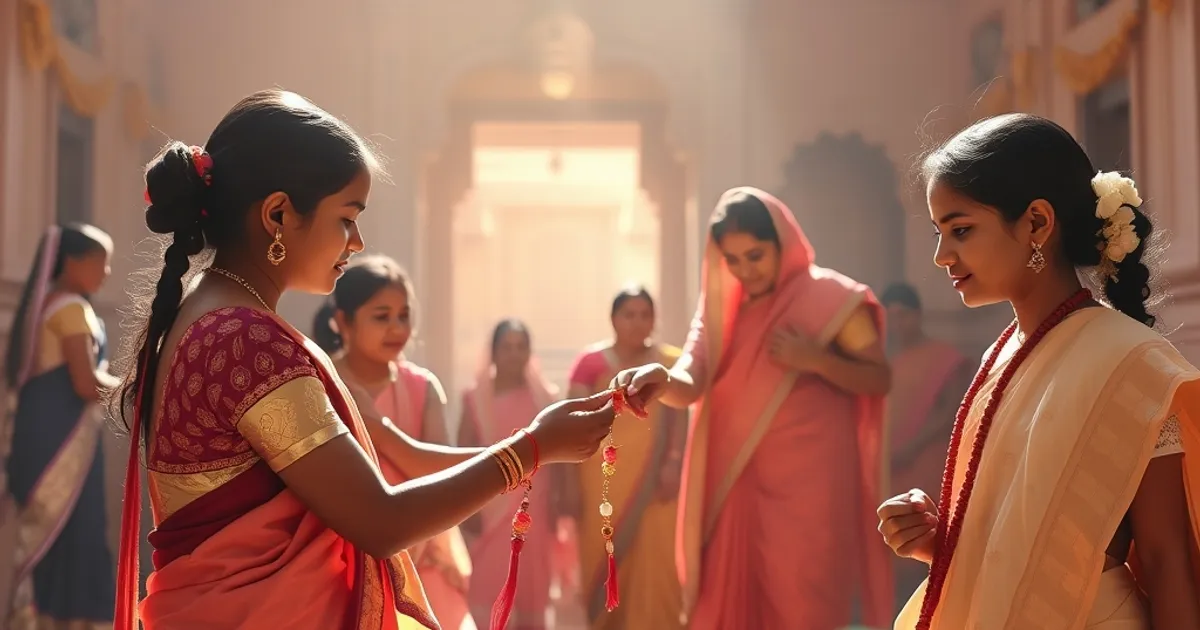
The 22nd of August 2026 carries two significant observances simultaneously. Raksha Bandhan is the more widely recognized: sisters tie rakhis — ornamental threads symbolizing protection and familial love — on their brothers' wrists, brothers offer gifts and a renewed promise of care, and families gather for meals that anchor the celebration in the warmth of domestic life.
In Kalyan-Dombivli, the morning of Raksha Bandhan typically begins with a family puja before the rakhi-tying ceremony. Many families visit a local temple first, completing a brief worship before the sibling ritual at home. The Hanuman Mandir on Rahul Estate Road is one of the neighborhood temples where early-morning footfall is especially notable on Raksha Bandhan — devotees seek blessings for family bonds being reaffirmed through the day's ceremony, and the mandir's accessible location within the Rahul Estate area makes it a natural first stop.
Hariyali Teej, also falling on August 22, is celebrated primarily by women as a festival of the monsoon season, with fasting, green-colored clothing and accessories, swings in courtyards, and prayers for marital happiness and the well-being of the family. The combination of Hariyali Teej and Raksha Bandhan on the same day gives August 22 a layered quality — it is simultaneously a day honoring sibling bonds and a day celebrating the monsoon and womanhood.
Markets in Kalyan and Dombivli's commercial areas see a surge in rakhi sales, fresh mithai, and green bangles in the days leading up to August 22. The temporary stalls that spring up near railway stations and main market roads from about August 15 onwards are among the most reliable signs that the festival is approaching. Arriving at the mithai shops early on August 22 morning — some open by 6 AM for festival days — ensures the best selection for the day's celebrations.
Insider Tip: The stretch of market road near Dombivli east station has a concentration of mithai shops that open early on Raksha Bandhan morning. Go before 8 AM for the freshest pedas and ladoos — they sell out quickly as families pick up sweets before heading to temple and then home for the rakhi ceremony.
The Four Temples of Kalyan-Dombivli
Four temples form the backbone of puja life for the community throughout August, each with its own devotional character and neighborhood role.
Gaon Devi Mandir at Rahul Estate is a goddess temple with deep roots in the area's village-period history. Gaon Devi — the village deity, a protective maternal figure associated with the welfare of the settlement — is the kind of deity whose worship predates formal religious organization and lives in the collective memory of the community. Her mandir at Rahul Estate remains a focal point for observances across the full August festival sequence, with devotees visiting before and after major festivals throughout the month.
Datta Mandir in Barave Village is dedicated to Dattatreya, the deity who represents the synthesis of the Hindu Trimurti — Brahma, Vishnu, and Shiva combined in one form. The Datta tradition is particularly strong in Maharashtra, where the deity is venerated as the ultimate guru and embodiment of spiritual teaching. The mandir in Barave Village serves a devoted community of regular worshippers, and during the Shravan month its programming reflects the intensity of the season, with regular evening aartis that draw both young and older devotees from the surrounding neighborhood.
Shiv Mandir on Shiv Mandir Road is one of the most active temples across the August festival sequence. Given Shiva's centrality in Shravan month observances, Monday fasts and weekly abhisheks — the ritual bathing of the Shiva lingam with milk, water, honey, and curd — draw consistent and devoted attendance throughout the month. For both the Nag Panchami observance and the wider Monday rituals of Shravan, this mandir functions as a primary site of community devotion.
Hanuman Mandir on Rahul Estate Road rounds out the local temple landscape. Hanuman devotion is a daily practice for many households in Kalyan-Dombivli, and the Tuesday and Saturday pujas at this mandir attract consistent attendance across age groups. During Raksha Bandhan, the mandir's early-morning puja provides families a meaningful starting point for the day's celebrations, and the proximity to Gaon Devi Mandir within the Rahul Estate area means both can be visited on the same morning.
Janmashtami and Ganesh Chaturthi: The Month's Final Arc
After Raksha Bandhan, the festival calendar pauses only briefly before Janmashtami on August 24 — the celebration of Krishna's birth. Midnight celebrations, Dahi Handi events (where community groups form human pyramids to break a pot of curd suspended high above the street), and temple programs mark the day across Kalyan-Dombivli. The Dahi Handi tradition has a particularly enthusiastic following in the Mumbai Metropolitan Region, and local mandals in the twin cities organize their own competitions.
Then, on August 27, Ganesh Chaturthi arrives — and in Maharashtra, this festival supersedes all others in scale and community mobilization. The installation of Ganesh idols in homes and community pandals, the puja cycle ranging from one and a half days to ten days, the processions, and the final visarjan (immersion) constitute one of the largest public religious events in the country. In Kalyan-Dombivli, community mandal installations are prepared weeks in advance. Large pandals draw tens of thousands of visitors over the festival's duration, and the streets around major installations see both devotional and festive energy at full volume.
FAQ
When should I visit Kalyan-Dombivli to experience Raksha Bandhan? The evening of August 21 and the morning of August 22 are the peak window. Markets are active the evening before, and temple visits on the morning of Raksha Bandhan are the most vibrant time to be in the neighborhood areas.
Are all four temples open on major August festival days? Gaon Devi Mandir, Datta Mandir, Shiv Mandir, and Hanuman Mandir all observe extended hours during major festival days. Early morning arrival is advisable during Raksha Bandhan, Nag Panchami, and Ganesh Chaturthi.
How does Ganesh Chaturthi change movement around the city? Starting August 27, portions of residential streets become pedestrian-priority zones near major pandals. Traffic routing changes significantly in central Kalyan and Dombivli areas, and public transport gets crowded. Plan extra travel time for any journey through the city during the festival.
Is Kalyan-Dombivli accessible from Mumbai for visitors? Yes. The Central Railway line connects both Kalyan and Dombivli stations directly to Chhatrapati Shivaji Maharaj Terminus in Mumbai with frequent services. Journey times vary by train type but are generally under 90 minutes from the city center.
Bottom Line
August 2026 in Kalyan-Dombivli is a month-long festival arc with Raksha Bandhan on August 22 at its center and Ganesh Chaturthi on August 27 as its spectacular close. The community's four key temples — Gaon Devi Mandir, Datta Mandir, Shiv Mandir, and Hanuman Mandir — are the essential nodes in this ritual geography, each serving its neighborhood and its devotional tradition through a demanding and joyful season. Add Nag Panchami, Hariyali Teej, and Janmashtami, and what emerges is one of the most festival-dense months in Maharashtrian Hindu life — experienced at close quarters in one of the Mumbai Metropolitan Region's most community-rooted twin cities.