
Governance Under the Spotlight: Health Scandals, Civic Crackdowns and Political Tensions in Karachi
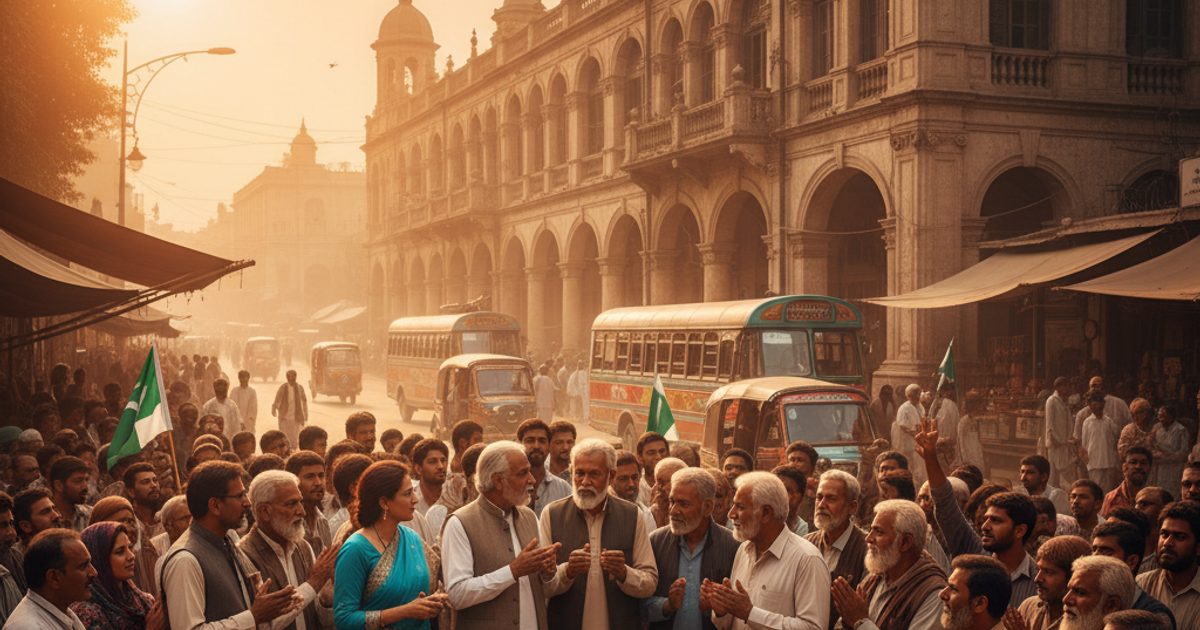
Karachi's residents are watching closely as city and provincial authorities respond to a series of pressing governance challenges — a shocking health crisis at a public hospital, a renewed push to reclaim public spaces, and a charged political debate over who truly serves the city's interests.
🏥 78 Children Test HIV-Positive at Valika Hospital
A Sindh provincial minister has officially confirmed that 78 children were infected with HIV at Karachi's Valika Hospital, bringing the crisis into the public domain through an official statement. The disclosure has alarmed residents and health advocates, shining a harsh light on medical safety standards at the facility. Authorities are under pressure to explain how such a widespread infection could occur within a hospital setting. The confirmation by a senior minister signals that the government is acknowledging the scale of the problem, though questions remain about accountability and next steps for the affected families. [4]
🚧 Commissioner Orders Sweeping Anti-Encroachment Operations
Karachi's Commissioner Syed Hassan Naqvi directed all deputy commissioners to maintain and intensify anti-encroachment operations across the city, with a focus on clearing roadside eateries from footpaths, demolishing illegal markets and recovering unauthorised parking areas. During a Sunday meeting, he underscored the need to keep roads and footpaths free of obstruction and called for strict legal action against violators. In the Site subdivision, an operation on Mauripur Road resulted in the complete demolition of an illegal timber market that had been operating beneath a bridge. Authorities also took action against LPG retailers in Bin Qasim over alleged overpricing of cylinders. [9]
🗣️ Sharjeel Pushes Back on Political Pressure Over Karachi Development
A senior official named Sharjeel publicly declared that Karachi's development cannot be achieved through political blackmailing, signalling frustration with what he characterised as politically motivated pressure tactics. His remarks reflect ongoing tensions over how development resources are allocated and managed in Pakistan's largest city. The statement was made in the context of broader debates about Karachi's urban needs and the political dynamics that often complicate progress. Sharjeel's comments were interpreted as a direct response to opposition manoeuvres seeking leverage over civic projects. [6]
🪪 New NADRA Mega Centre Inaugurated to Serve Karachi Residents
Sindh Governor Syed Nihal Hashmi formally inaugurated a new NADRA Mega Centre in Karachi, expanding the city's capacity to provide identity documentation services to its millions of residents. The inauguration represents a concrete step toward improving civic service delivery in a metropolis long challenged by bureaucratic backlogs. A dedicated mega centre is expected to reduce wait times and ease pressure on existing NADRA facilities across the city. The event was attended by officials and signals a commitment to upgrading the infrastructure through which citizens access essential government services. [5]
🔍 Analysis: Why Jamaat-ul-Ahrar Chose Karachi as a Target
An analytical piece published this week examines the motivations behind Jamaat-ul-Ahrar's decision to strike Karachi, exploring the strategic and ideological factors that made Pakistan's largest city a target for the militant group. The article investigates the broader context of militant activity in urban Pakistan and the specific vulnerabilities that Karachi presents as a densely populated commercial hub. It raises questions about security preparedness and the roots of extremist grievances that manifest in violence directed at the city. The piece contributes to a growing conversation about how Karachi can better protect itself from such threats. [7]
Sources: [4] Dawn · [9] Pakistan Today · [6] The Nation (Pakistan ) · [5] The Nation (Pakistan ) · [7] Arab News PK