
Karachi Confronts HIV Crisis and Oral Cancer Surge While Civic Leaders Advance Development
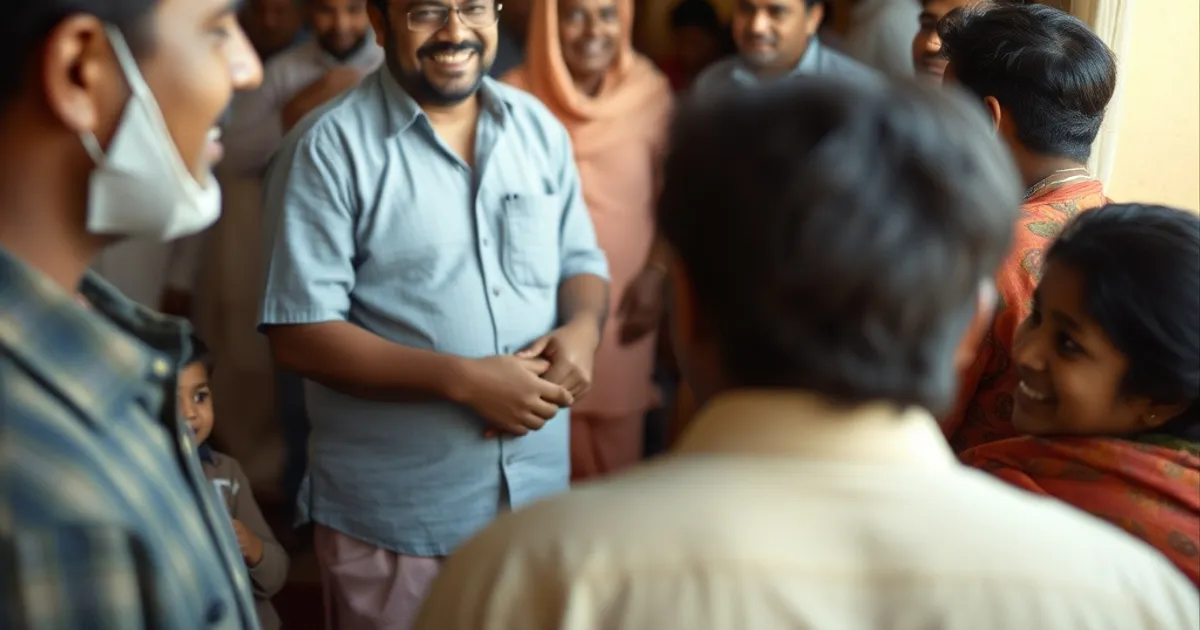
Karachi and the broader Sindh province are confronting overlapping health emergencies this week: an expanding child HIV outbreak traced to Valika Hospital and a sharp provincial rise in oral cancer linked to widespread gutka and tobacco use. Meanwhile, Mayor Murtaza Wahab and Chief Minister Syed Murad Ali Shah pressed ahead on multiple civic fronts, inaugurating a new emergency services base, reviewing a provincial solar energy scheme, and hosting The Dawood Foundation to plan science and heritage initiatives for Pakistan's largest city.
🤝 Sindh's Child HIV Outbreak Exposes Systemic Healthcare Failures
The child HIV outbreak in Sindh has entered a new chapter, with the latest cluster linked to Valika Hospital in Karachi. Al Jazeera framed the crisis within a well-documented pattern of systemic failures, noting that Sindh has experienced repeated localized outbreaks in recent years — most notably the Ratodero cluster of 2019, in which hundreds of children were infected through contaminated needles and tainted blood products. Experts cited by Al Jazeera emphasized that the virus has spread from high-risk populations into the general community, including young children, because of inadequate enforcement of infection control standards and poor regulation of informal and semi-formal healthcare providers. Dawn separately reported that screening around the Valika Hospital vicinity has already identified 120 HIV-positive individuals in the surrounding neighborhood, indicating the outbreak has extended into the local community. Officials have linked the transmission chain to needle reuse and unscreened blood transfusions. Public health advocates are pressing the Sindh government to move beyond reactive screening campaigns and toward structural reform: tighter licensing of healthcare facilities, mandatory blood safety protocols, and dedicated treatment pathways for newly infected patients and their families. With each successive cluster, the same institutional shortcomings resurface, and analysts warn that only sustained systemic intervention — not another emergency response — can reliably prevent the next outbreak. [1]
Oral Cancer Surge Overwhelms Sindh's Strained Health System
A parallel public health crisis is taking shape across Sindh, where oral cancer cases have risen by roughly 25 percent over the past five years, driven by the pervasive use of gutka, mawa, paan, chhalia, and tobacco products. The Express Tribune reported that young men between 20 and 30 now constitute a growing share of patients, while oncologists are also noting an increase in female cases. Registry data underscores the scale of the problem: the Karachi Cancer Registry counted 65,886 oral cancer cases in Sindh from 2017 to 2021, and the Dow Cancer Registry documented 22,858 oral and lip cancer cases from 2010 to 2019. Areas including Ibrahim Hyderi, Malir, Korangi, Landhi, New Karachi, Orangi, Keamari, and Lyari carry the heaviest case loads, reflecting the geographic concentration of gutka consumption in densely populated working-class neighborhoods. The absence of a dedicated provincial cancer hospital has left the treatment system critically strained. Radiation therapy is available only through Pakistan Atomic Energy Commission facilities in Karachi, and existing capacity cannot meet current demand. Between 35 and 40 percent of patients from Karachi, Thatta, and Sujawal arrive at hospital in advanced disease stages, sharply reducing survival prospects. The human toll was illustrated by a 22-year-old from Ibrahim Hyderi who died after years of gutka and mawa use; his father issued a public appeal urging young people to abandon these products before it is too late. [2]
🗳️ Mayor and Chief Minister Drive Karachi's Governance Agenda
Karachi Mayor Murtaza Wahab this week acknowledged a persistent gap between the Sindh government's development output and public awareness of it, as reported by The Nation. Speaking at an event, the Mayor said the government's work is not being promoted effectively — an admission that underscores ongoing political pressure over urban service delivery in a megacity of more than 15 million residents. Separately, Chief Minister Syed Murad Ali Shah chaired a progress review of the Solar Home System Project at the CM House, as covered by Energy Update. The initiative is designed to extend residential solar electricity access across Sindh, forming part of the provincial government's strategy to address Pakistan's chronic power shortfall through decentralized renewable energy adoption at the household level. The Associated Press of Pakistan reported that Mayor Wahab also inaugurated a new Emergency Operational Base for the Sindh Institute of Emergency Health Services, operating under the SIEHS-1122 designation. The new base is intended to upgrade Karachi's ambulance dispatch coordination and trauma response capacity, bringing the city's emergency medical infrastructure closer to the demands placed on a modern megacity. Taken together, these civic developments — energy access, emergency services expansion, and communications strategy — reflect an administration attempting to demonstrate tangible governance progress across multiple service domains, even as the city simultaneously confronts serious public health emergencies. [4]
🎓 Dawood Foundation and Engro Partner with Sindh CM on Science and Heritage
A delegation from The Dawood Foundation (TDF), led by Vice Chair Sabrina Dawood alongside Engro CEO Ahsan Zafar Syed, met with Chief Minister Syed Murad Ali Shah to advance plans for strengthening Karachi's science education, heritage conservation, and public learning infrastructure. Biz Today reported that the discussions focused on collaborative frameworks through which TDF and Engro could support provincial initiatives in these sectors. The Dawood Foundation holds one of Pakistan's longest and most distinguished philanthropic records, with sustained contributions to health, education, and community institution-building across the country. Engro, one of Pakistan's largest and most diversified conglomerates, brings substantial corporate resources into the partnership. While specific projects arising from the meeting were not fully detailed in available reporting, the initiative signals a public-private model in which major private actors supplement government capacity to fund intellectual and cultural infrastructure in Karachi. Such partnerships have historically been critical in sustaining the city's libraries, museums, science centers, and academic institutions during periods of constrained public spending. The focus on heritage also reflects broader civic conversations about preserving Karachi's architectural and cultural identity amid rapid urban change. If formalized, the collaboration could produce meaningful institutional development at a moment when the city is simultaneously navigating public health crises and ambitious governance priorities. [5]
Sources: [1] Al Jazeera · [2] The Express Tribune · [4] The Nation (Pakistan ) · [5] Biz Today