
Janmashtami 2026 in Kathmandu: Events, Puja & Where to Celebrate
TL;DR
- 🪔 Krishna Janmashtami 2026 falls on September 4 — the night that brings Kathmandu's temples to life
- 🏛️ Changu Narayan Temple, Budhanilkantha, and Bhairabnath Temple are among the key pilgrimage sites
- 🌙 The celebration centers on the midnight birth hour of Lord Krishna, with fasting and all-night devotion
- 🎶 Temples and neighborhoods fill with bhajans, kirtan, and dramatic renderings of Krishna's life story
- 🌸 Guru Purnima 2026 on July 29 and Raksha Bandhan 2026 on August 28 warm up the season before the main event
Janmashtami in the Valley: A Festival That Fills the City
In Kathmandu, Krishna Janmashtami 2026 is not simply an event you attend — it is something that unfolds around you and through the city itself. The festival marking Lord Krishna's birth falls on September 4 this year, and preparation begins weeks in advance as temples organize their programs, neighborhoods decorate, and families plan their fasts and midnight pujas.
Kathmandu sits within a valley that has been a center of Hindu and Buddhist devotion for well over a thousand years. When Janmashtami arrives, the ancient temples become the focal points of an observance that combines deep religious practice with festive gathering. The city's rhythm genuinely shifts on the night of September 4, and for anyone in Kathmandu that week, the experience is unlike anything available outside the valley.
The Temples at the Heart of the Celebration
Janmashtami is a Vaishnavite festival — Krishna is the eighth avatar of Vishnu — and Kathmandu's Vishnu-tradition temples are the natural gathering places.
Changu Narayan Temple, one of the oldest Vishnu temples in the Kathmandu Valley and a UNESCO World Heritage Site, holds a particularly significant place in the Janmashtami calendar. Its stone carvings depicting Vishnu in multiple forms create a fitting backdrop for the birth of his most beloved avatar. The temple sits on a hilltop in Bhaktapur district and draws worshippers from across the valley on auspicious Vaishnava dates.
Budhanilkantha — also referred to as Budhanilkantha Temple — is the site of a large reclining Vishnu image set within a stone water tank. The figure of the sleeping Vishnu is one of the valley's most powerful religious icons, and Janmashtami brings an added intensity to the prayers offered there. Devotees travel from across Kathmandu to stand before this image on the festival night.
Bhairabnath Temple in Taumadhi Square in Bhaktapur is another major temple active throughout the late-summer festival season. While Bhairavnath is associated with the fierce form of Shiva, the historic squares of the Kathmandu Valley function as integrated religious landscapes, and all their temples are active during major festivals.
Bhimsen Temple in the old city area holds its own importance for community worship. For those who prefer pilgrimage sites away from the densest city-center crowds, Ichangu Narayan in the western part of the valley and the Karya Binayak Temple complex provide quieter alternatives with full programs.
💡 Insider Tip: The Janmashtami crowds at central temples peak around midnight on September 4, when the birth hour of Krishna is observed. If you want to experience the midnight aarti without the largest press of people, Ichangu Narayan tends to be quieter than the main-square temples while still holding a complete program with aarti and prasad distribution.
The Fast and the Midnight Hour
The central practice of Janmashtami is the Krishnashtami fast, observed from sunrise on September 4 through the midnight birth of Krishna. Devotees abstain from grains and often from water as well. The fast breaks with a puja performed at midnight — the moment astronomers calculate as Krishna's birth — with offerings of butter, milk, and sweets. The infant Krishna image is bathed, dressed, and garlanded as the household clock moves toward that hour.
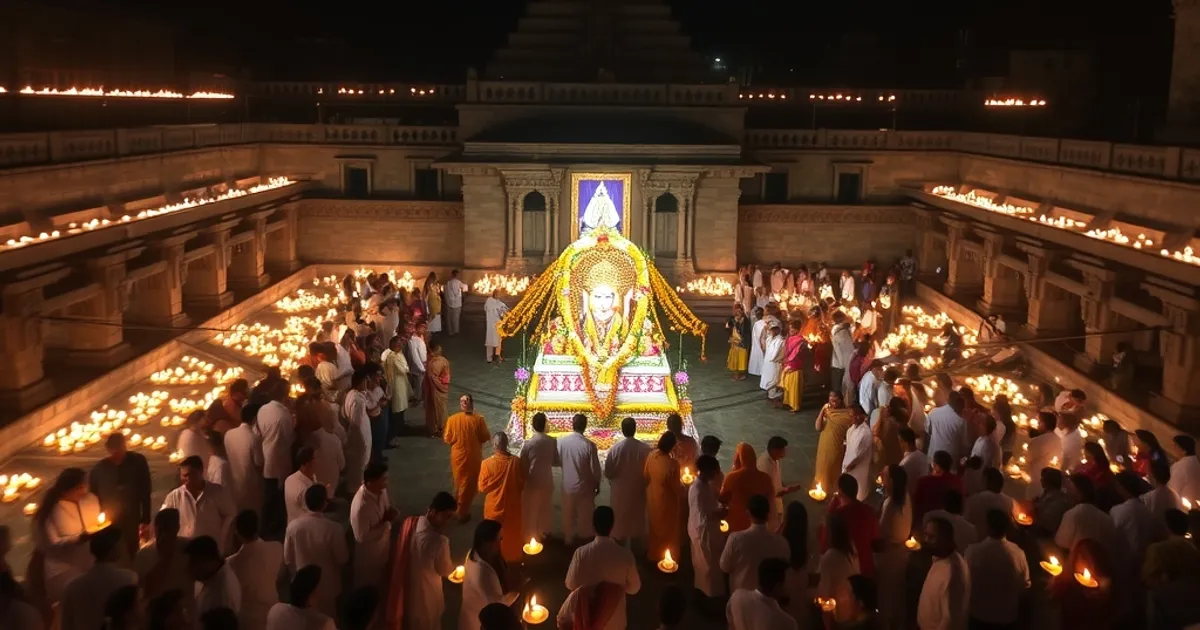
The midnight moment is the emotional and spiritual climax of the festival. Even families who do not make it to a temple typically gather at home around a small puja setup. In Kathmandu's neighborhoods, you can hear the conch shells and bells from surrounding households sounding at midnight as each family marks the birth.
The Season Around Janmashtami
The weeks before September 4 carry their own significance and gradually build the devotional momentum.
Guru Purnima 2026 falls on July 29 — the full-moon day dedicated to teachers and spiritual lineages. This is when disciples honor their gurus, and in Kathmandu's many teaching traditions across both Hindu and Buddhist practice, the day is a meaningful gathering point.
Raksha Bandhan 2026 arrives on August 28. In the Kathmandu Valley, Raksha Bandhan coincides with Janai Purnima — the ceremony in which Hindu men of the twice-born castes change their sacred thread (janai). The two observances together make August 28 one of the most layered festival days of the late summer.
August also brings notable gatherings to the city. The International Conference on Culture, Narrative, and Globalization takes place on August 8 at Vivanta Kathmandu, drawing scholars engaged with precisely the kind of questions that surround living traditions like Janmashtami in a changing world. The India International Optical & Ophthalmology Expo on August 22 at Bhrikutimandap Exhibition Hall is one of several international professional events that demonstrate the city's role as a regional hub alongside its ancient religious identity.
What to Expect at the Temples on September 4
For those attending puja at one of Kathmandu's major temples on Janmashtami, some practical notes apply. Temples during major festivals distribute prasad themselves — you do not need to bring offerings. Traditional dress is appreciated and common but not required. Footwear is removed at the temple entrance; slip-on shoes help in crowds.
The day itself — September 4 — is a public holiday in Nepal, so government offices and many businesses will be closed. Plan banking and other services accordingly.
Bhajans and kirtan typically begin in the afternoon and continue through the night. If you have children with you, the early evening programs at most temples are more accessible than the post-midnight hour. Many families attend the dusk aarti, return home to perform their own midnight puja, and then sleep — honoring the festival fully without requiring a full night out.
FAQ
Q: What is the significance of the midnight timing on Janmashtami? A: According to Hindu scripture, Lord Krishna was born at midnight — Nishita Kaal — on the eighth day (ashtami) of the dark fortnight of the Bhadra month. The midnight puja recreates that moment by bathing and dressing an infant Krishna image at the precise hour, which is considered the most potent act of the entire observance.
Q: Can non-Hindus attend Janmashtami at Kathmandu's temples? A: Most of Kathmandu's major temples welcome visitors of all backgrounds during festivals. Some inner sanctums restrict entry to Hindus, but the outer courtyards and the general festive atmosphere are broadly open.
Q: Is Janmashtami a public holiday in Nepal? A: Yes. Krishna Janmashtami is a public holiday in Nepal, so September 4, 2026 will see government offices and many businesses closed. Plan ahead for any services or transactions you need that week.
Bottom Line
For anyone in Kathmandu, Krishna Janmashtami 2026 on September 4 is the single most immersive festival the city offers in the late-summer calendar. The temples — Changu Narayan Temple, Budhanilkantha, Bhairabnath Temple, and the quieter Karya Binayak Temple complex among them — become living centers of devotion from dusk through midnight. The season that leads here, from Guru Purnima 2026 in July through Raksha Bandhan 2026 in late August, carries its own weight. Arrive at September 4 with the fast already begun and the family puja space set, and let Kathmandu's long, lamp-lit Janmashtami night do the rest.