
Janmashtami 2026 in Kent: Events, Puja & Where to Celebrate
Janmashtami 2026 in Kent: Events, Puja & Where to Celebrate
TL;DR
- 🎊 Janmashtami 2026 falls on August 29 — the emotional peak of the Hindu summer festival season
- Kent's Desi community spans towns from Gravesend to Canterbury, with temples and community centres organizing celebrations across the county
- 🌕 Guru Purnima 2026 on July 29 begins a six-week panchang run that culminates with Janmashtami
- The midnight puja is the defining moment — Krishna is celebrated as born at midnight
- Raksha Bandhan 2026 on August 19 and Nag Panchami 2026 on August 17 fall in the fortnight before, making August a continuous festive stretch
Janmashtami and Kent's Growing Desi Community
Kent, the southeastern county stretching from the Thames Estuary to the English Channel, has seen consistent growth in its South Asian Desi population over the past two decades. Towns including Gravesend, Dartford, Sittingbourne, and the areas surrounding Maidstone and Canterbury host Hindu temples and community centres serving families with roots across the subcontinent. For this community, Janmashtami 2026 on August 29 is one of the most significant celebrations of the year.
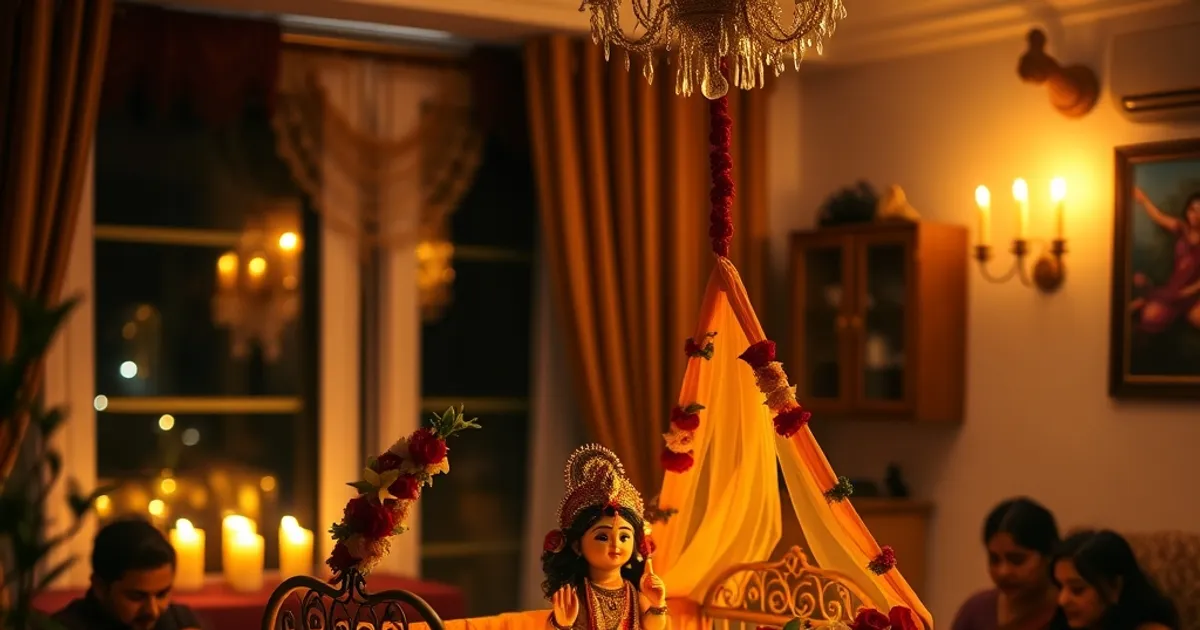
Janmashtami marks the birth of Lord Krishna, celebrated as the eighth avatar of Vishnu and one of the most universally loved figures in Hindu tradition. The festival is both devotional and exuberant — midnight vigils, bhajan marathons, elaborate decorations of a baby Krishna's cradle (jhula), distribution of makhan and mishri, and in some communities the Dahi Handi tradition where a clay pot of curd is broken by a human pyramid. In Kent, the celebrations blend traditional practices with the UK's multicultural festival culture, making them accessible for second and third generation families who want both authenticity and community connection.
The Panchang Road Map: From Guru Purnima 2026 to Janmashtami 2026
For the Desi community in Kent, the lead-up to Janmashtami 2026 is itself a full calendar of observances. The panchang from late July through August 29 contains more than eight significant dates, each with its own practice and meaning.
Ekadashi on July 24 begins the sequence. The eleventh lunar day is observed through fasting and is especially important in Vaishnava traditions — which, given that Janmashtami honors Krishna as an avatar of Vishnu, makes Ekadashi a natural seasonal opener. Hindu temples in Kent typically hold morning puja on Ekadashi, and these mornings are a good entry point for community members new to the local temple circuit.
Pradosh Vrat falls on July 26 — the bi-monthly Shiva fast observed at dusk on the thirteenth lunar day. Many Kent Desi households observe both Vaishnava and Shaivite practices, which is common in families from Maharashtra, Gujarat, and Uttar Pradesh.
July 29 brings Guru Purnima 2026, coinciding with Purnima, the full moon. Guru Purnima 2026 is widely observed across Hindu, Buddhist, and Jain traditions as the day to honor teachers and gurus. Kent's Hindu organizations, yoga centers, and devotional communities treat this as a major gathering day. The full moon of Purnima amplifies the sense of collective spiritual occasion.
Sankashti Chaturthi on August 2 is the monthly Ganesha observance, kept by fasting until moonrise. Ekadashi returns on August 8. Amavasya falls on August 12 — the new moon day observed for ancestor remembrance through the tarpan ritual. A quieter observance, but one with deep household significance. The pace picks up with Nag Panchami 2026 on August 17, honoring serpent deities with milk offerings and puja. Raksha Bandhan 2026 arrives on August 19 — a major festival in its own right, celebrating the bond between siblings. Janmashtami 2026 on August 29 closes the sequence.
Celebrating Janmashtami: Midnight, Music, and Makhan
The defining feature of Janmashtami is its midnight timing. Krishna is said to have been born at the stroke of midnight in a prison cell in Mathura, and the celebration of his birth is therefore a nocturnal event. This makes Janmashtami one of the most distinctive nights in the Hindu festival calendar — families stay up together, children dressed as baby Krishna or as Radha, the whole household oriented toward the midnight moment.
In Kent, community programs typically begin in the evening hours, building through bhajans and devotional performances toward the midnight climax. The sequence usually includes a recitation from the Bhagavata Purana describing Krishna's birth, group bhajans, the ceremonial rocking of a decorated jhula with a Krishna idol, aarti, and the distribution of prasad — traditionally featuring makhan (butter) and mishri (rock sugar), foods beloved by Krishna in his childhood.
Many community members observe a fast throughout Janmashtami day, breaking it only after the midnight puja. This can be either a full fast or a phalahar (fruit-based) fast, depending on household tradition.
The fortnight between Nag Panchami 2026 and Janmashtami 2026 — from August 17 to August 29 — feels like a continuous festive stretch. Raksha Bandhan 2026 on August 19 sits in the middle: a day of sibling bonds, rakhi threads, and family gatherings. By the time Janmashtami arrives ten days later, the Desi community across Kent has been in festive mode for two full weeks.
Insider Tip
Insider Tip: Janmashtami programs at temples in Kent often require advance RSVP due to space constraints, especially for the midnight session. Look for announcements from your local temple or Hindu cultural society in early August. If you plan to fast on Janmashtami day, note that the precise break-fast timing depends on the muhurat calculation used by your community's pujari — it may be at midnight or just after, and timing can vary by a few minutes between locations.
FAQ
When is Janmashtami 2026? Janmashtami 2026 falls on August 29, 2026.
Why is Janmashtami celebrated at midnight? Krishna is celebrated as having been born at midnight, making that hour the central moment of the festival. Community programs and home puja are structured to culminate at midnight.
What other festivals precede Janmashtami in the summer 2026 panchang? In order: Ekadashi (July 24), Pradosh Vrat (July 26), Guru Purnima 2026 and Purnima (July 29), Sankashti Chaturthi (August 2), Ekadashi (August 8), Amavasya (August 12), Nag Panchami 2026 (August 17), and Raksha Bandhan 2026 (August 19).
What food is traditional at Janmashtami? Makhan (butter) and mishri (rock sugar) are the traditional prasad foods, reflecting Krishna's love of butter as a child. The fast broken after midnight typically includes fruits, milk-based sweets, and sabudana preparations.
Are there Janmashtami events in Kent for families with children? Yes — community programs typically include activities for children: dressing up as Krishna or Radha, the jhula ceremony, receiving prasad, and sometimes a Dahi Handi event.
Bottom Line
Janmashtami 2026 on August 29 is the culminating celebration of a summer season that moves through Ekadashi, Pradosh Vrat, Guru Purnima 2026 and Purnima, Sankashti Chaturthi, Amavasya, Nag Panchami 2026, and Raksha Bandhan 2026 before arriving at Krishna's birthday. For Kent's Desi community, this night — with its bhajans, midnight puja, decorated cradle, and shared prasad — is one of the most vivid expressions of Hindu devotion in the calendar year. Stay up for midnight. It is worth every hour.