
Kota mothers demand transplant or euthanasia after C-section negligence at New Medical College
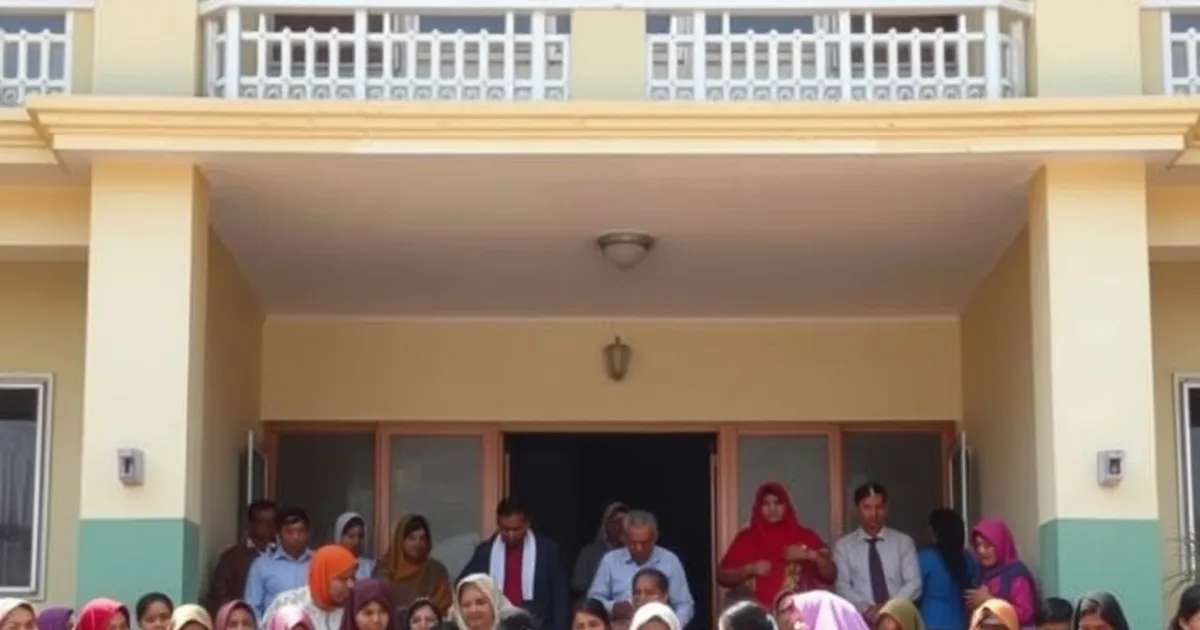
Five women who underwent caesarean deliveries at Kota's New Medical College Hospital between May 5 and May 7 have spent more than two months on dialysis after developing serious kidney infections, and they have now written directly to President Droupadi Murmu demanding action. The mothers are asking for kidney transplants within 48 hours or, if that cannot be arranged, official permission to pursue euthanasia — a desperate appeal that has drawn national attention to the standard of obstetric care at Rajasthan's government medical institutions.
🗳️ Five Kota Mothers on Dialysis Demand Kidney Transplant or Euthanasia
Five women who gave birth at Kota's New Medical College Hospital after undergoing caesarean sections between May 5 and May 7, 2026, have been unable to return home in the more than two months since their deliveries. Each has been on repeated dialysis sessions to manage a serious kidney infection that developed after the procedure, leaving their families in financial and emotional distress. The situation drew national attention when the women and their families wrote to President Droupadi Murmu demanding that the hospital arrange kidney transplants within 48 hours. If that demand could not be met, the letter asked the President to grant permission for euthanasia, a request that encapsulated the depth of their despair. Hospital administrators responded with a notably more reassuring account, with the NMCH Medical College principal stating that the health of most patients had improved considerably since admission and that further recovery was expected. The gap between the institutional narrative and the families' lived experience has made this case a touchstone for conversations about accountability in government hospitals. For families who trusted a public medical facility with the most consequential moment of their lives, the outcome has been devastating, and their willingness to write directly to the President signals the exhaustion of every other avenue they felt was available to them. [4]
C-Section Negligence at Kota Hospital Prompts Presidential Appeal
Reporting by The Indian Express detailed the formal complaint submitted by the five women who underwent caesarean sections at Kota's New Medical College between May 5 and May 7, 2026, and who have since remained continuously hospitalized. Their letter to President Droupadi Murmu framed the prolonged hospitalization and ongoing dialysis as the direct result of medical negligence at the institution, an allegation that places responsibility squarely on the hospital's surgical and post-operative care teams. The article was reported from Jaipur and published on July 16, 2026, two months after the initial surgeries, underscoring how long this crisis has been allowed to persist without a satisfactory resolution. The choice to write to the President rather than pursuing complaints through the hospital's grievance system or the state health department suggests that more immediate avenues had been tried without result. Medical negligence in India is difficult to litigate and even harder to prosecute within meaningful timeframes for those suffering harm. Patient advocates have used the Kota case to argue for dedicated fast-track mechanisms that can provide interim support, including assured access to transplant care, while formal investigations are conducted. The case has become a symbol of the gap between India's aspirations for quality universal healthcare and the reality faced by ordinary families in Tier-2 cities. [5]
Kota Youth Arrested Over Alleged Online Network Targeting Hindu Women
A youth identified as Manish Sharma, residing in Vigyan Nagar in Kota, was arrested by Rajasthan police following a complaint lodged by right-wing organizations alleging that he had been running an online network to facilitate the religious conversion of Hindu women. The complainant, identified as Renwal, alleged in the police complaint that Sharma had used social media platforms including Telegram, Snapchat, and Discord over a sustained period to make contact with Hindu women, and that he also used obscene videos as a means of manipulation and coercion. Police registered a case and Sharma was taken into custody on the strength of the complaint. The case involves serious allegations that go beyond religious conversion to include claims of online harassment and distribution of explicit content, and courts will ultimately need to assess the evidence and determine culpability. Arrests driven by right-wing group complaints in Rajasthan on conversion-related grounds have become more common in recent years, intersecting with broader political debates about inter-community relationships and religious identity in the state. The complainant's framing of the case as a systematic network targeting Hindu women is a characterization from the complaining party rather than an established finding of fact. The matter is expected to proceed through the judicial process where the specific charges and evidence will be fully tested. [8]
Sources: [4] ETV Bharat · [5] The Indian Express · [8] The New Indian Express