
Weekend Activities for Desi Kids in Lower Hutt
TL;DR
- 🌏 Lower Hutt's South Asian families use the Hindu calendar to give kids structured cultural weekends.
- 🌕 Guru Purnima 2026 on July 29 is the standout date — a day honoring teachers that becomes a natural lesson for children.
- 🐍 Nag Panchami 2026 on August 17 lands on a Sunday and is one of the most visually engaging festivals for younger kids.
- 📅 Pradosh Vrat, Sankashti Chaturthi, and Ekadashi round out the stretch — each offering a smaller family touchpoint.
- 🎨 Cultural transmission doesn't require a formal setting — cooking, drawing, and storytelling around these dates all count.
Passing Culture to the Next Generation in Lower Hutt
Lower Hutt sits in the Wellington region of Aotearoa New Zealand, and its South Asian diaspora — drawn from India, Fiji-Indian communities, and Sri Lanka across multiple generations — has been a steady presence for decades. For Desi parents raising children here, the question of cultural transmission is a practical one: how do you pass on language, ritual, and identity when the wider world moves in other directions?
The Hindu calendar provides one answer. It gives families a rhythm — a series of dates across the year with built-in cultural content, each one carrying a story, a food tradition, a way of marking time that connects to something older and larger than the immediate moment. The observances coming up between late July and mid-August give Lower Hutt families seven such occasions across three weeks.
This stretch lands in New Zealand's winter school holidays and the weeks just before the Term 3 return — which actually makes it well-timed for family activities that don't compete with school commitments.
Guru Purnima 2026 and the Full Moon: July 27–29 🌕
July 27 — Pradosh Vrat
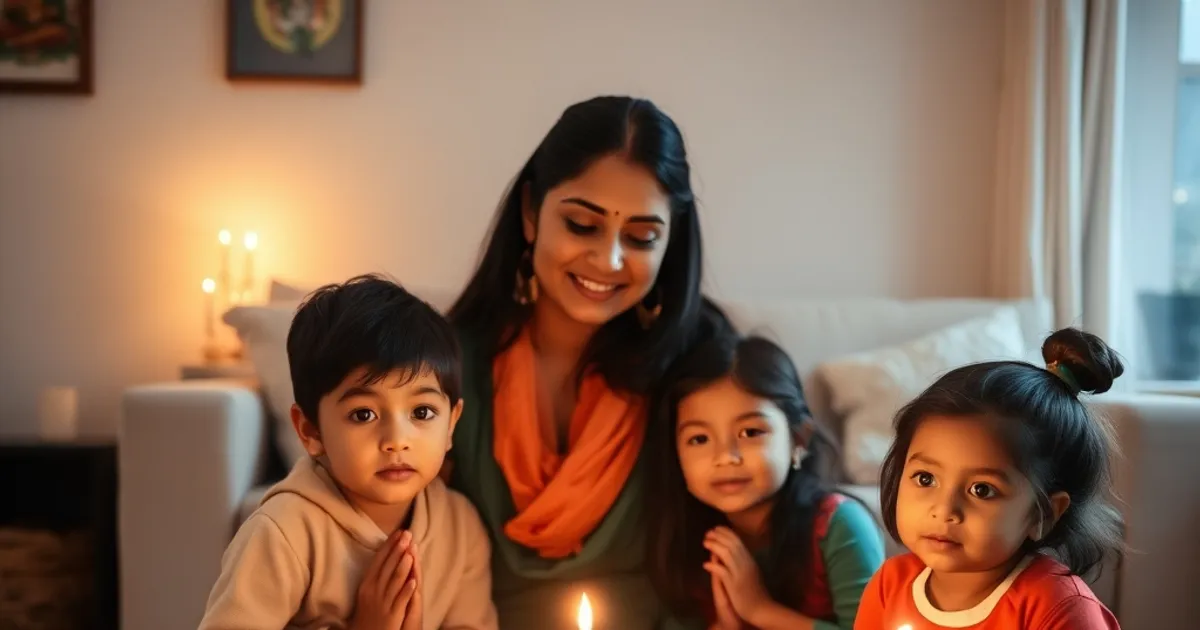
The stretch begins with Pradosh Vrat on July 27 — a fasting day observed on the thirteenth lunar day, dedicated to Lord Shiva. For children, Pradosh can be introduced gently as an evening of simplicity and focus: a quiet dinner, a story about Shiva, and a diya lit at dusk. The name Pradosh refers specifically to the twilight period, and the ritual of watching the sky change at sunset is something even young children respond to.
July 29 — Purnima and Guru Purnima 2026
Two days later, July 29 brings Purnima (the full moon) and Guru Purnima 2026 on the same date. This combination makes July 29 the most significant cultural moment of the stretch.
Guru Purnima honors teachers — gurus in the broadest sense, including parents, community elders, and anyone who has shaped a child's understanding of the world. For diaspora families, this framing is particularly powerful: it gives children a formal occasion to express gratitude to the people who teach them, and it models the kind of reverence for knowledge that runs through South Asian cultural traditions.
Activities for Guru Purnima with children:
- Write a card or draw a picture for a teacher, grandparent, or elder
- Read a story about a historical guru — Ramakrishna, Vivekananda, Adi Shankaracharya — or a mythological one
- Make kheer, halwa, or another traditional sweet together as a family
- Go outside at night to see the full moon and explain what Purnima means in the lunar calendar
New Zealand's winter sky in late July is typically clear and dark — the full moon is reliably visible from Lower Hutt, making the astronomical connection vivid for children who might otherwise struggle to picture a "full moon ritual."
Local temple groups and the Wellington Indian Association occasionally organize Guru Purnima programs in the region. Check Desi.Net's Lower Hutt listings and community notice boards for organized events.
Insider Tip: Guru Purnima programs in diaspora communities tend to be among the most welcoming gatherings of the year — they attract families who attend only occasionally, alongside regulars. If you have been meaning to connect with the local Desi community in Lower Hutt and haven't found a natural moment, this is a good one.
August: Sankashti Chaturthi, Ekadashi, Pradosh Vrat, and Nag Panchami 2026 🐍
August 2 — Sankashti Chaturthi
Sankashti Chaturthi is dedicated to Lord Ganesha, observed on the fourth day of the waning lunar fortnight each month. For young children, Ganesha is often the entry point into Hindu mythology — the elephant-headed deity is visually distinctive, his stories are age-appropriate, and his symbolism (removing obstacles, wisdom, new beginnings) resonates across age groups and backgrounds.
Activities for kids on Sankashti Chaturthi:
- Draw or paint Ganesha — there are many regional artistic styles to explore, from Madhubani to Warli
- Read or listen to Ganesha stories from Indian picture books
- Make modak or coconut laddoos together as prasad
- Watch the moonrise, which is a traditional part of the Sankashti observance — the fast is broken after sighting the moon
August 9 — Ekadashi
Ekadashi, the eleventh lunar day, is a fasting day across Vaishnava communities. Children do not need to fast to participate — a modified approach (fruit-based meals, no grains for dinner) can be a meaningful introduction to the practice. Explaining why people fast — the idea of voluntary restraint as a way of focusing the mind — is a conversation with real value for children in a culture saturated with consumption.
August 11 — Pradosh Vrat
The second Pradosh Vrat of this cycle falls on a Monday evening — a school night. Weekend preparation can involve telling children the story of Pradosh and making a small diya together before the evening prayers.
August 17 — Nag Panchami 2026
Nag Panchami 2026 falls on a Sunday, making it the most practical date of the August cycle for a longer family activity. The festival honors serpents as divine symbols — the Naga appears across Hindu iconography as a symbol of eternity, protection, and the cycle of creation. In many homes, the day involves kolam-style drawings of snakes, milk offerings, and stories about serpent deities like Vasuki and Shesha.
For diaspora children in Lower Hutt, Nag Panchami 2026 offers a Sunday that can be genuinely full:
- Watch a nature documentary about snakes and connect it to the cultural tradition
- Make kolam-inspired snake drawings in chalk on the driveway or on paper
- Cook a regional dish associated with the festival
- Visit a park or nature reserve for a walk — Lower Hutt has accessible green space along the Hutt River that works well for family outings
The Sunday timing makes Nag Panchami 2026 the anchor activity of the August stretch for families with school-age children.
Building Traditions Through Repetition
The key insight for diaspora families in Lower Hutt is that consistency matters more than formality. A child who marks Pradosh Vrat with a quiet evening and a story about Shiva, month after month, builds a connection to that tradition across years — not through a single intense experience, but through the accumulation of small rituals.
Guru Purnima 2026, Sankashti Chaturthi, and Nag Panchami 2026 each have strong visual and narrative elements that hold children's attention. The lunar calendar also provides natural anchors: tracking the phases of the moon, learning why certain days carry significance, and connecting the night sky to ancestral tradition links science and culture in a way that resonates with how children actually learn.
None of this requires a school or a large community to work. It requires a calendar, willingness to mark the days, and the patience to explain why.
Finding Community Support in Lower Hutt
Desi.Net's Lower Hutt directory lists community organizations, temples, and cultural groups serving the South Asian diaspora in the Wellington region. For organized programs around Guru Purnima 2026 or Nag Panchami 2026, the directory is a starting point.
The Lower Hutt Desi community is smaller than Auckland's, so many activities happen through informal networks — temple notice boards, Facebook groups for Indian families in Wellington, and South Asian WhatsApp chains in the region. These informal channels often surface events that do not make it to formal listings.
FAQ
Are these activities only for Hindu families? The observances listed are rooted in Hindu tradition, but Guru Purnima is also observed in Jain and Buddhist communities. Many of the suggested activities — storytelling, cooking traditional food, moon-watching — are accessible to families of any background with South Asian heritage.
What if there is no temple nearby? Almost all the activities described can be done at home. Puja can be simple, stories can come from picture books or online sources, and the food traditions involve pantry staples. The practice matters more than the venue.
How do I explain fasting to young children? Frame it as a mindfulness practice — a way of being intentional about eating and directing attention toward something meaningful. Children as young as five can participate in modified ways, and the conversation itself is part of the transmission.
Is there a South Asian community group in Lower Hutt specifically? Desi.Net lists organizations in Lower Hutt and the greater Wellington region. Searching the directory by city surfaces relevant groups and their contact information.
Bottom Line
Lower Hutt families have a meaningful run of dates from now through mid-August: Pradosh Vrat on July 27, Guru Purnima 2026 and the full moon on July 29, Sankashti Chaturthi on August 2, Ekadashi on August 9, Pradosh Vrat again on August 11, and Nag Panchami 2026 on August 17. Each one is a weekend anchor — or a weeknight tradition — built around stories, food, and ritual that children can genuinely engage with. Guru Purnima 2026 is the peak of the stretch. Nag Panchami 2026 lands on a Sunday and closes it out well. Passing on culture in the diaspora takes consistent, repeated effort. This stretch of the Hindu calendar gives Lower Hutt families exactly the structure to do it.