
Indian American Scholars Make Their Mark at UW-Madison
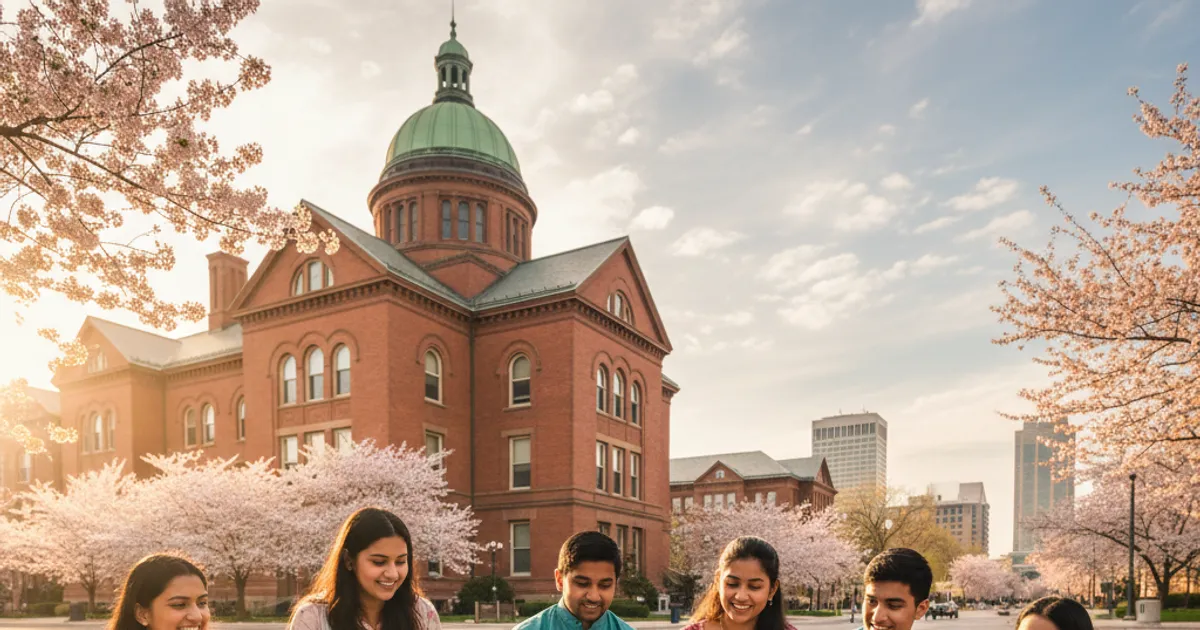
The South Asian community in Madison, Wisconsin has reason to celebrate a pair of significant achievements at the University of Wisconsin-Madison. Two Indian American faculty members have been elevated to named professorships — among the highest academic honours a major research university can confer — while a separate milestone arrived earlier this year when an Indian American author took the keynote stage for UW-Madison's APIDA Heritage Month celebrations. Together, these developments paint a vivid picture of a Madison Desi community whose members are not merely present in the city's most important institution, but actively shaping its intellectual and cultural identity. From the research laboratory to the literary podium, Indian Americans at UW-Madison are earning recognition that resonates far beyond the campus and speaks to the deep roots the South Asian community has established in Wisconsin's capital city over generations of academic and civic achievement.
🎓 Indian American Faculty Earn Named Professorships at UW-Madison
The University of Wisconsin-Madison has appointed two Indian American faculty members to distinguished named professorships, marking a proud moment for the South Asian academic community in Wisconsin's capital city. Named professorships represent among the most prestigious honours a major research university can bestow — typically endowed with dedicated funding, enhanced research resources, and lasting institutional recognition for sustained scholarly excellence across a career. The appointments, reported by The American Bazaar in early July 2026, reflect a continuing and accelerating trend of Indian American academics rising to the top tiers of American higher education. UW-Madison, consistently ranked among the nation's foremost public research universities, has a meaningful South Asian faculty presence spanning engineering, business, the natural sciences, and the social sciences. For the Indian American community in Madison and across Wisconsin, these professorships carry deep symbolic and practical significance. They signal not only individual achievement but also the growing influence and visibility of South Asian scholars in shaping the intellectual life of flagship institutions. Named chairs serve as powerful inspiration for younger Indian American and South Asian students pursuing academic careers, demonstrating that the path from immigrant families to tenured excellence at elite universities is both well-travelled and expanding. The Madison Desi community, while smaller than those in major coastal metros, has built a strong tradition of educational achievement, and these appointments powerfully underscore that enduring legacy for the entire community. [2]
🪔 Indian American Author Keynotes UW-Madison's APIDA Heritage Month
An Indian American author delivered the featured keynote address at the University of Wisconsin-Madison's APIDA Heritage Month celebrations, bringing a distinctly South Asian literary voice to one of the university's most significant annual multicultural events. APIDA Heritage Month — which honours Asian Pacific Islander Desi American communities — has grown considerably in visibility at UW-Madison in recent years, reflecting both the rising numbers of APIDA students on campus and a broader institutional commitment to recognising diverse contributions to American society and culture. Keynote addresses at such events carry special weight: they are opportunities to tell stories often underrepresented in mainstream academic settings, and to connect the experiences of South Asian immigrants and their descendants with the wider American narrative. An Indian American author standing at the UW podium signals that literature, memoir, and cultural storytelling are increasingly valued as vital forms of knowledge within major research universities. For Desi students and faculty at UW-Madison, events like the APIDA Heritage Month keynote serve as powerful affirmations of belonging — moments when the university publicly acknowledges the depth and richness of South Asian American culture. The speech, covered by The Daily Cardinal, UW-Madison's storied student newspaper founded in 1892, underscores that both campus media and the university administration recognise the growing importance of amplifying Indian American voices in public intellectual and cultural life across the state of Wisconsin. [3]
Sources: [2] The American Bazaar · [3] The Daily Cardinal