
Best Temples & Mandirs in Madurai (2026)
TL;DR
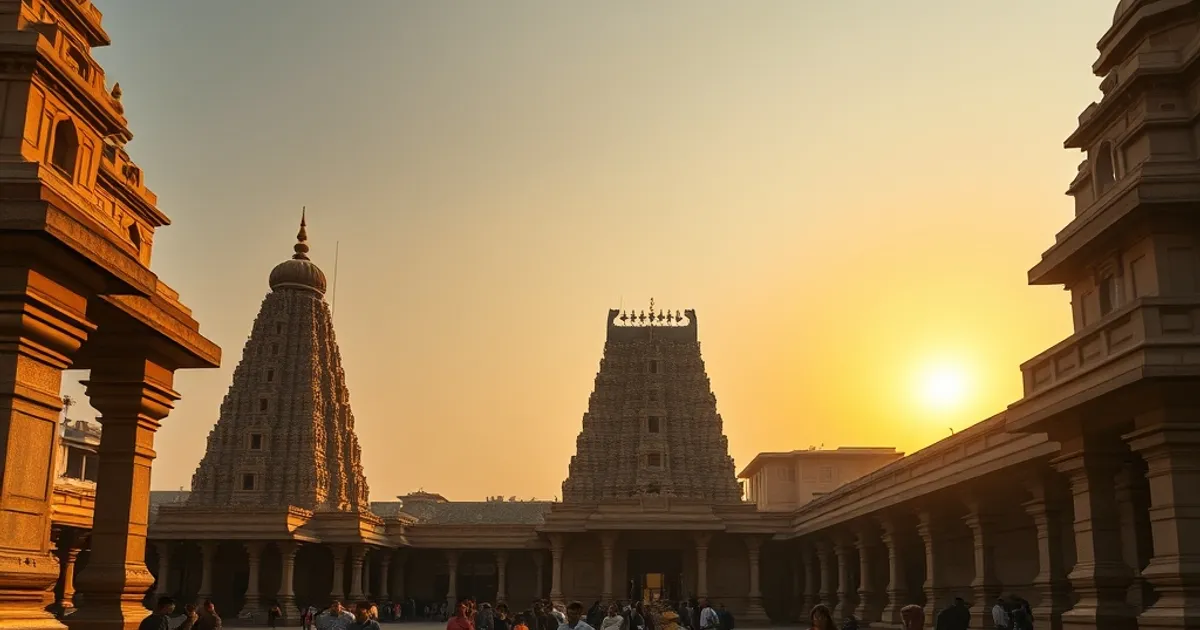
- 🛕 Madurai's temple circuit is one of the most concentrated in South India — five major shrines sit within three kilometres of the old city core
- 🌅 Sri Meenakshi Amman Temple covers 45 acres with 14 gopurams; plan at least two to three hours and arrive early to beat the queues
- 🏛️ Koodal Azhagar Temple provides a quieter Vaishnava counterpoint, with an unusual three-level structure housing different forms of Vishnu
- 🌺 Smaller shrines including Arulmigu Subramaniya Swami Temple and Sita Lakshmi Anjineya Temple reward visitors who explore beyond the main complex
- 🗓️ Plan two full days if you want unhurried visits to more than three or four temples; festival seasons bring extraordinary energy and larger crowds
A City That Grew Around Its Temples
Madurai is one of the oldest continuously inhabited cities in South Asia, with a recorded history stretching back more than two thousand years. What makes it genuinely different from other ancient cities is the relationship between the sacred and the civic: the old city's streets were laid out concentrically around the temple complex, not the other way around. The temple was first; the city followed.
The Dravidian style of architecture that Madurai's temples exemplify — multi-tiered gopurams (gateway towers) covered with thousands of brightly painted stucco figures — set the template for sacred construction across southern Tamil Nadu. To walk through these corridors is to move through a living tradition, one that has been maintained and continuously updated over centuries rather than preserved as a museum piece. Priests conduct multiple puja sessions daily; devotees arrive at dawn; flower sellers line every street outside.
The religious landscape of the city is not monolithic. The dominant tradition centres on Meenakshi (Parvati) and Sundareshwarar (Shiva), but Vaishnava temples, Murugan shrines, folk deity temples, and smaller neighbourhood sanctuaries coexist within the same few square kilometres. A thorough visit involves all of them.
Sri Meenakshi Amman Temple
Sri Meenakshi Amman Temple at Madurai Main, Madurai, Tamil Nadu 625001 — reachable at 0452 234 4360 for general enquiries — is the starting point for any serious engagement with the city's sacred geography. It is one of the largest active temple complexes anywhere in the world, covering roughly 45 acres and containing 14 gopurams, the tallest of which rises nearly 52 metres.
The complex has separate sanctums for Goddess Meenakshi and Sundareshwarar, linked by the Porthamarai Kulam (golden lotus tank) and an extensive network of pillared corridors. The Thousand Pillar Hall within the compound houses a museum of temple sculpture worth at least an hour on its own. The temple opens in two main sessions — roughly 5 a.m. to 12:30 p.m. and 4 p.m. to 10 p.m. — though these hours shift during festival periods.
Dress code is strictly enforced at the entrance: no shorts, no sleeveless clothing, no footwear inside the compound. Camera and mobile policies vary by zone; the outer corridors and Thousand Pillar Hall generally permit photography, while the sanctums and ritual areas do not. The morning session's first hours are the least crowded and offer the best light in the outer colonnades.
Koodal Azhagar Temple and the Vaishnava Tradition
Koodal Azhagar Temple stands as the principal Vaishnava shrine in the city and ranks among the 108 Divya Desams — temples sung by the Alvars, the ancient Tamil poet-saints who form the bedrock of Vaishnava devotional literature. The same site also appears in common usage as Koodal Algar Temple, and both names refer to the same sacred place.
What makes the architecture here genuinely unusual is the vertical arrangement: three separate levels house three different forms of Vishnu — standing (Nindra), seated (Irundha), and reclining (Kidandha). Most Dravidian temples arrange their sanctums laterally; the stacked structure here is rare. The atmosphere is calmer than the Meenakshi complex, and the morning session draws a devoted local congregation that makes the experience feel personal rather than touristic.
Smaller Shrines Across the City
Arulmigu Subramaniya Swami Temple on Big Car Street is the main Murugan shrine in this part of the city. Murugan — also known as Kartikeya or Skanda — occupies a position in Tamil religious life that goes well beyond formal sectarian affiliation; he appears in literature, festivals, and daily devotion with a consistency unlike anywhere else. This temple is busiest during Skanda Sashti (October–November) and on Tuesdays, but morning prayers throughout the year draw a committed local following.
Sita Lakshmi Anjineya Temple on South Perumal Maistry Street combines the worship of Anjaneya (Hanuman) with Sita and Lakshmi — an arrangement that reflects the syncretic devotion characteristic of this region. The temple is compact and intimate, and the resident priest typically conducts abhishekam during the morning session with minimal waiting.
Arulmigu Sri Pandi Muneeswaran Temple on the Airport-Mattuthavani Ring Road at Pandikovil caters strongly to local neighbourhood devotion, particularly on Fridays and Tuesdays, when offerings of kumkum, flowers, and vibhuti accumulate at the entrance throughout the day.
Karuppana Sami Temple at 51 East Marat Street, near Corporation Bank, represents the folk deity tradition that runs parallel to the classical Agama temples across Tamil Nadu. These guardian deity shrines are as integral to the city's religious life as the gopuram-crowned complexes, and visiting one offers a different but equally authentic dimension of how people actually practise here.
For those interested in twentieth-century devotional figures, Yogi Ramsuratkumar Gurukshethram at 73-1 Ramaiah Main Street offers a contemplative atmosphere quite unlike the high-energy classical temples nearby.
Insider Tip
Queue times at Sri Meenakshi Amman Temple vary dramatically by day and time. The paid fast-track darshan option — rates posted at the temple's main counter and revised periodically — typically reduces wait times from two or three hours to under thirty minutes on busy weekends. If you are visiting during a festival month, the Devasthanam office handles advance bookings for special seva sessions that offer closer access to the main sanctums; book these at least a few days ahead.
Planning Your Circuit
The core of Madurai's temple geography fits comfortably into a walking and autorickshaw circuit. A practical day-one sequence: Sri Meenakshi Amman Temple at the 5 a.m. opening, two to three hours inside, then Koodal Azhagar Temple mid-morning before the noon closure. Post-reopening: Arulmigu Subramaniya Swami Temple on Big Car Street, then Sita Lakshmi Anjineya Temple in the early evening. Day two allows Karuppana Sami Temple, Arulmigu Sri Pandi Muneeswaran Temple, and Yogi Ramsuratkumar Gurukshethram at a more relaxed pace.
Wednesdays and Thursdays see the thinnest crowds at the smaller shrines. The April–May festival season (Chithirai) is spectacular but demanding; January through March balances good weather with manageable footfall.
FAQ
Are all temples in Madurai open to non-Hindus? The large Agama temples — Sri Meenakshi Amman Temple and Koodal Azhagar Temple — are open to Hindu visitors; entry for others depends on current temple administration policy and is best confirmed at the entrance or by calling 0452 234 4360.
What is the dress code? Conservative clothing for all visitors: dhoti or trousers for men, saree or salwar kameez for women. Shorts and sleeveless tops are turned away at the gate. Some temples offer dhoti wraps on loan at the entrance for a small deposit.
Can I hire a guide? Authorised guides are available at Sri Meenakshi Amman Temple's main entrance. For smaller shrines, the resident priest often provides informal orientation.
What are the best festival times to visit? Meenakshi Thirukalyanam (April–May) is the grandest celebration in the city. Skanda Sashti (October–November) is the highlight at the Murugan temples. Maha Shivaratri (February–March) draws very large crowds to the Meenakshi complex.
Is photography allowed? Outer corridors and the Thousand Pillar Hall at Sri Meenakshi Amman Temple permit photography. Inner sanctums and ritual areas do not. Check at each temple on arrival.
Bottom Line
Madurai does not have a temple district — it is a temple district. From the sweeping scale of Sri Meenakshi Amman Temple and the architectural rarity of Koodal Azhagar Temple to the neighbourhood shrines on Big Car Street and East Marat Street, the city compresses centuries of living tradition into a walkable area. Come with time to spare, appropriate clothing, and genuine curiosity. The temples will do the rest.