
Concerts & Cultural Shows Coming to Madurai
TL;DR
- Madurai's cultural calendar from late July through mid-August is driven by the ancient Hindu lunar cycle
- Guru Purnima 2026, Nag Panchami 2026, and Pradosh Vrat are among the celebrations shaping the city's spiritual mood
- The city's deep Tamil Shaiva tradition gives every festival a local flavor rooted in centuries of living practice
- Sankashti Chaturthi and Amavasya draw families to temples and riverside ghats across the city
- These are not performances — they are the living cultural fabric of everyday Madurai
A City That Runs on the Lunar Calendar
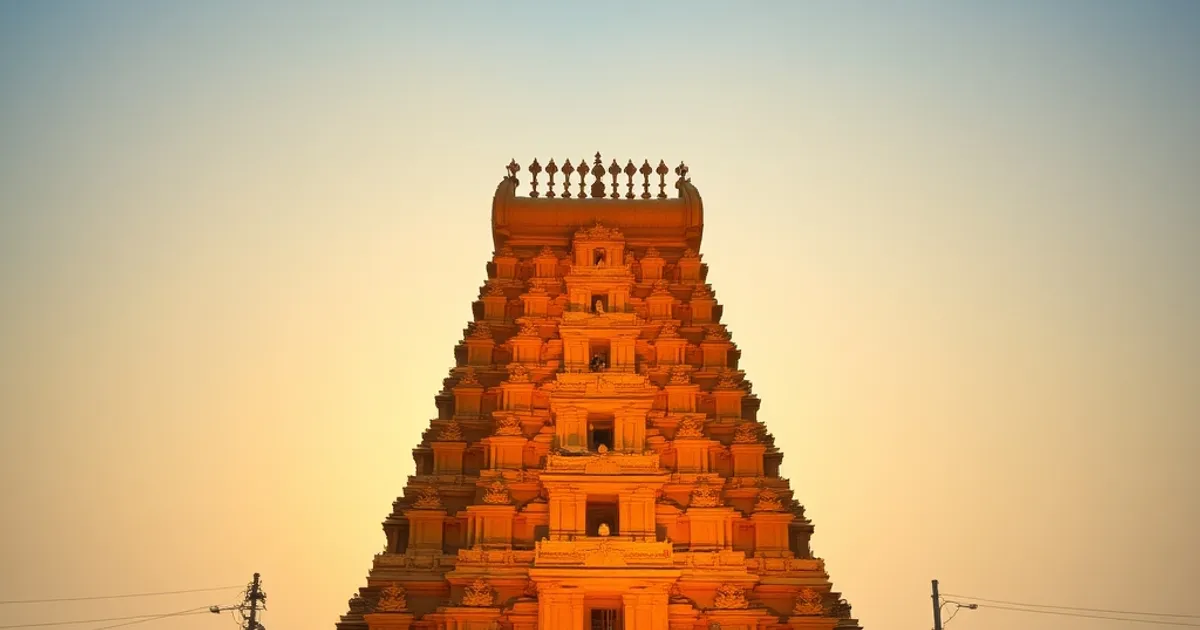
Madurai does not need a promoter to fill its cultural calendar. The city has been running on the rhythms of the Hindu lunar year for more than two thousand years, and the months of Ashadha and Shravana bring a steady procession of festivals, fasts, and communal prayers that animate temples, streets, and family courtyards from Thirunagar to Mattuthavani.
For those who live here, this is simply July and August — a season defined not by summer blockbusters or ticketed shows, but by the sound of bells at dawn, the smell of jasmine at temple gopurams, and the particular quiet of a household where someone is observing a fast. The cultural calendar for this stretch is dense and meaningful. Here is what is coming.
Pradosh Vrat — The Shaiva Twilight Observance
Pradosh Vrat on July 27 opens this season's calendar. In a city as saturated with Shiva worship as Madurai — home to the Meenakshi Amman Temple, one of the great Shiva-Shakti temples of South India — Pradosh Vrat resonates with particular force. The observance falls on the 13th tithi of the lunar fortnight, and devotees fast through the day before performing abhishek and aarti during the twilight hour.
Around Madurai's many Shiva temples, Pradosh evenings bring a noticeable swelling of devotion. The roads near the Meenakshi Amman complex, already busy at most hours, carry an extra current of people on Pradosh evenings — families walking toward the temple with flowers and coconuts, auto-rickshaws threading through the usual knot of traffic, small shops selling bilva leaves to devotees who need them for the puja.
The next Pradosh Vrat in the cycle comes on August 10, giving those who could not observe the July date another opportunity.
Guru Purnima 2026 — The Full Moon That Belongs to Teachers
Guru Purnima 2026 falls on July 29, the Purnima of Ashadha. It is one of the calendar's most beloved occasions — a day to acknowledge the teachers, spiritual masters, and elders who shaped a person's understanding of the world. In the Tamil tradition, the guru-shishya relationship is ancient and foundational, woven into the Shaiva Siddhanta lineages and the Vaishnava acharya traditions that have long called this region home.
Across Madurai, July 29 brings gatherings at math institutions, music schools, classical dance academies, and temples. Students of Carnatic music offer their respects to their gurus. Yoga practitioners gather for satsang. Vedanta study groups hold special readings. The Aadheenam institutions connected to the Shaiva tradition organize elaborate functions where disciples honor the heads of their lineages.
For families with children studying classical arts or music, Guru Purnima 2026 carries a practical dimension — it is the day to bring a gift of fruit or sweets to the teacher and to mark the relationship formally. Even in schools and colleges, teachers sometimes receive small tokens of appreciation on this day.
Purnima — The Full Moon's Own Celebration
Purnima on July 29 coincides with Guru Purnima 2026 this cycle. The full moon in Madurai means temples stay open later, the city's outdoor spaces fill with families enjoying the lunar brightness, and the ghats near the Vaigai River draw worshippers for ritual dips and prayers.
Satyanarayan puja, a popular Purnima observance across South India, brings extended families together on this day. Homes are swept and decorated, the puja is performed with fruits and panchamrit, and the prasad is shared with neighbors and visitors. The communal quality of Purnima observance is among its most appealing features — it spills out of front doors and into streets in a way that few other rituals do.
Insider Tip: If you are in Madurai on July 29 for Guru Purnima 2026 and Purnima, the stretch of temples along the Meenakshi Amman perimeter and near the Koodal Azhagar temple are particularly alive in the evening hours. Arrive before sunset to experience the full arc of the twilight prayers without the deepest crowd.
Sankashti Chaturthi — Ganesh on the Fourth Day
Sankashti Chaturthi arrives on August 2. Dedicated to Lord Ganesh, this monthly fast-and-prayer observance is observed widely across Tamil Nadu, and Madurai's concentration of Vinayaka temples ensures that the day carries visible momentum across the city.
Devotees fast until moonrise, then perform Ganesh puja and break their fast only after sighting the moon. Sankashti Chaturthi falling on a Sunday this cycle gives families the full day to prepare the puja space, observe the fast together, and gather for the moonrise prayer as a household. Madurai's Vinayaka temples — several tucked into the old streets of the central city near the main temple complex — see steady visitor traffic on Sankashti days.
The day also carries particular significance for those beginning new ventures or seeking resolution of ongoing difficulties, as Ganesh is the remover of obstacles and the patron of new beginnings.
Ekadashi — Fasting on the Eleventh Tithi
Ekadashi falls on August 9 in this lunar cycle. The eleventh-day fast is observed across the Vaishnava and broader Hindu community in Madurai, with devotees abstaining from grains and certain vegetables for the day. Vishnu temples around the city — including the Koodal Azhagar Perumal Temple, one of the Divya Desams — hold special prayers and recitations of the Vishnu Sahasranama on Ekadashi.
For those who maintain Ekadashi as a regular practice, the day functions as a monthly reset — a clearing of the palate, physically and mentally, before returning to ordinary life. In Madurai, where the day's heat is often considerable by August, fasting requires some determination, and the community support of knowing others are observing the same day provides a quiet solidarity.
Amavasya — Remembering Ancestors at the New Moon
Amavasya on August 12 belongs to the ancestors. The new moon day is the traditional time for pitru tarpan — the offering of water and sesame seeds to departed relatives — and in Madurai, the banks of the Vaigai River and the bathing ghats near temples draw families for these ancestral rites.
The tone of Amavasya is reflective rather than celebratory. Households observe the day with quiet prayers and the preparation of simple food offerings. Some families visit the temples of Madurai's older neighborhoods, where the priests perform ancestral rites on behalf of devotees. It is a day that younger generations sometimes find harder to connect with, but for elders, Amavasya is among the most important monthly markers on the calendar.
Nag Panchami 2026 — The Festival of Serpents and the Earth
Nag Panchami 2026 on August 17 brings one of the most visually memorable festivals of the year. The veneration of serpents — Nag Devata — on the fifth day of Shravana reflects an ancient layer of religious practice that predates much of the formal temple tradition and connects directly to the agricultural rhythms of the land.
In Madurai, Nag Panchami 2026 is observed with milk offerings at snake shrines, the drawing of serpent images at doorways and in kolam designs, and the preparation of festival foods. Women and girls are especially active in the observance, and the imagery of the two-headed snake rendered in turmeric paste or chalk on doorsteps is a vivid marker of the day across the city's neighborhoods.
The festival's timing in the monsoon month of Shravana is deliberate — it is a moment to honor the earth and the creatures that live within it, precisely when the rains have made the land most alive.
FAQ
Q: Are these festivals celebrated in specific neighborhoods of Madurai, or citywide? Most of these observances are citywide, embedded in household practice as much as in temple events. The areas around the Meenakshi Amman Temple and the older central city neighborhoods tend to be most visibly active.
Q: Which of these events would be most accessible for someone visiting Madurai for the first time? Guru Purnima 2026 on July 29 and Nag Panchami 2026 on August 17 are both visually rich and widely celebrated — good entry points for a first-time observer.
Q: Is any special permission needed to attend temple events on these days? Most temples in Madurai are open to all visitors during public festival times. Some inner sanctuaries have restrictions. Dress modestly, remove footwear outside, and follow the queue.
Q: Do businesses and schools close on these days? Nag Panchami 2026 is often a local holiday in Tamil Nadu. Other observances vary — some families take private leave; official closures depend on state holiday notifications.
Q: How does Madurai's celebration of Guru Purnima 2026 differ from other cities? Madurai's deep classical music and dance heritage gives Guru Purnima 2026 a particular richness here — the number of active Carnatic music and Bharatanatyam teachers and students in the city means the day generates a visible wave of guru-shishya observance across neighborhoods.
Bottom Line
Madurai's cultural calendar from late July through mid-August is not a curated events lineup — it is the city breathing. Pradosh Vrat, Guru Purnima 2026, Purnima, Sankashti Chaturthi, Ekadashi, Amavasya, and Nag Panchami 2026 together form a sequence that has shaped life in this city for centuries. For residents and visitors alike, these weeks offer an unfiltered encounter with one of South India's most enduring living traditions.