
Janmashtami 2026 in Madurai: Events, Puja & Where to Celebrate
TL;DR
- Janmashtami 2026 on August 14 brings Krishna Jayanti celebrations to Madurai's famous temple corridors 🪔
- The Meenakshi Amman Temple complex hosts special midnight abhishekams that draw thousands of devotees 🛕
- Dahi handi competitions, butter distributions, and all-night bhajans light up the city's neighborhoods
- The festive season runs from Ekadashi (Jul 25) through Sankashti Chaturthi (Aug 2) before Janmashtami proper
- Temples including Koodal Azhagar Temple and Sita Lakshmi Anjineya Temple hold events specific to Krishna devotion 🙏
Janmashtami in a Shaivite City
Madurai is, at its core, a Shaivite city. The Sri Meenakshi Amman Temple — among the most architecturally magnificent temple complexes on the subcontinent — is dedicated to Goddess Meenakshi and her consort Shiva as Sundareshwarar. And yet, when Krishna Jayanti arrives in August, Madurai celebrates with a warmth that surprises visitors expecting the city's focus to remain squarely on Shiva.
The explanation lies in how Tamil Nadu has always practiced religion — as a flowing, inclusive tradition rather than a sectarian rivalry. Janmashtami is called Krishna Jayanti here, and it carries the full weight of Vaishnava devotion even in a city defined by its Shaivite temple. Families who pray daily at Sri Meenakshi Amman Temple think nothing of gathering the same night to celebrate the birth of Krishna at a neighbor's home or at a nearby Vishnu shrine.
The events leading into Janmashtami follow a familiar rhythm. Ekadashi on July 25 is observed by Vaishnavas as a particularly sacred fast; Vishnu temples across the city hold extended puja hours. Pradosh Vrat on July 27 draws Shiva devotees. Then Guru Purnima on July 29 — the same day as Purnima — brings teachers and students together in a celebration of knowledge transmission. Sankashti Chaturthi on August 2 is Ganesha's day, marked with special modak offerings and evening prayers. By the time Janmashtami arrives on August 14, the city has already been in festive motion for weeks.
The atmosphere in Madurai's streets during this period carries its own texture. The lingering fragrance of jasmine — the city's signature flower — mixes with temple incense. The rhythmic sound of nadaswaram drifts from temple gopurams in the morning hours. Evenings fill with the drone of harmoniums and the percussion of mridangams as bhajan groups warm up in residential courtyards.
The Temples of Madurai During Janmashtami 🛕
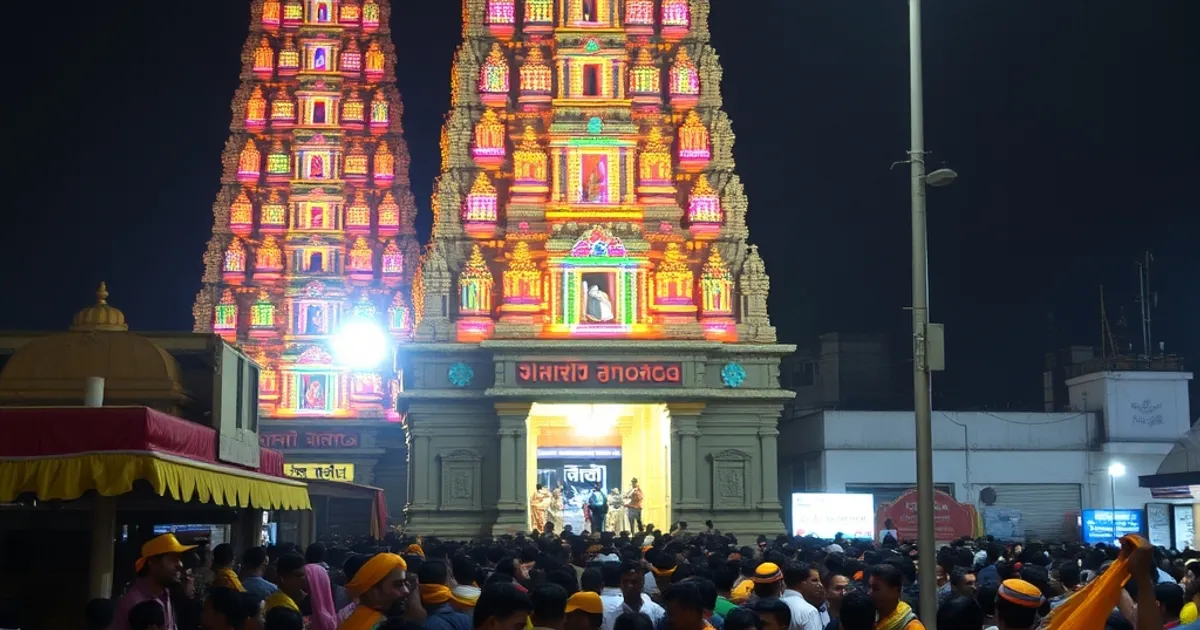
The Meenakshi Amman Temple, which anchors the city's spiritual geography with its eleven towering gopurams, opens extended hours during Janmashtami. The midnight puja inside the complex carries unusual solemnity — priests chant Sanskrit shlokas in concert with Tamil pasurams, the two devotional streams running simultaneously in a distinctly Madurai way.
Koodal Azhagar Temple, dedicated to Vishnu as Koodalazhagar, is the most significant Vaishnava shrine in the city and becomes the primary Janmashtami destination for many devout families. The midnight birth celebration here follows traditional Vaishnava ritual precisely: at the auspicious hour, a small Krishna idol is placed in a decorated cradle, priests chant the Ashtapadi, and devotees queue to rock the cradle gently as an act of blessing. Koodal Algar Temple draws its own significant crowds through the festive period.
Sita Lakshmi Anjineya Temple's Janmashtami observance is notable for combining Vaishnava traditions — honoring Sita, Lakshmi, and Anjaneya as part of the Rama devotional universe — with specific Krishna birthday rituals. The blending reflects how worship in Tamil Nadu rarely confines itself to strictly separate sectarian categories. The presiding deities share the decorated mandapam with images of infant Krishna for the festival duration.
Yogi Ramsuratkumar Gurukshethram at 73-1 Ramaiah Main Street observes Janmashtami with satsangs and devotional readings. The Gurukshethram's contemplative atmosphere offers an alternative to the busier temple settings for those who prefer quieter participation in the day's spiritual significance.
Arulmigu Sri Pandi Muneeswaran Temple and Karuppana Sami Temple, both significant in Madurai's folk-deity devotional landscape, hold community gatherings in the Janmashtami season that weave festival celebration into their ongoing ritual life. Arulmigu Subramaniya Swami Temple, dedicated to Murugan, is particularly active through August — Murugan's sacred month in the Tamil calendar — and the surrounding devotional energy amplifies the Janmashtami mood across the whole city.
Dahi Handi and the Street Celebrations
Madurai's dahi handi celebrations take on a flavour shaped by the city's dense street culture. The old city's lanes near the temple complex and in areas like Teppukulam form natural amphitheaters for pot-breaking competitions. Young men form govinda teams, earthen pots are suspended from balcony railings or bamboo poles, and crowds press in from all directions.
The chanting of "Govinda Govinda" builds as each attempt climbs. Teams from different streets carry genuine neighborhood pride into these competitions, and winning teams are celebrated through the following year. Pots are traditionally filled with butter and curd; some include coconut water and small coins.
Simultaneously, residential streets host bhajan circles that run through the night. Families spread out on verandas, the street becomes shared space, and the music rarely pauses between sunset and dawn. By about 11 p.m., the air across entire neighborhoods feels charged — everyone awake, every lamp lit, every home door open.
One distinctly Tamil element is the kolam competition that accompanies Janmashtami. Women draw elaborate rice-flour patterns outside their front doors, and the competitive spirit in certain neighborhoods produces genuinely extraordinary artwork. Tiny footprints — representing Krishna's arrival — are drawn in lines leading from the street into the house, a custom that has survived generations unchanged.
Timing and Practical Guidance
Madurai in August is warm and sometimes rainy; the southwest monsoon can bring brief, heavy downpours. Carry a light umbrella. Temple queues during Janmashtami are longest between 9 p.m. and 12:30 a.m. Plan either to arrive early in the evening or to visit after 1 a.m. when crowds thin but pujas continue.
Insider Tip: Visit Koodal Azhagar Temple between 11:30 p.m. and 12:30 a.m. on Janmashtami night for the midnight puja. The queue grows longest between 9:30 p.m. and 11 p.m.; arriving just before midnight finds the ritual in full swing with a more manageable crowd. Carry a small shawl — the inner sanctum can be cool even on a warm August night.
FAQ
When is Janmashtami 2026 in Madurai? Janmashtami falls on August 14, 2026. Celebrations begin at sunset on August 13 and reach their peak at midnight.
Which is the main Janmashtami temple in Madurai? Koodal Azhagar Temple is the primary Vaishnava site for Krishna Jayanti celebrations. The Meenakshi Amman Temple complex also holds special extended pujas.
Is Janmashtami a public holiday in Tamil Nadu? It is widely observed but not always a formal public holiday. Most temples, cultural organizations, and many businesses operate on adjusted schedules.
Are visitors welcome at the temple celebrations? Yes. Madurai's temples welcome all devotees during festival observances. The Meenakshi Amman Temple requires modest dress, and entry to the inner sanctum is restricted to Hindus.
Are there free community events during Janmashtami in Madurai? Yes. Dahi handi competitions, street bhajans, and neighborhood distributions of butter and curd prasadam are all public, free events spread across the city's residential areas.
How should I plan my Janmashtami visit if I am coming from outside Madurai? Book accommodation at least three weeks ahead. Arrive by July 29 (Purnima and Guru Purnima) to experience the full festive build-up rather than only the main event.
Bottom Line 🙏
Janmashtami in Madurai is a study in how a Shaivite city makes room for Krishna Jayanti with complete genuineness. From the midnight cradle ceremony at Koodal Azhagar Temple to the all-night bhajans threading through the lanes near Meenakshi Amman Temple, the city commits fully to the celebration. The Arulmigu Sri Pandi Muneeswaran Temple, Sita Lakshmi Anjineya Temple, and Arulmigu Subramaniya Swami Temple each contribute their own rituals to a festival that, by midnight on August 14, turns the entire city into one extended celebration of Krishna's birth. Madurai does not observe Janmashtami as a secondary event; it observes it as family.