
Janmashtami 2026 in Manteca: Events, Puja & Where to Celebrate
TL;DR
- 🪈 Janmashtami 2026 falls on August 26-27 — Lord Krishna's birth is celebrated at the stroke of midnight
- Manteca's Central Valley Desi community includes Punjabi farming families and newer South Indian professionals, each with their own Janmashtami traditions
- Key Shravana dates to track: Guru Purnima 2026 (Jul 28), Nag Panchami 2026 (Aug 16), and Amavasya (Aug 12)
- No formal Desi temple is listed in Manteca — home celebrations and community gatherings carry the observance
- 🌙 Midnight is the moment: plan your jhula setup, bhajans, and panchamrit ahead of time
Janmashtami in the Central Valley: Manteca's Layered Desi Heritage
Manteca sits in San Joaquin County, east of the Bay Area and north of Modesto, at the edge of California's agricultural heartland. Its South Asian story runs deep. Punjabi Sikh and Hindu farming families established roots in the Central Valley generations ago, drawn by land and labor opportunities that matched skills carried from the Punjab plains. More recently, tech professionals, healthcare workers, and engineers have arrived — many from Tamil Nadu, Andhra Pradesh, and Karnataka — adding a South Indian dimension to a community already shaped by North Indian traditions.
Janmashtami brings those threads together. It is the birthday of Lord Krishna, the eighth avatar of Vishnu, celebrated on the Ashtami tithi of the dark fortnight (Krishna Paksha) of Bhadrapada month, when the Rohini nakshatra is prominent. In 2026, the alignment places the main celebration on the evening of August 26, with the birth moment at midnight — meaning the formal observance extends into August 27. For Punjabi families, Janmashtami carries memories of dahi-handi and community melas. For South Indian families, it is bhajans, panchamrit abhishek, and a strict fast through the day. Both traditions find their expression here, often within the same neighborhood.
The Central Valley's particular quality — vast flat land, agricultural rhythms, a mix of working-class and professional households — gives Manteca's Janmashtami a character distinct from the dense suburban Desi corridors of Fremont or San Jose. Celebration here is more intimate, more likely to happen in a living room than a convention hall. That intimacy is not a deficit; it is a feature.
The August Hindu Calendar Leading Up to Janmashtami
Shravana is the holiest month for many Hindu communities, and the run-up to Janmashtami is dense with observances. Tracking these dates helps Manteca families stay oriented through a busy devotional season.
Guru Purnima 2026 falls on July 28, the full moon of Ashadha and the ceremonial start of Shravana. It is a day to honor teachers — spiritual, academic, and personal — through prayers, charitable giving, and expressions of gratitude. For Vaishnava families, Guru Purnima 2026 is the opening of a four-week season of devotion that culminates in Janmashtami.
Sankashti Chaturthi arrives on August 2. This monthly Chaturthi fast dedicated to Lord Ganesha is observed by fasting until moonrise and breaking with offerings of modak and sweets. Maharashtrian families in the Central Valley mark it consistently through the year; Shravana's Sankashti Chaturthi carries added weight within the broader festival month.
Ekadashi falls on August 8, the eleventh lunar day of the dark fortnight. Vaishnava families fast from grains, read Bhagavatam or other scripture, and observe the day with minimal activity and heightened prayer. For those who will also fast on Janmashtami (August 26), this Ekadashi is a kind of devotional preparation — the body and the practice both get a trial run.
Pradosh Vrat follows on August 10, the thirteenth lunar day (Trayodashi) dedicated to Shiva and Parvati. The puja is performed at dusk during the pradosh kala — bilva leaves, abhishek of the Shiva lingam, lamp lighting. Shaivite families in Manteca observe this quietly, as one of two monthly Pradosh Vrats.
Amavasya on August 12 is the new moon and a day of ancestral remembrance. Tarpan — the offering of water and sesame seeds — is performed in the direction of departed ancestors. The day's tone is solemn, a counterpoint to the rising festive energy of the fortnight ahead. After Amavasya, the bright fortnight begins its count toward Janmashtami.
Nag Panchami 2026 arrives on August 16, the fifth day of the bright fortnight. This festival dedicated to serpent deities is observed through milk offerings, floor art of serpents at doorsteps, and fasting — particularly in Maharashtrian, Kannadiga, and parts of North Indian traditions. In Manteca, families with roots in these communities observe Nag Panchami 2026 quietly at home. Ten days after Nag Panchami 2026, Janmashtami arrives.
How Manteca Families Celebrate Janmashtami
Without a Desi temple in Manteca proper, the celebration is built from home puja and community coordination. Here is the shape of a typical Janmashtami on August 26-27 for a Manteca Indian family:
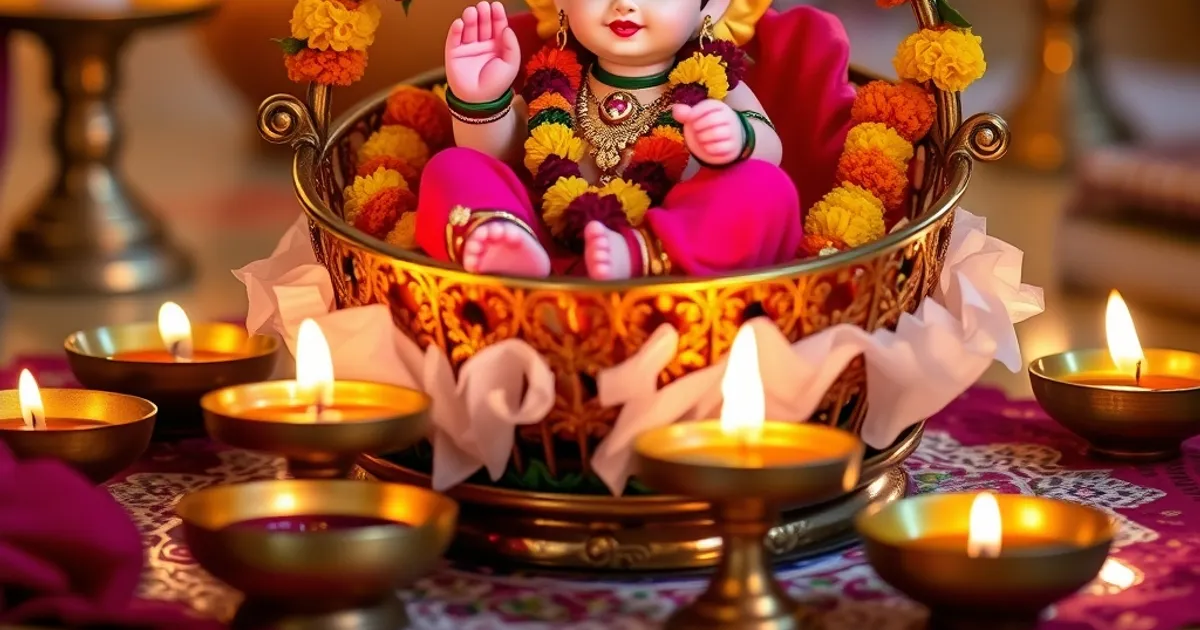
The day begins with a fast. Strict observers take nothing until midnight; others allow fruits, milk, and sago (sabudana). The puja space is cleaned and decorated. A small jhula — a cradle for Baby Krishna — is set up and decorated with flowers. An idol or image of infant Krishna is dressed in fresh clothes, often yellow or blue. By evening, devotional music fills the home: Hare Krishna, Achyutam Keshavam, Madhurashtakam — pulled from playlists or sung together.
At midnight, the puja begins in earnest. In many households, a conch shell is blown — or a recording plays. The Krishna idol is bathed in panchamrit: milk, curd, honey, ghee, and sugar poured in sequence, then water to rinse. The idol is then placed in the jhula and rocked gently. The room's energy shifts. The fast breaks on prasad: fruits, makhana kheer, and sweets made without grain.
For Punjabi families, Janmashtami often also means dahi-handi — the tradition of forming a human pyramid to break a clay pot filled with curd, echoing Krishna's childhood butter-stealing lore. Organized dahi-handi events happen primarily in Stockton and Modesto, both within comfortable driving distance of Manteca. Checking with local South Asian cultural organizations in the broader San Joaquin Valley is the most reliable way to find community events.
Insider Tip: If you are fasting on Janmashtami and plan to break the fast at midnight, prepare your prasad items the day before. Makhana (fox nuts) can be lightly roasted and stored; sabudana khichdi ingredients can be prepped ahead of time; fruit can be cut and refrigerated. Cooking at 11:45 PM after a full day of fasting is a manageable plan only if the prep is done.
FAQ
When exactly is Janmashtami 2026? The fasting day is August 26, 2026. The midnight puja and birth celebration extend into August 27. Always confirm local tithi timing with a panchang, as the Rohini nakshatra alignment determines the precise muhurat.
Is there a temple in Manteca for Janmashtami events? No Desi temple is currently listed in Manteca. Families typically observe at home or travel to Stockton, Modesto, or Bay Area temples for organized events with bhajans, abhishek, and prasad distribution.
How do Punjabi and South Indian Janmashtami traditions differ? North Indian and Punjabi celebrations often emphasize dahi-handi, community melas, and theatrical performances of Krishna's stories (leelas). South Indian traditions tend to focus more on bhajans, panchamrit abhishek, and elaborate home temple decoration. Both observe the midnight birth moment.
What is Nag Panchami 2026 and when does it fall in Manteca? Nag Panchami 2026 falls on August 16 in Manteca. It is a festival dedicated to serpent deities, observed during Shravana with milk offerings and doorstep art. It falls ten days before Janmashtami.
Can I observe Guru Purnima 2026 without a guru or formal teacher? Guru Purnima 2026 (July 28) can be observed by anyone — it is a day to express gratitude to parents, school teachers, mentors, or any person who has guided your life. Formal initiation is not required.
Bottom Line
Janmashtami 2026 in Manteca is a home-first celebration, shaped by the Central Valley's particular Desi history — Punjabi roots, South Indian arrivals, and a community that makes the festival work without an institutional temple to anchor it. The calendar running from Guru Purnima 2026 on July 28 through Amavasya on August 12 and Nag Panchami 2026 on August 16 gives families a full month of devotional rhythm before the midnight of August 26-27. Whether the jhula is rocked in a farmhouse on the outskirts of Manteca or an apartment closer to the 99 freeway, the moment is the same: Krishna is born, the fast breaks, and the prasad is sweet.