
Ganesh Chaturthi 2026 in Milan: Events, Puja & Where to Celebrate
TL;DR
- 🪔 Ganesh Chaturthi arrives in the days and weeks following Krishna Janmashtami 2026 (September 4) — Milan's Indian community begins preparations well before the festival opens.
- 🌕 The lead-up calendar is packed: Guru Purnima 2026 (July 29), Nag Panchami 2026 (August 17), Raksha Bandhan 2026 (August 27), and Janmashtami mark the festive path to Chaturthi.
- 🙏 Sankashti Chaturthi on August 2 and August 31 — the monthly Ganesha fast days — offer a devotional warm-up for the longer ten-day festival ahead.
- 🎶 Milan's established Gujarati and Punjabi diaspora communities adapt puja traditions from home, organising hall-based celebrations that draw the broader South Asian community together.
- 📋 Desi.Net's Milan page is the best starting point for finding Indian cultural events and community listings in Italy.
The Festival Calendar: Building Toward Ganesh Chaturthi in Milan
Milan's Indian community carries a full religious and cultural calendar through the summer and early autumn months of 2026. The weeks between July and September trace a steady path of observances that culminate in one of the most celebrated festivals in the Hindu tradition.
Guru Purnima 2026 on July 29 marks the opening of this festive stretch. The full-moon day dedicated to honoring teachers and gurus is observed among many Indian families in Milan with prayers at home, online satsangs connected to teachers back in India, and informal gatherings hosted by community members. The day coincides with Purnima — the full moon — which holds its own ritual significance for devotees across traditions.
Ekadashi on July 25 and Pradosh Vrat on July 27 cluster together in the final days of the month before the full moon, creating a devotionally dense period. Vaishnavas in the community observe the Ekadashi fast, while Shiva devotees mark Pradosh Vrat with evening prayers in adapted home settings.
By early August, Sankashti Chaturthi on August 2 arrives as the first monthly Ganesha fast of this period. In Maharashtra and across many parts of India, Sankashti is observed with a daylong fast broken only after moonrise, following the evening aarti at a Ganesha shrine. In Milan, where a dedicated permanent Hindu temple does not currently exist, devotees create temporary altar spaces in their homes or gather at a community member's residence for a shared puja. This practice of congregating in homes mirrors the community puja model that underpins Ganesh Chaturthi celebrations in the homeland.
Nag Panchami 2026 on August 17 follows, bringing folk traditions connected to serpent veneration. For Maharashtrian and North Indian families in Milan, this is a day of household ritual: milk offerings, prayers, and drawing serpent imagery at the threshold. The Indian diaspora in Milan — particularly those with roots in Gujarat and Maharashtra — tends to observe these quieter festivals through family-level rituals rather than large community gatherings.
Pradosh Vrat returns on August 25, three days before Purnima on August 27.
Raksha Bandhan 2026 on August 27 is one of the diaspora's most socially active occasions. Siblings exchange rakhis — protective threads — and the day is often marked with community lunches, cultural programmes for children, and video calls home. In Milan's Indian community, Raksha Bandhan events are among the largest gatherings of the summer, drawing out families who might not attend every temple observance but rally for this sibling celebration.
Sankashti Chaturthi comes around again on August 31, just days after Raksha Bandhan. This second monthly Ganesha fast of the period serves as a direct devotional bridge into the spirit of Ganesh Chaturthi, which follows Krishna Janmashtami 2026 on September 4 by a matter of days in the Hindu lunar calendar.
What Is Ganesh Chaturthi and How the Diaspora Celebrates
Ganesh Chaturthi is a ten-day festival marking the birth of Lord Ganesha, the elephant-headed deity revered as the remover of obstacles and the patron of new beginnings. The celebration is most elaborate in Maharashtra, Goa, Andhra Pradesh, and Karnataka, but is observed broadly across Hindu communities worldwide.
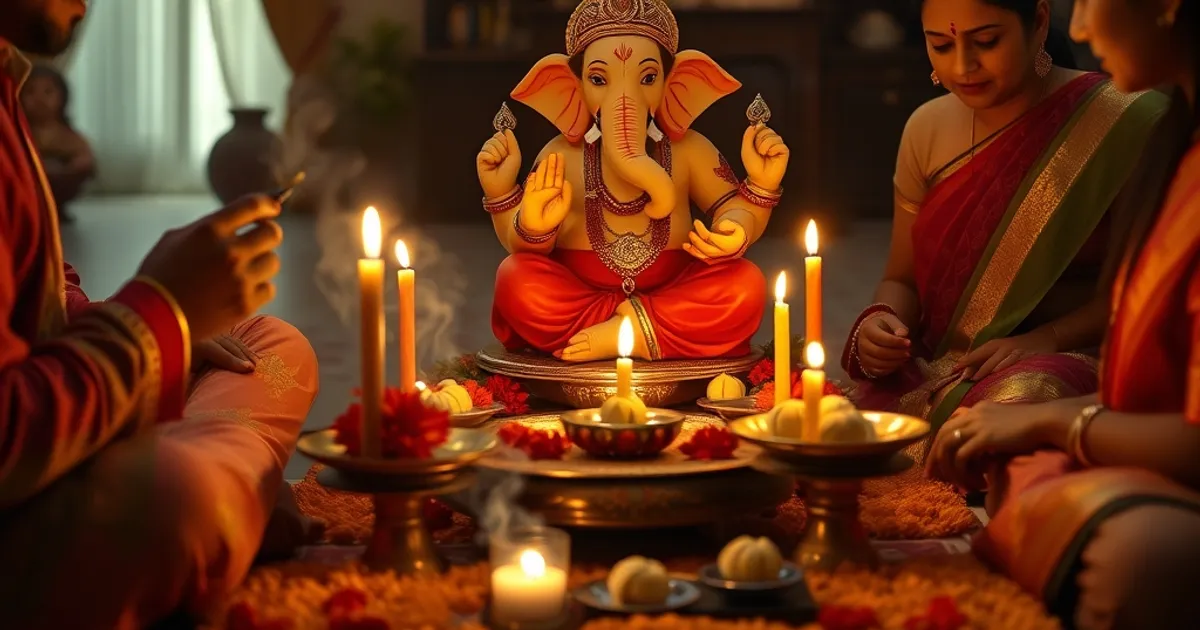
The festival begins with the installation of a clay idol of Ganesha — a murti — in homes, community halls, or public spaces. Over ten days, devotees gather for daily pujas, offerings of modak (the sweet dumpling regarded as Ganesha's favourite), and evening aartis. Songs, cultural performances, and community meals weave through the ten-day period. The festival concludes with visarjan: the immersion of the Ganesha idol in a body of water, a symbolic farewell after which Ganesha is invited to return the following year.
In Milan, the adaptation of this ten-day tradition to a European context involves practical creativity and communal effort. Without a permanent temple, the Indian community organises around rented halls, cultural centres, and private residences. Murtis are sourced through imports or eco-friendly artisans who ship from India, and the scale of celebration ranges from intimate family observances to organised community events that draw dozens of families together under one roof.
The ten-day arc gives families and community groups a natural structure: some host pujas on the opening and closing days only, while others maintain daily programmes. Children are often given roles — carrying offerings, reciting shlokas, or participating in the aarti — making Chaturthi one of the most effective festivals for cultural transmission across generations born outside India.
Indian Community Life in Milan
Milan has an established Indian diaspora concentrated in the Gujarati and Punjabi communities, many of whom arrived as textile traders, restaurateurs, and professionals over several decades. The city's role as Italy's commercial and fashion capital made it a natural landing point for Indian entrepreneurs, and the community has maintained cultural associations and informal networks across generations.
This community foundation means Ganesh Chaturthi in Milan does not happen in isolation. Cultural associations and community leaders coordinate to ensure that major festivals are celebrated collectively. Indian grocery stores and shops in the Via Padova corridor and the Porta Venezia area stock festival-specific items — fresh flowers, incense, modak ingredients, and devotional accessories — in the weeks surrounding Janmashtami and Chaturthi.
Families with children use festivals like Raksha Bandhan 2026 and Ganesh Chaturthi as anchors for cultural transmission. They provide a way of connecting second-generation children born in Italy to traditions that shape identity and maintain continuity with family in India. Many parents report that the communal nature of Chaturthi — the shared puja, the group aarti, the children running between families — replicates something of the neighbourhood mandal culture they grew up with.
Milan's Indian community also benefits from its proximity to other European cities with larger South Asian populations. Community members regularly travel to and from London, Paris, and Leicester for major festivals, and ideas, organisers, and cultural performers cross borders within this network.
Insider Tip: If you are looking to participate in a Ganesh Chaturthi puja in Milan and do not yet have connections to the local community, the period around Krishna Janmashtami 2026 on September 4 is the best time to make contact. Community associations often announce their Chaturthi plans during Janmashtami events or in the days immediately following. Attending a Janmashtami gathering is one of the most natural ways to find out about local Chaturthi arrangements without needing a prior introduction. Keep an eye on Desi.Net's Milan page, where organisers post event details as plans are confirmed.
Frequently Asked Questions
When does Ganesh Chaturthi fall in 2026? Ganesh Chaturthi follows Krishna Janmashtami 2026 (September 4) in the Hindu lunar calendar. The exact date shifts each year and falls in the days or weeks after Janmashtami. Check Desi.Net's Milan page for confirmed event dates as community announcements become available closer to the festival.
Does Milan have a Hindu temple where Ganesh Chaturthi is celebrated? There is no permanent Hindu temple currently listed for Milan. The Indian community organises celebrations in rented halls, cultural centres, and private homes. Community associations are the main point of contact for finding organised events, and Desi.Net's Milan directory lists active local groups.
What is Sankashti Chaturthi and how does it connect to Ganesh Chaturthi? Sankashti Chaturthi is the monthly fasting day dedicated to Lord Ganesha, observed on the fourth lunar day after the full moon. It falls on August 2 and again on August 31 in this period. The August 31 Sankashti falls just before Ganesh Chaturthi in the lunar calendar, making it a natural moment of focused Ganesha devotion ahead of the ten-day festival.
What is Raksha Bandhan 2026 and when is it? Raksha Bandhan 2026 falls on August 27. It is the festival in which siblings tie protective threads called rakhis on each other's wrists. In Milan's Indian diaspora, Raksha Bandhan is one of the most socially active festivals of the summer and often features community gatherings with cultural programmes for children.
How do Indian families source Ganesha murtis for Chaturthi celebrations in Italy? Families typically order murtis in advance from artisans in India who ship internationally, or through community organisers who coordinate group orders. Eco-friendly clay murtis that dissolve in water have become more common, since performing visarjan in European rivers or lakes requires biodegradable materials.
Bottom Line
For Milan's Indian diaspora, the summer of 2026 builds steadily toward Ganesh Chaturthi through a series of meaningful observances: the spiritual depth of Guru Purnima 2026 on July 29, the folk warmth of Nag Panchami 2026 on August 17, the sibling celebration of Raksha Bandhan 2026 on August 27, and the devotion of Krishna Janmashtami 2026 on September 4. Each marks a step along the path to the ten-day Chaturthi festival, when the Gujarati and Punjabi communities at the heart of Milan's Indian scene gather around Lord Ganesha for daily pujas, shared meals, and the moving ritual of visarjan. Desi.Net's Milan listings remain the most practical first stop for finding events, connecting with organisers, and staying part of the community across the kilometres that separate Italy from home.