
What's Happening in Milan's Desi Community
TL;DR
- 🌸 Milan's South Asian diaspora marks August with a full Hindu lunar calendar and two major festivals
- Raksha Bandhan 2026 brings community gatherings and sibling celebrations to Europe's fashion capital
- Nag Panchami 2026 and Purnima anchor the spiritual mid-month for the city's Punjabi and Gujarati communities
- Regular observances — Ekadashi, Pradosh Vrat, and Amavasya — track the lunar month for devoted families
- Keeping these traditions alive in Milan takes active effort, and the community puts in that effort consistently
Milan's Desi Community in August: Tradition in a Fashion Capital
Milan does not immediately read as a hub of South Asian culture. But spend time in certain neighborhoods — Porta Ticinese, stretches near the Navigli canals, pockets of the eastern suburbs — and you begin to see the outlines of something more layered than the luxury fashion economy that defines this city's global reputation.
Milan's South Asian diaspora is substantial, well-networked, and demographically rooted: the Punjabi and Gujarati communities here are among Europe's more cohesive, with community organizations, cultural networks, and informal structures that have grown over decades of settlement. August is when that community's calendar fills up.
Raksha Bandhan 2026: The Sibling Bond Across European Time Zones
Raksha Bandhan 2026 is among the most emotionally significant dates on Milan's Desi calendar this month. The festival — built around the ritual of sisters tying a rakhi thread on their brothers' wrists — carries particular weight for a community where family is typically distributed across multiple countries. Siblings may be in Punjab, in London, in Toronto, or in another Italian city; making Raksha Bandhan 2026 happen requires coordination that the homeland context rarely demands.
Community organizations in Milan typically coordinate Raksha Bandhan 2026 gatherings that serve as proxies for the family settings that distance has made difficult to replicate. Sisters tie rakhis at collective events; temples hold open programs so that those without nearby siblings can still observe the tradition in company. Video calls run in the background of household gatherings; carefully packaged rakhis arrive from families back home weeks in advance.
Milan's Gujarati and Punjabi communities both observe Raksha Bandhan 2026 with visible enthusiasm, and the occasion often functions as a larger cultural gathering point — extending beyond the ritual itself into shared food, music, and the kind of conversation that only happens when people who understand the same cultural references are in the same room together.
Insider Tip: Milan's South Asian community is concentrated in specific neighborhoods and connected primarily through regional community networks. If you are new to the city and looking to join Raksha Bandhan 2026 or any other August gathering, community WhatsApp groups organized by regional origin — Gujarati Samaj networks, Punjabi community groups — are the fastest way to find out where events are happening and who is organizing them.
Nag Panchami 2026 and Purnima: The Spiritual Mid-Month
Nag Panchami 2026 is observed by Milan's Hindu families primarily through home puja and, where organized space is available, collective temple programs. The festival's roots — in the agricultural rhythms of the monsoon season, in the veneration of the serpent as a protector of homes and underground waters — may feel distant from a northern Italian city context. But the community's connection to the observance remains alive, maintained through family practice passed down from grandparents and reinforced during visits to the homeland.
Children growing up in Milan learn Nag Panchami 2026 the same way they learn many things: by watching, by participating in home rituals, by being told stories that give the practice its meaning. That informal transmission is how the community perpetuates what the surrounding culture does not reinforce for them.
Purnima, the full moon day, carries its own significance in August's Shravan month. Full moon evenings often draw informal community gatherings — shared prayers, collective bhajans, or simply families coming together to mark the occasion with a meal and devotion. In a city where the South Asian community is geographically dispersed, Purnima provides a reliable monthly occasion for coming together, and August's Purnima falls at a particularly auspicious point in the lunar calendar.
Ekadashi and Pradosh Vrat: The Month's Anchor Points
Two rounds of Ekadashi fall in August — one in the dark fortnight, one in the bright — and both are observed by fasting households across Milan's South Asian community. Ekadashi requires abstinence from grains and legumes, and maintaining that practice in a European food environment takes more active effort than it does back home. Suitable foods require sourcing; fasting requires explanation to non-South Asian colleagues and friends.
That extra effort tends to make Ekadashi feel more deliberate for many Milan-based observers — a conscious choice rather than a culturally ambient one. Several community members describe this quality as something they have come to value: the tradition demands something from them, and the act of meeting that demand reinforces the connection to it.
Pradosh Vrat falls twice in August — on the thirteenth day of each lunar fortnight — dedicated to Shiva. Milan's Shiva devotees observe the vrat with evening prayers and fasting, gathering with other community members for collective worship where a dedicated space is available. On the two Pradosh Vrat evenings this month, those gatherings become small but meaningful centers of community life.
Amavasya: New Moon Reflection in an Italian City
Amavasya, the new moon day, is observed in Milan primarily as a day of ancestral remembrance and quiet devotion. Pitru tarpan — the offering made on behalf of departed ancestors — requires either flowing water or a designated sacred space, and Milan's community has adapted the practice to local conditions.
For many Milan-based South Asian families, Amavasya means a vegetarian meal, a home puja at a family altar, and a phone call back to family in Punjab, Gujarat, or elsewhere in the homeland — participating at a distance in whatever rituals are being conducted there. The physical distance does not diminish the emotional weight of the day; if anything, the call home makes it more vivid.
What August Looks Like for Milan's Desi Community
The cumulative picture of August — Raksha Bandhan 2026, Nag Panchami 2026, Purnima, two rounds of Ekadashi, Amavasya, and two Pradosh Vrat evenings — is of a community that has decided cultural continuity is worth the work it requires in a diaspora context.
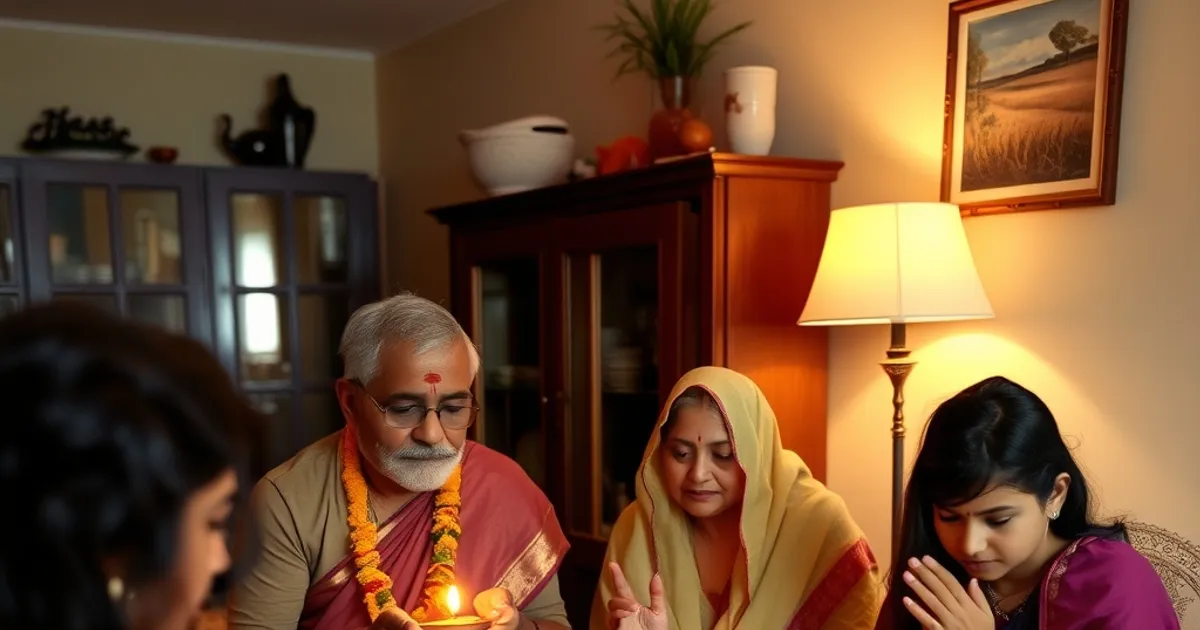
That is the defining quality of Milan's Desi community: its practices are active, not passive. They require seeking out ingredients, connecting with community networks, traveling to where gatherings happen, and sometimes simply observing alone at home because no temple is nearby. The fact that the calendar is still being followed — by thousands of South Asian residents across this Italian city — speaks to the depth of connection to these traditions and to the community structures that support them.
FAQ
Does Milan have a Hindu temple? Milan has South Asian community organizations and spaces used for religious observance. The availability and location of formal temple spaces can be confirmed through community groups active in the city.
How does the Gujarati community in Milan typically observe Raksha Bandhan 2026? Gujarati families tend to observe Raksha Bandhan 2026 with home-based rituals and community gatherings organized through local Gujarati associations. Contact local community organizations for specific events in August 2026.
Is Nag Panchami 2026 widely observed by Punjabi families in Milan? Nag Panchami observance varies by regional tradition and is more commonly associated with families from Maharashtra, Uttar Pradesh, and southern India, though practices differ significantly by family background.
How do Milan's South Asian residents find community events? Regional community associations, WhatsApp groups, and South Asian social media networks are the primary channels for event information in Milan.
What is Pradosh Vrat and how long does the fast last? Pradosh Vrat is a bimonthly fast dedicated to Shiva, observed on the thirteenth day of each lunar fortnight. The fast is typically broken after evening prayers during the pradosh period, roughly 1.5 hours after sunset.
Bottom Line
August gives Milan's Desi community a month of both celebration and spiritual depth. Raksha Bandhan 2026 bridges the sibling bond across European time zones with warmth and community infrastructure; Nag Panchami 2026 and Purnima mark the mid-month with devotion; and the steady discipline of Ekadashi, Pradosh Vrat, and Amavasya tracks the lunar calendar through to the end of the month. In a city better known for runway seasons than religious calendars, Milan's South Asian community is quietly running both — and making it look effortless.