
Telugu New Year in Milpitas, a BBQ Comeback, and a Temple Burglary That Shook the South Bay
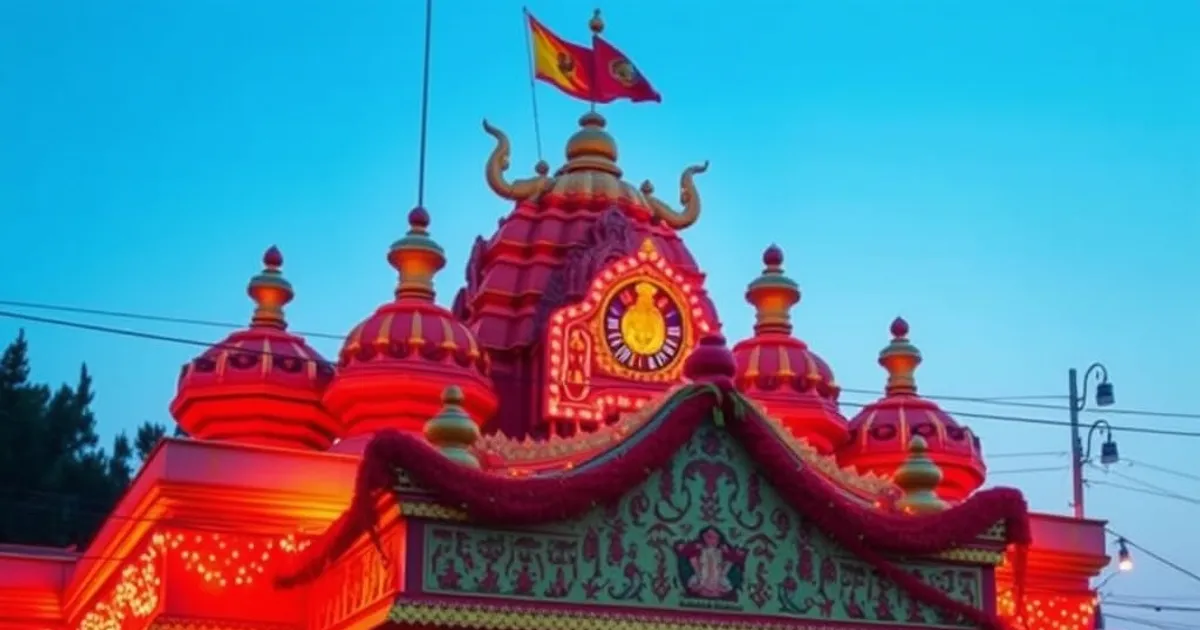
Milpitas's South Asian community navigated a week of contrasting stories: the Bay Area Telugu Association brought the community together for a grand Ugadi New Year celebration, a beloved live-fire Indian barbecue restaurant made its return after closure, and the Shirdi Sai Parivaar Temple was struck by burglars before dawn, shaking devotees and renewing calls for stronger protection of South Asian houses of worship.
🪔 Bay Area Telugu Association Hosts Grand Ugadi Celebrations 2026 in Milpitas
The Bay Area Telugu Association hosted its Grand Ugadi Celebrations 2026 in Milpitas, California, bringing together the Telugu-speaking community of the Bay Area for one of the most significant cultural events of the Telugu calendar year. Ugadi marks the Telugu New Year and is a festival of deep spiritual and cultural importance for Telugu communities across the world, and the Bay Area Telugu Association organized the 2026 celebrations on what it described as a grand scale. The Indian Panorama, a publication dedicated to news relevant to the Indian-American community in the United States, covered the event as a noteworthy moment in Bay Area South Asian community life. Milpitas has become an important gathering point for South Asian cultural organizations in the South Bay, with its substantial Indian-American population making it a natural host for large-scale community celebrations. The Bay Area Telugu Association plays a significant role in maintaining Telugu cultural traditions for families in the diaspora, creating shared spaces for community members across generations to observe festivals, share language and culture, and sustain connections to their heritage in Andhra Pradesh and Telangana. The 2026 Ugadi event reflects the active role that cultural associations play in keeping South Asian traditions vibrant for Bay Area families, ensuring that the Telugu New Year is observed with grandeur even far from the subcontinent. [1]
Wah Jee Wah's Live-Fire Indian Barbecue Returns to Milpitas After Closure
Wah Jee Wah, described by the San Francisco Chronicle as one of the Bay Area's few live-fire Indian barbecue restaurants, is returning to Milpitas following a period of closure. The restaurant's reopening brings back a distinctive concept that distinguishes itself through live-fire cooking — an approach that, while rooted in certain Indian regional culinary traditions, is uncommon enough as a dedicated restaurant format to make Wah Jee Wah one of only a handful of such venues across the Bay Area. The Chronicle's coverage characterized the establishment as a notable South Bay dining presence whose return is a meaningful event for the region. For diners in Milpitas and surrounding communities, the reopening restores a culinary option that had been unavailable during the closure period. Live-fire cooking employs open flames, charcoal, or wood fire to produce flavors distinctly different from conventional kitchen methods and from the tandoor-based formats more commonly associated with mainstream Indian restaurant dining. The San Francisco Chronicle framed the reopening as a significant culinary return, noting both the rarity of the live-fire Indian format in the Bay Area and the restaurant's Milpitas location. The story highlights how specialty dining concepts can build lasting community loyalty that persists through periods of closure and reopening. [2]
🤝 Shirdi Sai Parivaar Temple Burglarized Before Dawn, Community Left Heartbroken
The Shirdi Sai Parivaar Temple in Milpitas was burglarized in the early hours of Thursday, September 25, leaving the local Hindu community shaken. Temple officials told Diya TV that intruders broke into a side lobby door and entered the main hall, where they forcibly removed the center donation hundi — a sacred donation box containing offerings from recent celebrations. Thieves also stole jewelry from the Chavdi, items regarded as sacred by devotees. Temple officials confirmed the break-in occurred between 5:30 and 5:40 a.m. and that CCTV footage captured the suspects; the footage has been shared with Milpitas police, who are investigating. A temple spokesperson conveyed the community's grief to Diya TV: "We don't know how much cash is lost. Our hundi is gone, completely taken away. It's very sentimental for all of us. More than money, we are heartbroken that someone entered the temple and stepped onto the podium." The burglary is part of what community leaders describe as a troubling pattern targeting Hindu temples across California and the United States. Similar incidents have been reported in Santa Clara, Fremont, Newark, Sacramento, and Indiana over the past two years. Community leaders are calling for stronger security measures and federal recognition of what they describe as an escalating trend. Milpitas police have urged nearby religious institutions to review their security protocols. [4]
Santa Clara County DA Charges San Jose Man in Multi-Temple Burglary Spree
A San Jose man accused of stealing tens of thousands of dollars from South Bay churches and temples is being held on one million dollars bail, according to the Santa Clara County District Attorney's Office. Prosecutors allege Jaime Gutierrez Flores, 33, broke into at least eight religious institutions between December and February, culminating in his arrest at a San Jose church. The DA's office further alleges that Flores and an accomplice targeted a Hindu temple in Sunnyvale on three separate occasions, stealing more than $45,000 from donation boxes. District Attorney Jeff Rosen stated: "Our schools, our homes, our places of worship, are special and sacred places, and when they are invaded by criminals it feels as though our whole community has been violated. Our office will hold this criminal, and anyone who acted with him, fully responsible to the law." Patch reported on the charges in the context of the broader pattern of religious institution burglaries across the South Bay, which has alarmed Hindu and South Asian communities throughout Santa Clara County. The prosecution represents a law enforcement response to what community members have described as serial targeting of temples and churches. For South Bay devotees, the charges signal that authorities are treating crimes against religious institutions with appropriate seriousness. [8]
Sources: [1] The Indian Panorama · [2] San Francisco Chronicle · [4] Diya TV · [8] Patch