
Janmashtami 2026 in Muscat: Events, Puja & Where to Celebrate
Janmashtami 2026 in Muscat: Events, Puja & Where to Celebrate
For Muscat's vibrant South Asian community, Janmashtami is so much more than a date on the calendar — it is the one night of the year when the city's Indian families, temple circles, and cultural societies come together in genuine joy, staying up past midnight to welcome the birth of Lord Krishna. Whether you grew up doing the midnight abhishek in Mumbai or have never celebrated outside your family home before, Muscat has a warm and growing tradition around this festival that is absolutely worth experiencing.
TL;DR
- 🗓️ Krishna Janmashtami 2026 falls on Friday, 4 September 2026 — a weekend night, which makes this year's celebrations extra festive.
- 🕉️ The lead-up calendar is packed: Raksha Bandhan lands on 28 August, so plan a full festive fortnight.
- 🪔 Community pujas, bhajans, and midnight Krishna jayanti rituals are the heart of the celebration — connect with your local mandal early.
- 🛍️ Stock up on puja samagri, traditional dress, and decorations from the Indian grocery and gift shops in Ruwi and Al Khuwair well ahead of time.
- 👶 Dahi Handi events and fancy-dress competitions for children are popular — great for families with little ones.
Why Janmashtami Feels Special in Muscat
There is something quietly beautiful about celebrating a festival rooted in the Yamuna's banks while the Arabian Sea shimmers on the other side of the Hajar mountains. Muscat's South Asian diaspora — hundreds of thousands strong — has built a cultural life here that mirrors the best of home without losing a drop of devotion. Janmashtami is one of those festivals that crosses regional lines: Gujarati, Malayali, Punjabi, Tamil, Maharashtrian families all celebrate, each with their own cherished rituals, yet all gathered under the same love for Krishna.
Because 4 September 2026 falls on a Friday, the weekend gives families the luxury of staying up for the traditional midnight jayanti puja without worrying about school runs or early office starts the next morning. That alone makes 2026 a standout year.
The Date & the Lead-Up Calendar
Krishna Janmashtami 2026 is confirmed for Friday, 4 September 2026. Mark that date, but also look at the festive runway leading into it:
Raksha Bandhan — Friday, 28 August 2026 lands just a week before Janmashtami. Many families treat these two festivals as a single extended celebration, with the rakhi tying happening on the 28th and the Krishna puja preparations beginning almost immediately after.
The Purnima (Full Moon) on 28 August adds an extra layer of auspiciousness to Raksha Bandhan this year, making the night sky itself part of the celebration.
Between Raksha Bandhan and Janmashtami you will also notice Sankashti Chaturthi on 1 September — a Ganesh fast observed by many Maharashtrian and Konkani families — so it is genuinely a packed fortnight of puja and prasad.
For those who follow the full Vaishnava observance, the Ekadashi on 7 September and Pradosh Vrat on 9 September follow Janmashtami closely, extending the spiritual season well into mid-September.
How Janmashtami is Celebrated: Rituals to Know
If you are new to the festival or want to deepen your practice, here is what the traditional celebration looks like:
Fasting (Upavas): Devotees fast through the day of Ashtami — eating only fruits, milk, and sabudana-based dishes — breaking the fast only after the midnight puja. It is a beautiful discipline and, practically speaking, the light foods keep you energised for a late night.
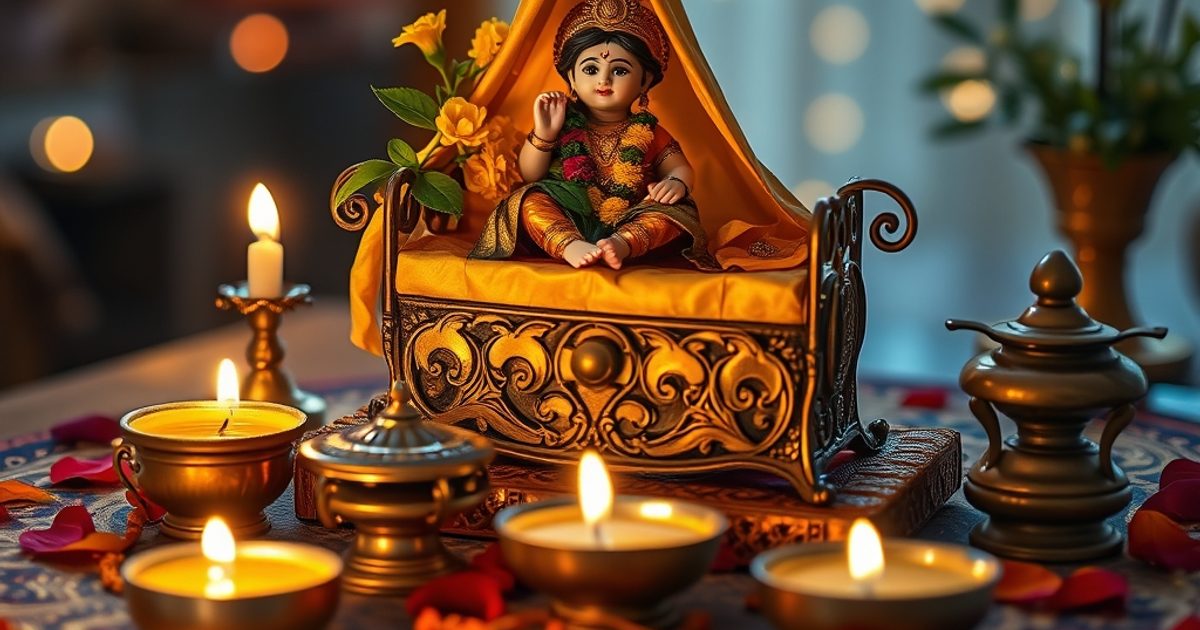
Decoration and Jhula: A small cradle (jhula or jhoola) is set up at home and in temples, and a figurine of baby Krishna is placed in it. Flowers, fresh tulsi leaves, and soft fabrics dress the space. Children love helping with this.
Midnight Abhishek: At the stroke of midnight — the moment of Krishna's birth — the deity is bathed in panchamrit (a mix of milk, curd, honey, ghee, and sugar), then dressed in new clothes and jewellery. The sound of conch shells, bells, and collective chanting creates an atmosphere unlike any other.
Dahi Handi: The day after Janmashtami (called Nandotsav or Gopalkala), human pyramid formations attempt to break a clay pot hung high — a recreation of Krishna's legendary butter-thieving antics. Community groups in Muscat organise this as a fun, theatrical event, especially popular with teenagers and young adults.
Bhajans and Kirtans: Overnight bhajan sessions are a staple. Classical compositions like Surdas bhajans, Meera bhajans, and the timeless Hare Krishna kirtan fill homes and halls. If you have never attended a night-long bhajan, Janmashtami is the perfect first time.
💡 Desi Insider Tip: Make your panchamrit at home the evening before and store it in the fridge — it keeps perfectly overnight and saves you the midnight scramble. Use full-fat milk, fresh curd, raw honey, good-quality ghee, and rock sugar (mishri) rather than refined sugar. The difference in taste during the abhishek is genuinely noticeable, and the prasad that follows is extraordinary.
Preparing Your Home Puja
A home Janmashtami setup does not need to be elaborate to be meaningful. A few things to source ahead of time in Muscat:
Puja samagri: Indian grocery shops in Ruwi's wholesale market area and in Al Khuwair generally stock panchamrit ingredients, agarbatti, camphor, kumkum, and small Krishna idols ahead of major Hindu festivals. Visit by late August to avoid the last-minute rush.
Matki (clay pots): For the Dahi Handi tradition, small decorative clay pots are sometimes available at gift and homeware shops that cater to the Indian community. They double as charming décor.
Traditional dress: Dressing children as baby Krishna — in yellow dhoti, peacock feather crown, and flute prop — is one of the most-loved Janmashtami traditions. Fabric shops in Ruwi and the Indian commercial zones around Mutrah can help you put together a costume, or check Indian boutiques in Al Khuwair for ready-made options in August.
Printed photos and frames: Many families display large framed images of Krishna for the puja. Indian gift shops near the Ruwi bus station area typically stock these.
Community Celebrations: Finding Your Mandal
While specific 2026 event details for Muscat's temples and cultural organisations have not yet been announced at the time of writing, here is how to stay connected:
Most of the large-scale Janmashtami events in Muscat are organised by Indian cultural associations, regional sabhas (Gujarati sabha, Kerala Hindu Samajam, etc.), and ISKCON-affiliated groups. These organisations typically confirm event details — venue, timing, registration for cultural programmes — in late August, sometimes just one to two weeks before the festival.
The best way to find your community's celebration is to connect directly with the mandal or sabha you are already part of, or to ask colleagues and neighbours in your residential area. WhatsApp groups within Indian residential communities in areas like Qurum, Ghubra, Azaiba, and Al Khuwair are often the fastest way to learn about local gatherings.
For children's fancy-dress competitions and Dahi Handi events, school PTAs in schools with large Indian student bodies frequently organise their own celebrations — worth checking with your child's school in August.
The Festive Fortnight: A Practical Timeline
Here is how to pace yourself across the celebrations:
By mid-August: Source your puja items and plan your home setup. Order or stitch costume pieces for children.
28 August — Raksha Bandhan & Purnima: Celebrate rakhi with siblings, observe the full moon, and let the festive mood begin.
1 September — Sankashti Chaturthi: Quick Ganesh puja to start the final countdown auspiciously.
3 September (evening): Set up your jhula and home decorations. Prepare panchamrit. Join any pre-Janmashtami bhajan sessions in your community.
4 September — Janmashtami: Observe the fast through the day. Attend community programmes in the evening. Perform the midnight abhishek at home or at your nearest community hall. Break your fast with panchamrit prasad after midnight.
5 September — Nandotsav: Celebrate with Dahi Handi events and community gatherings.
FAQ
Q: What is the exact date of Janmashtami 2026 in Muscat? Krishna Janmashtami 2026 falls on Friday, 4 September 2026.
Q: What time is the midnight puja performed? The abhishek and jayanti puja traditionally happen at midnight — around 12:00 AM on 5 September 2026. Exact timing varies slightly by the muhurat calculated for your region, so check with your local pandit or mandal closer to the date.
Q: Is Janmashtami a public holiday in Oman? Janmashtami is not an official public holiday in Oman. However, because 2026's celebration falls on a Friday — already a weekend day — most residents will have the evening and night free to celebrate fully.
Q: What should children wear for fancy-dress on Janmashtami? The classic little Krishna look is a yellow or blue silk dhoti, a peacock feather crown, a flute prop, and a bindi or kajal dot on the forehead. Simple, beautiful, and instantly recognisable.
Q: Where can I find a community Janmashtami event in Muscat? Connect with your local Indian cultural association, regional sabha, or ISKCON group. Residential community WhatsApp groups and Indian school PTAs are also reliable sources. Event announcements typically circulate in late August.
The Bottom Line
Janmashtami 2026 lines up beautifully for Muscat's South Asian community — a Friday night celebration, a full festive fortnight from Raksha Bandhan onwards, and the same warmth and devotion that has always made this festival one of the most beloved in the Hindu calendar. Whether you celebrate with a quiet home puja or an all-night community kirtan, the spirit of Krishna's birth has a way of making even a city far from home feel deeply, joyfully desi.
For the latest community event listings, temple announcements, and cultural happenings as September approaches, keep Desi.Net bookmarked — your local South Asian guide to life in Muscat.