
Ganesh Chaturthi 2026 in Nagpur: Events, Puja & Where to Celebrate
Ganesh Chaturthi 2026 in Nagpur: Events, Puja & Where to Celebrate
TL;DR
- 🙏 Tekdi Ganesh Mandir is Nagpur's most beloved Ganesh temple, perched atop a small hill and drawing pilgrims year-round
- 🍊 Nagpur — Maharashtra's orange capital and the Vidarbha region's cultural hub — celebrates Ganesh Chaturthi with deep Maharashtrian community roots
- 🐍 Nag Panchami on August 17 carries special resonance here: the city's very name honours the serpent, making this festival a distinctly Nagpur affair
- 🥁 Neighbourhood mandals across the city have kept Chaturthi celebrations vibrant and community-rooted for generations
- 📅 Sankashti Chaturthi on August 2 and Nag Panchami on August 17 build the devotional momentum leading into the main festival
Nagpur holds a unique position in Maharashtra's cultural and spiritual life. Known across the country as the city of oranges and situated at the precise geographical centre of India, Nagpur is not a city that seeks external validation. It has its own rhythm, its own traditions, and its own way of honouring the festivals that have defined the Maharashtrian calendar for centuries. Ganesh Chaturthi in Nagpur is not a replica of Mumbai's grand spectacle — it is something more personal, more rooted, and in many ways more representative of how this festival is lived at a genuinely human scale.
Tekdi Ganesh Mandir: The Spiritual Summit of Nagpur
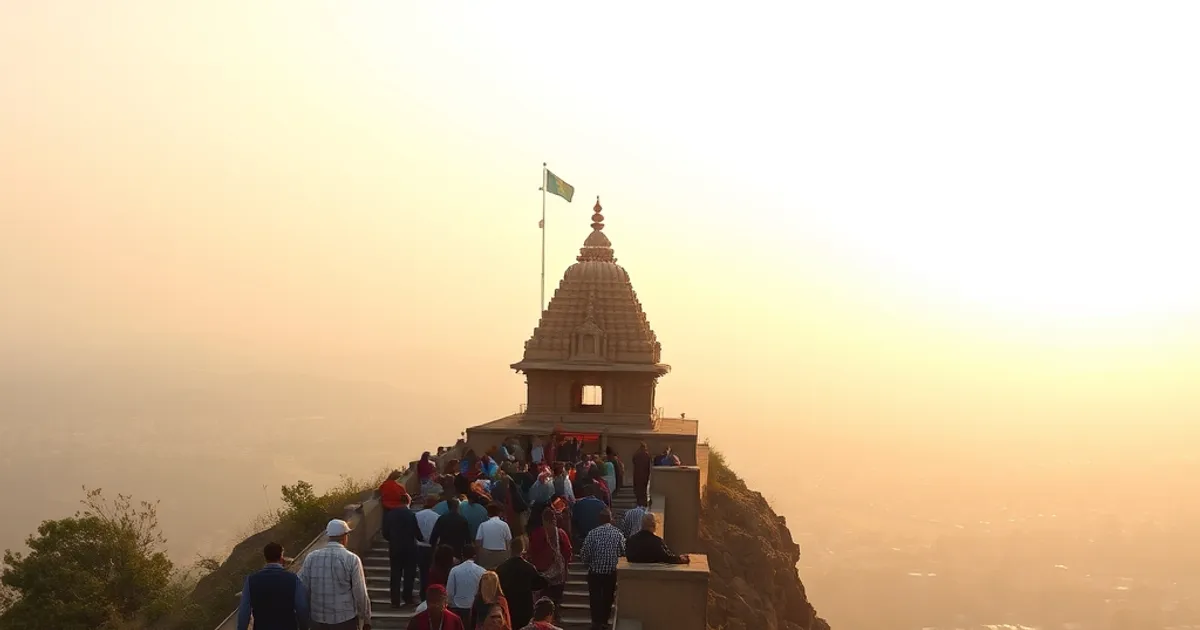
If there is a single place that defines Ganesh Chaturthi in Nagpur, it is Tekdi Ganesh Mandir. Perched atop a small hillock — tekdi is the Marathi word for a small hill or elevated ground — this temple has been a pilgrimage destination for Nagpur's residents for well over a century. The ascent to Tekdi Ganesh Mandir is itself considered an act of devotion: devotees climb on foot, often reciting names of Ganesha with each step, arriving at the summit to the sound of bells and the sight of the city spreading out below in every direction.
During Ganesh Chaturthi, Tekdi Ganesh Mandir becomes the spiritual epicentre of the city's celebrations. The temple receives enormous numbers of devotees on the main festival day and throughout the ten-day observance. Special pujas are conducted at prescribed hours, prasad is distributed to all who arrive, and the hilltop glows at night with diyas and festive lighting that can be seen from the streets below. For many Nagpur families, the pilgrimage to Tekdi Ganesh Mandir on Chaturthi morning is a tradition carried across multiple generations, something children grow up expecting and adults return to regardless of how far they have travelled in life.
The elevated position of Tekdi Ganesh Mandir gives it a quality that flat-ground temples cannot replicate: a sense of arrival, of having made a physical effort that mirrors the devotional one, of standing somewhere genuinely apart from the pace and noise of the city below.
Nag Panchami and Nagpur's Unique Festival Identity
Nagpur's name carries within it a deep etymological connection to the serpent — naag in Sanskrit and Marathi — and this connection makes Nag Panchami on August 17 far more than just another festival date in this city. In Nagpur, Nag Panchami is observed with particular care and community participation. Serpent shrines across the city receive attention and milk offerings, and the festival draws considerable public engagement across all neighbourhoods. The overlap between the city's name and the festival's central symbol gives celebrations here a resonance that is genuinely local rather than simply inherited.
For the devotional calendar, Nag Panchami falls just weeks before Ganesh Chaturthi, and the two festivals together create a concentrated festive stretch that shapes Nagpur's late-August character. Guru Purnima on July 29 opens this season, followed by Sankashti Chaturthi on August 2 — a dedicated Ganesha fasting day — and then Nag Panchami on August 17. By the time Ganesh Chaturthi arrives, the city has already been in a devotional register for nearly a month.
Vidarbha Traditions and the Community Mandal Spirit
Nagpur and the broader Vidarbha region carry their own expressions of Maharashtrian culture that differ from the coastal Konkan tradition and Pune's cosmopolitan interpretations. Vidarbha's Ganesh Chaturthi celebrations tend to centre on community mandals — neighbourhood committees that take collective ownership of the puja, the pandal, the daily aartis, and the visarjan procession. This is not just organisational convenience; it is a genuine expression of how the Vidarbha tradition understands community.
These mandals function as social institutions as much as religious ones. They run cultural programmes and sports events through the ten days, serve community meals, and ensure that households without extended family nearby can participate fully in the collective celebration. The mandal tradition turns Ganesh Chaturthi into something beyond a festival — it becomes a community gathering, a moment when neighbours who pass each other daily stop and actually share something real.
In Nagpur's markets, the weeks before Chaturthi bring a surge in the availability of clay idols, red hibiscus, modak moulds, and decorative fabric. The city's famously fragrant orange bazaars also stock seasonal sweets, and the smell of fresh coconut and jaggery drifts from homes and sweetmeat shops throughout the preparation period.
Insider Tip: Arrive at Tekdi Ganesh Mandir before sunrise on Chaturthi morning for the dawn aarti — the early light over Nagpur from the hilltop is striking, and the devotional atmosphere at that hour is more intimate and intense than anything the busier afternoon hours can offer. For the rest of the festival, seek out smaller neighbourhood mandals in the older parts of the city for some of the most unself-conscious and authentic Chaturthi celebrations Nagpur has to offer.
Preparing for the Festival: What the City Looks Like
Nagpur's streets undergo a visible transformation in the weeks leading up to Ganesh Chaturthi. Idol-makers set up workshops that become informal galleries, displaying sizes ranging from a few inches for home pujas to large installations destined for public pandals. Many Nagpur families maintain the tradition of bringing Ganesha home for one-and-a-half days — a practice rooted in Lokmanya Bal Gangadhar Tilak's original vision of Ganesh Chaturthi as a vehicle for community solidarity.
The visarjan procession on the final day winds through Nagpur's main roads with dhol-tasha bands, colour, and the kind of fervent collective chanting that makes city streets feel briefly like something ancient. Local water bodies serve as immersion sites across different parts of the city. The whole place — orange groves, Vidarbha heritage, and all — pauses for those moments of farewell and return.
FAQ
What makes Tekdi Ganesh Mandir significant? Tekdi Ganesh Mandir sits atop a hillock, making the physical ascent part of the devotional act. It is one of Nagpur's oldest, most historically rooted Ganesh temples and the spiritual centre of the city's Chaturthi celebrations.
Why is Nag Panchami especially significant in Nagpur? Nagpur's name derives from naag (serpent), giving Nag Panchami on August 17 a local cultural resonance that makes this festival particularly meaningful here compared to other Maharashtra cities.
When does Ganesh Chaturthi fall in 2026? Ganesh Chaturthi 2026 arrives in late August, after Nag Panchami on August 17. Refer to a local panchang for the exact date and muhurat timings.
What is Sankashti Chaturthi? Sankashti Chaturthi on August 2 is a monthly fasting day for Ganesha devotees. The Sankashti that falls in the month preceding Ganesh Chaturthi is observed with heightened devotion across the city.
Are there activities for families during the festival? Yes. Neighbourhood mandals organise cultural programmes, sports events, and community meals throughout the ten days, making the festival accessible and enjoyable for all ages.
Bottom Line
Nagpur brings to Ganesh Chaturthi something that larger cities sometimes lose in the scale of their celebrations: an unhurried, genuine community spirit. With Tekdi Ganesh Mandir as the festival's spiritual summit, Nag Panchami deepening the devotional context just weeks before, and Vidarbha's mandal culture holding communities together through ten days of shared celebration, Nagpur's Chaturthi is shaped by place, history, and belonging in equal measure. For those wanting to understand what Maharashtrian festival life feels like when it is lived close to the ground, Nagpur is exactly the right place to be.