
Raksha Bandhan 2026 in Nairobi: Events, Puja & Where to Celebrate
Raksha Bandhan 2026 in Nairobi: Events, Puja & Where to Celebrate
TL;DR 🌸
- Raksha Bandhan 2026 falls on August 28 — the emotional centerpiece of the festival season for Nairobi's South Asian diaspora
- Nairobi has one of Africa's oldest South Asian communities, with Gujarati and Punjabi families whose roots here trace back to the early 1900s
- The Hare Krishna Temple on Ngara Road, Shree Hanuman Temple on Muthithi Road, and Mahajanwadi Temple on Oshwal Road are among the principal venues for seasonal worship
- The July–September 2026 calendar includes Guru Purnima 2026, Nag Panchami 2026, Krishna Janmashtami 2026, and Ganesh Chaturthi 2026 alongside the main Raksha Bandhan date
- Plan around Parklands, where the bulk of Nairobi's South Asian religious and cultural infrastructure is concentrated
The Festival Season: July to September 2026
Nairobi's South Asian diaspora follows the lunisolar calendar with a fidelity that has survived more than a century of distance from the subcontinent. The July-through-September 2026 window is one of the most festival-rich stretches of the year, and community institutions across Parklands, Ngara, and surrounding neighborhoods mark each date with organized events or temple observances.
Ekadashi falls on July 25, August 9, August 23, September 7, and September 22. These fortnightly fasting days honoring Vishnu are among the most consistently maintained personal observances in Vaishnava households, many of which have sustained the practice uninterrupted across three or four generations in Kenya.
Pradosh Vrat is observed on July 27, August 10, August 25, and September 9. The thirteenth-tithi Shiva observance draws devotees to Shaivite shrines for the sandhya (evening) puja. The Shree Hanuman Temple on Muthithi Road, while centered on Hanuman worship, attracts families observing Pradosh and other Shaivite-adjacent vrats.
Guru Purnima 2026 (July 29) is marked across traditions with evenings of bhajan and satsang. Temples and community centers organize gatherings honoring the teaching lineage, and families visit their spiritual mentors or gurus if they are present in the city.
Purnima on July 29 and August 28 are full-moon days favorable for temple visits and extended prayer. The August 28 Purnima coincides this year with Raksha Bandhan 2026 — a combination that amplifies the day's sacred resonance considerably.
Sankashti Chaturthi on August 2 and August 31 bring Ganesha devotees out for moonrise prayers and modak offerings, marking the fortnightly occasions of seeking Ganesh's blessing before major undertakings.
Amavasya on August 12 and September 11 prompt pitru puja — ancestral rites performed on the new moon. Temples in Nairobi that support these rites offer structured services; many families also observe simpler forms at home.
Nag Panchami 2026 (August 17) honors the serpent deities with milk, flowers, and turmeric. Several temples in the Parklands corridor maintain serpent shrines or images for this observance.
Raksha Bandhan 2026 (August 28) is the main festival of this season — covered in full below.
Krishna Janmashtami 2026 (September 4) is the midnight birth celebration of Krishna. The Hare Krishna Temple on Ngara Road is the principal venue for the overnight vigil, which draws participants from across the South Asian community and from Nairobi's broader population of devotees.
Ganesh Chaturthi 2026 (September 14) closes the season with the beloved Vinayaka festival — clay idols, daily aartis, and the ceremonial visarjan that marks the deity's departure after the celebration period.
Raksha Bandhan in Nairobi: The Heart of the Season 🎋
Raksha Bandhan — the protective thread tied by a sister on her brother's wrist, accompanied by prayers for his welfare and his pledge of protection in return — is one of those festivals that travels well. The essential ritual requires nothing more than a rakhi, a lamp, a few sweets, and the presence of siblings or surrogate siblings. That simplicity makes it one of the most resilient diaspora celebrations.
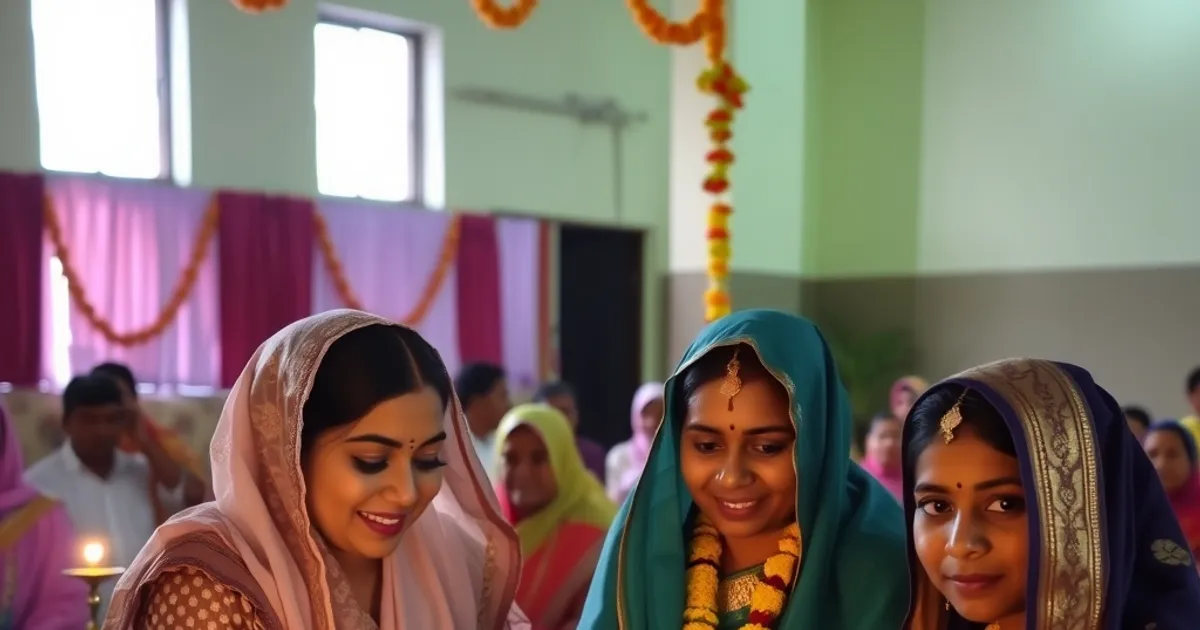
In Nairobi, August 28 is a day when the South Asian community gathers in ways that extend beyond the intimate family setting. Community organizations and mandals organize collective celebrations — rakhi-tying events, sweet distributions, bhajan evenings, and in some years cultural performances — that recreate the festive warmth for families without extended family nearby.
The Shree Lohana Mahajan Mandal at Opposite Gymkhana on Desai Road is a historical anchor for Lohana community events, and Raksha Bandhan fits naturally into the cycle of observances it has supported for generations. For the Oshwal Jain community, the Oshwal Religious Centre on Ring Road Parklands provides a gathering point for the season's celebrations. For Punjabi Sikh families, the Baba Isher Singh Ji Community Centre on Brookside Drive is a key community space, particularly during festival periods that carry significance across religious lines.
The Shree Swaminarayan Sidhant Sajivan Mandal on Swamibapa Road and the Shree Kutch Satsang Swaminarayan Mandir off Langata Road both serve Swaminarayan communities that are among the most actively organized in East Africa's South Asian diaspora — their festival programming is typically structured and well-attended.
Temple and Community Venues for the Season 🏛️
Nairobi's South Asian religious infrastructure is concentrated primarily in Parklands and Ngara — a legacy of the community's settlement patterns from the early twentieth century — and it is remarkably dense for a diaspora of its size.
Hare Krishna Temple on Ngara Road is the most prominent Vaishnavite venue in the city. Janmashtami 2026 on September 4 is its highest-energy event of the year, but Ekadashi, Purnima, and regular Vaishnava observances throughout the season are maintained with consistent puja. The temple draws participants from both the South Asian diaspora and a wider Kenyan community of devotees.
Jain Shwetamber Munisuvratswami Temple on Kolobot Road serves Nairobi's Jain community, which participates in the broader festival season while observing its own distinct calendar — particularly the Paryushana period, which often overlaps with this stretch of the year.
Shree Hanuman Temple on Muthithi Road is an important venue for Pradosh Vrat and other Shaivite-adjacent observances, serving families whose devotional practice centers on Hanuman worship.
Mahajanwadi Temple on Oshwal Road stands as another pillar of the Oshwal community's religious life, alongside the Oshwal Religious Centre on Ring Road Parklands.
Taken together, these institutions — along with the Swaminarayan mandals, the Lohana Mahajan Mandal, and the Sikh community center — give Nairobi a festival infrastructure that has served the South Asian diaspora through multiple generations and remains active today.
Insider Tip
The Hare Krishna Temple on Ngara Road runs its Janmashtami 2026 celebration as one of Nairobi's most accessible South Asian cultural events of the year. It is open to all — not restricted to community members — and the energy of the overnight celebration, from the evening bhajans through the midnight abhishekam, is genuinely transporting. Arrive at least an hour before midnight on September 4. The crowd builds steadily through the evening and the sanctuary fills up well before the celebration peaks.
FAQ
When is Raksha Bandhan 2026? August 28, 2026. It falls on Purnima this year, making it doubly auspicious for worship and community gathering.
Which temples in Nairobi celebrate Janmashtami 2026? The Hare Krishna Temple on Ngara Road is the primary venue. Other temples in the Parklands area also hold observances tailored to their communities.
Is the South Asian community in Nairobi primarily Gujarati? Historically, Gujarati families — many of Lohana, Patel, and Oshwal backgrounds — have been central to Nairobi's South Asian life. Punjabi Sikh families are also a significant presence, as are Tamil, Telugu, and other South Indian groups who arrived in more recent decades.
When is Ganesh Chaturthi 2026? September 14, 2026.
Are community events at the mandals open to visitors? Many events organized by the Shree Lohana Mahajan Mandal, the Oshwal Religious Centre, and similar bodies are open to the broader South Asian community and sometimes to the general public. It is always advisable to confirm with the hosting organization before attending.
Bottom Line 🙏
Nairobi's South Asian diaspora carries more than a century of festival tradition, and Raksha Bandhan 2026 on August 28 sits at the heart of a season running from Guru Purnima 2026 in late July to Ganesh Chaturthi 2026 in mid-September. With the Hare Krishna Temple on Ngara Road, the Shree Kutch Satsang Swaminarayan Mandir off Langata Road, the Mahajanwadi Temple on Oshwal Road, and the full range of community institutions in Parklands and beyond, the city's religious life remains as active as it has ever been. Connect early with the Shree Lohana Mahajan Mandal, the Oshwal Religious Centre, or any of the Swaminarayan communities to find the events that fit your family's tradition.