
What's Happening in Nashua's Desi Community
The rhythm of life in Nashua’s Desi community isn't just set by school calendars or work weeks—it's beautifully intertwined with a parallel calendar of festivals, fasts, and spiritual observances that create our cultural heartbeat. Knowing when and how to mark these moments is what keeps our roots nourished and our families connected, even miles from the motherland. Let's navigate this sacred schedule together, making it easier for you to weave tradition into your busy Nashua life.
TL;DR
📅 Upcoming Observances: Ekadashi (Jul 24), Pradosh Vrat (Jul 26 & 27), Guru Purnima/Purnima (Jul 29), Sankashti Chaturthi (Aug 2). 🍲 Practical Support: Local grocers and home kitchens are your allies for fasting-friendly ingredients and simple, pure meals. 🙏 Community Connection: These are personal observances, but shared understanding strengthens our local bonds. 🧘 Flexible Observance: Intent and a simplified ritual at home often matter more than perfect execution.
Your Spiritual Calendar in Nashua
For many of us, keeping track of tithis (lunar days) can feel like a puzzle, especially without the familiar sounds of temple bells or neighborhood announcements. The verified upcoming dates—Ekadashi, Pradosh Vrat, Guru Purnima, and Sankashti Chaturthi—are quiet yet significant markers on our spiritual map. These are primarily home-based observances. Ekadashi and Sankashti Chaturthi are traditional fasting days dedicated to Lord Vishnu and Lord Ganesha, respectively, while Pradosh Vrat is observed for Lord Shiva on the thirteenth day of the lunar fortnight. Guru Purnima, falling on a full moon day, is a time to express gratitude to our teachers and guides. Knowing these dates in advance allows you to mentally prepare, plan lighter work schedules if possible, and gather what you need for a peaceful observance right in your Nashua home.
The Art of the Simple Fast (Vrat)
Fasting here isn't about deprivation; it's about clarity and devotion. With our hectic Nashua lifestyles—shuttling between Route 3 and the office—a full nirjala (waterless) fast might not be practical. And that's perfectly okay. The essence of vrat is mindfulness. Consider a phalahar fast, consuming only fruits, nuts, dairy, and vrat-approved flours like singhare ka atta (water chestnut flour) or kuttu ka atta (buckwheat flour). A simple meal of sabudana khichdi or fruit chaat can be deeply satisfying. The key is to avoid grains, lentils, and sometimes even salt, depending on your family's tradition. The focus shifts from cooking elaborate meals to inner reflection and prayer. Preparing a simple, satvik meal the night before can ease your morning and help maintain the day's serene energy.
Sourcing Vrat Essentials in Nashua
You don't need to drive to Boston for special ingredients. Our local Indian grocery stores are well-stocked with fasting staples, especially around these common observance dates. Look for packets of sabudana (tapioca pearls), kuttu ka atta, singhare ka atta, rajgira (amaranth) flour, and samak ke chawal (barnyard millet). You'll also find vrat-specific snacks like roasted makhana (fox nuts) and ready-made mixes. Fresh produce sections carry the potatoes, peanuts, yogurt, and fruits you'll need. A quick weekend trip to stock up means you're never caught off guard. It's also a great opportunity to ask the shopkeepers—they often know which products are in highest demand for the upcoming tithi and can point you to the right shelf.
Creating Sacred Space at Home
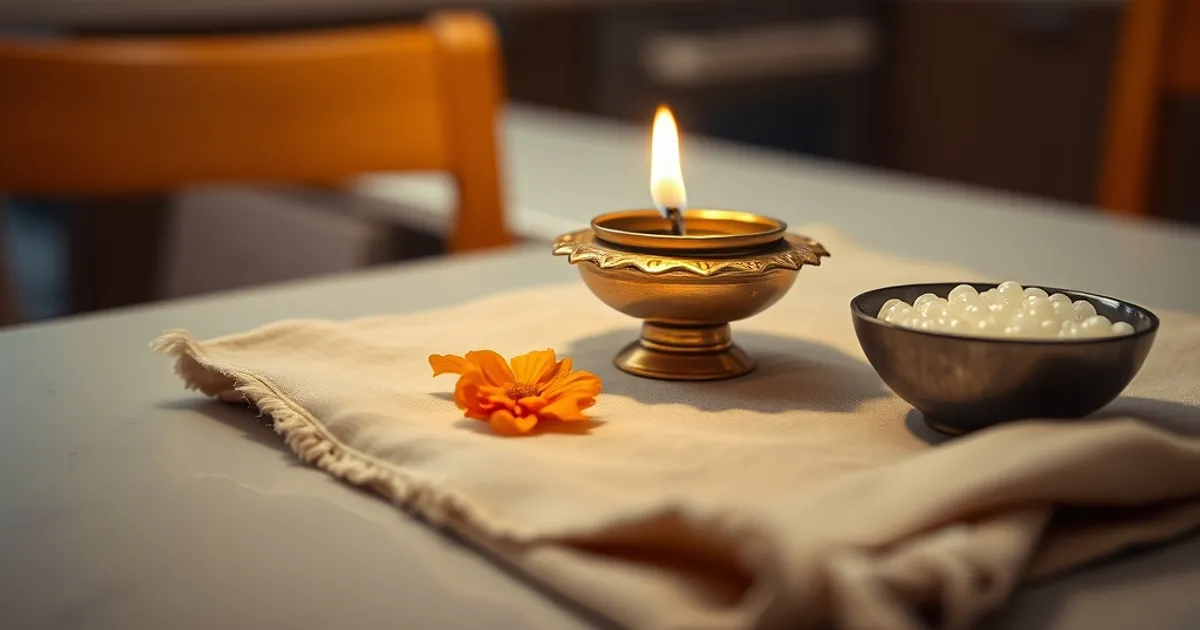
Observing these days in Nashua means creating your own mini-temple. You don't need a dedicated pooja room. A clean corner of the kitchen counter or a quiet spot in the living room can be transformed. Light a diya (lamp) or even a simple candle. Place a picture or small murti of the deity associated with the day—Vishnu for Ekadashi, Shiva for Pradosh, Ganesha for Sankashti. The act of cleaning the space, laying out a fresh cloth, and setting up your items is a meditation in itself. For Guru Purnima, you might place a photo of a beloved teacher, parent, or spiritual guide. The sounds of Nashua—lawnmowers, distant traffic—fade into the background when you play a gentle bhajan or chant the relevant mantras. This personal sanctuary is where diaspora faith becomes tangible.
Guru Purnima: Honoring Guides in Our Journey
Guru Purnima holds special resonance for us in the diaspora. Our "gurus" extend beyond traditional spiritual teachers. They are the parents who passed on traditions across oceans, the community elders who organized the first Navratri in a local hall, the language teachers who work with our kids on weekends, and even the supportive colleagues who help us navigate American professional life. This day is a reminder to pause and express gratitude. A simple gesture—a phone call, a heartfelt note, or offering a flower at your home altar—is what matters. It’s a day to reflect on the wisdom that guides our unique bicultural lives here in New Hampshire.
💡 Desi Insider Tip: For a truly stress-free fasting day, cook your vrat meal the night before. The morning can then be dedicated entirely to prayer and stillness, without the distraction of cooking. A pot of pre-made sabudana khichdi or peanut-rich aloo sabzi reheats gently while you complete your puja. This small shift turns the day from one of kitchen duty into one of genuine spiritual recharge.
FAQ
Q: Are there any community gatherings in Nashua for these observances? A: The listed observances (Ekadashi, Pradosh Vrat, etc.) are traditionally personal or family-centric fasts and prayers. Large public gatherings are not typically organized for these specific tithis in the same way as for major festivals like Diwali or Holi. Your observance at home is the primary practice.
Q: I'm new to fasting. How do I start? A: Begin gently. Try observing a partial fast—skip one main meal, or eat only fruit for the day. The intent (sankalp) is more important than rigor. Focus on avoiding grains and lentils, and spend some extra time in quiet prayer or reading. Listen to your body and adjust based on your health.
Q: Where can I find the exact timings for the puja? A: The verified facts provide the dates. For specific tithi timings (like when Ekadashi begins or ends), which are based on the lunar calendar and your location, reliable Hindu calendar websites or apps are the best resource. Enter 'Nashua, NH' as your location for accuracy.
Q: Can my children participate? A: Absolutely! In an age-appropriate way. They can help prepare the fruit plate, listen to a story about the deity of the day, or join in a simple aarti. It's a beautiful way to pass on traditions without pressure.
The Bottom Line
Our spiritual observances are the quiet threads that weave the vibrant fabric of Nashua's Desi community. They offer grounding, perspective, and a deep sense of cultural continuity amidst our fast-paced lives. Whether you observe a full fast or simply take a mindful moment to light a diya, you're participating in a timeless rhythm that connects us all. Don't let the perfect be the enemy of the meaningful—start where you are, use what you have. For more on navigating Desi life in Southern New Hampshire, from festival guides to local business spotlights, keep exploring right here on Desi.Net. We're your local hub, always here to help you feel connected.