
South Asian New York: Mayor Mamdani's Plural Identity, Indian Wedding Stops 5th Avenue, Mango Festival Arrives
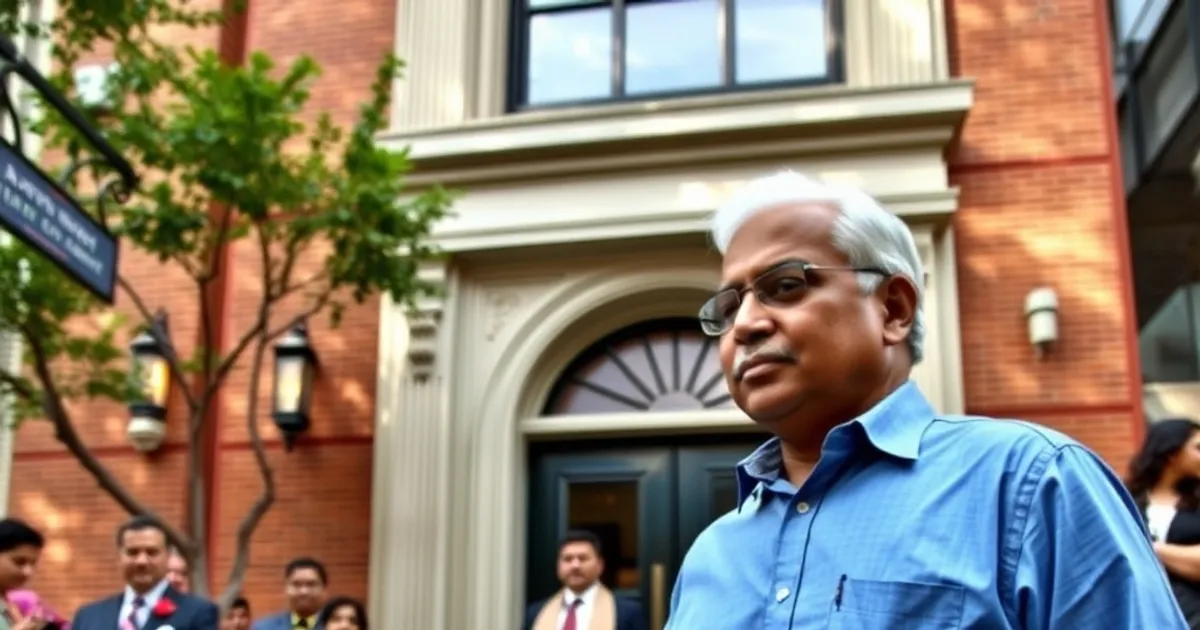
New York City's South Asian community is making headlines across multiple fronts this summer. Mayor Zohran Mamdani, the city's first South Asian mayor, is being profiled for the remarkable multiplicity of his cultural identity; a couple's five-day Indian wedding celebration shut down iconic 5th Avenue with a parade float; and the Indian Mango Festival is bringing rare subcontinental varieties to New York City for summer.
🗳️ Zohran Mamdani: NYC's Mayor Who Defies Every Easy Category
Zohran Mamdani, New York City's newly elected Mayor, has become one of the most discussed political figures in the country partly because of a question that no single answer can fully contain: who is he? City & State New York profiled Mamdani under the headline 'Muslim, Hindu, African, South Asian, New Yorker' — a title that captures the remarkable multiplicity of his inherited and chosen identities. Born to a Ugandan father and an Indian mother, raised across continents, Mamdani is a practicing Muslim whose household carries deep Hindu cultural roots — a combination not unusual in parts of East Africa's South Asian diaspora but striking to Americans accustomed to neater identity categories. Within weeks of taking office, his administration has been fielding policy questions ranging from artificial intelligence in city government to the structure of the city's primary election system, which anti-Mamdani political factions are now pushing to open up in hopes of eroding his coalition. His supporters see in him the actualization of New York's promise as a genuinely plural city — one where a person of South Asian descent, shaped by African experience and Islamic faith, can lead the largest city in the United States. For the city's South Asian community, his election carries particular resonance: it marks the first time a person of South Asian heritage has held the mayoralty of New York City, a milestone years in the making for a diaspora that has long punched below its political weight. [1]
🤝 Indian Newlyweds Pankti Doshi and Avish Jain Take Their Wedding to 5th Avenue
When bride Pankti Doshi and groom Avish Jain planned their wedding, they decided that a conventional ceremony would not do justice to the scale of the occasion. The couple's five-day celebration culminated in a procession along New York City's iconic 5th Avenue — complete with a parade float — in an event that shut down one of Manhattan's most trafficked and recognizable corridors and captured the attention of CNN and dozens of viral social media accounts. The procession draws on the tradition of the baraat — the groom's festive approach to the wedding venue accompanied by family, music, and dancing — and translated that centuries-old custom onto an entirely new stage. New York City's crowded sidewalks and glittering Midtown backdrop made for spectacular footage: the sight of a parade float carrying Indian newlyweds through the heart of Manhattan was simultaneously deeply rooted in South Asian custom and utterly New York in its audacity. The event speaks to the growing visibility and confidence of New York's Indian community, which increasingly stages its cultural celebrations not in private banquet halls but in the open public life of the city. For Doshi and Jain, the decision to take the party to 5th Avenue transformed a personal milestone into a public statement: that Indian weddings belong in the center of one of the world's great cities, as a joyful, unapologetic spectacle. [2]
🎉 Indian Mango Festival Brings Rare Subcontinental Varieties to New York City
An Indian Mango Festival is set to bring a curated selection of rare and prized South Asian mango varieties to New York City, offering the city's large Indian diaspora — and curious food lovers of every background — access to cultivars that rarely appear outside of the subcontinent. Reported by The American Bazaar, the festival is organized by vendors and enthusiasts who import directly from Indian orchards, making varieties such as Alphonso, Kesar, Langra, Himsagar, and other regional rarities available fresh to New York consumers. Mangoes occupy a position in South Asian culture that transcends mere fruit: they are seasonal events, revered gifts, status markers, and subjects of poetry, mythology, and fierce regional pride. The arrival of the first summer mangoes is a cultural milestone across India, Bangladesh, and Pakistan, and the New York festival attempts to recreate some of that anticipation and celebration for the diaspora. For South Asian New Yorkers who grew up awaiting mango season in South Asia, the festival offers a taste of home that airline travel and standard produce imports can approximate but rarely replicate with full freshness and varietal depth. For the broader New York food community, the festival represents an expanding window into the extraordinary diversity of India's agricultural heritage — a country that grows hundreds of named mango varieties across wildly different climatic and ecological regions. [3]
Sources: [1] City & State New York · [2] CNN · [3] The American Bazaar