
Janmashtami 2026 in Newark: Events, Puja & Where to Celebrate
TL;DR
- 🥳 Janmashtami 2026 lands on September 4 — and Newark's Indian community fills community halls and open grounds with cultural celebrations
- 🏺 Dahi Handi competitions are among the most high-energy South Asian cultural events of the summer
- 🎵 Stage programs — dance, music, drama, and children's fancy dress — bring generations together at community venues
- 🍛 Festival kitchens serve traditional Janmashtami foods including makhan, panjiri, and dairy-based sweets
- 🗓️ With Raksha Bandhan 2026 one week prior and Ganesh Chaturthi 2026 ten days after, this is the peak of the Indian festival season
Janmashtami as a Community Anchor Event
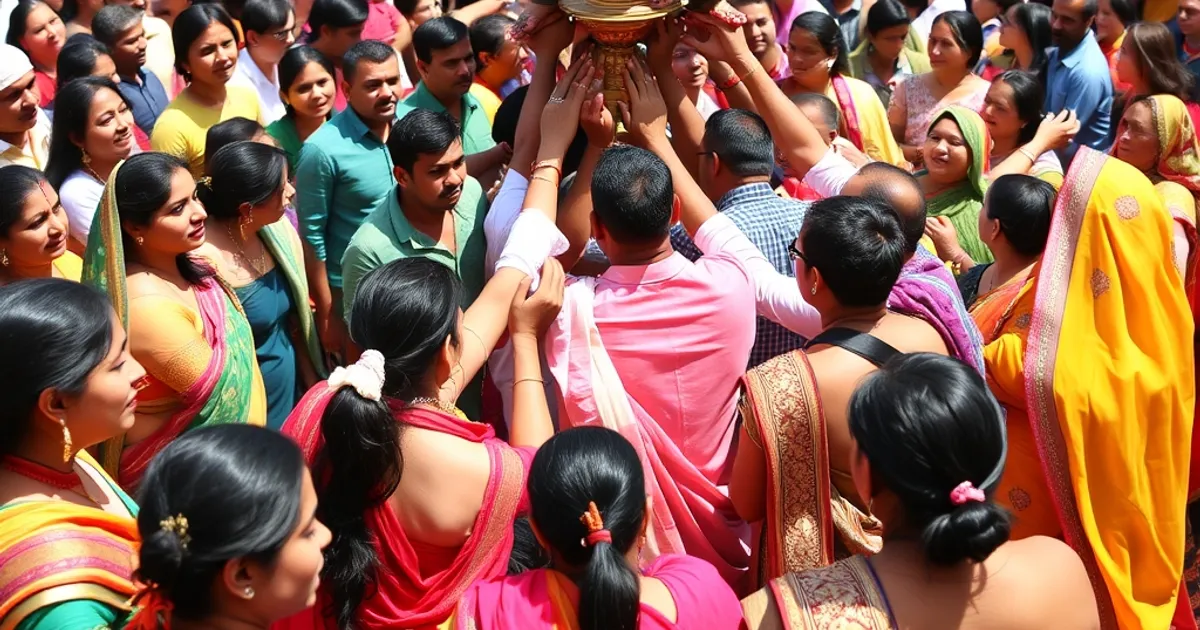
When Indian and Desi families across Newark think about the late-summer festival calendar, Janmashtami stands out not only as a religious occasion but as one of the most socially mobilizing events of the year. Krishna Janmashtami 2026 falls on September 4, and in the weeks leading up to that date, cultural associations, community centers, temple social committees, and informal neighborhood networks all begin coordinating the celebration.
What distinguishes the community event side of Janmashtami from the temple observance is its intentional outward-facing design. Where temple programs are built for devotees already engaged in prayer and fasting, community Janmashtami events are built for broad participation — children, young adults, families who came from Bihar, Uttar Pradesh, Gujarat, Maharashtra, and Tamil Nadu all finding a shared festive occasion. The result is a celebration shaped by that diversity, not flattened by it.
South Asian community hubs in Newark and the Essex County area have built a reliable Janmashtami event tradition over decades. Some organizations rotate venues; others maintain the same community hall year after year. The event schedule typically builds across the full day of September 4 and may carry into September 5 for families who stay through the midnight temple programs.
The Dahi Handi Competition
Few Janmashtami traditions generate more noise, excitement, and genuine athletic effort than dahi handi. The practice references one of the most beloved episodes in Krishna's mythology: as a young boy in Vrindavan, Krishna would organize teams of friends to raid the clay pots of butter and curd that village women hung from high ropes to keep out of reach. The dahi handi competition translates this story into a live physical challenge.
Teams — called Govindas — form human pyramids in an attempt to reach a clay pot (handi) suspended at height, filled with curd, buttermilk, or in community versions, cash prizes or symbolic items. The pyramid requires coordination, trust, and physical strength. The highest-level human pyramids in major competitions across India can reach seven or eight tiers; at community events in Newark, the height and tier count are calibrated to the available participants and safety standards.
What makes dahi handi work as a community event is its structure as spectacle and participation combined. The crowd cheers, offers encouragement, and groans at failed attempts. Participating teams take multiple rounds. The moment the pot breaks and the contents — or the represented prize — come down, the reaction from participants and spectators alike is immediate and collective.
Newark's Desi community typically organizes dahi handi in outdoor or semi-outdoor settings: community center parking lots, temple grounds, or rented public spaces. Separate lighter setups with lower-hanging pots and smaller pyramids are organized for children, making the event accessible across age groups.
Insider Tip: Dahi Handi registration for participant teams usually closes well before the day of the event. If you or your group want to actually compete — not just watch — get in touch with the organizing association in August. Watch for announcements in Indian community WhatsApp groups, social media pages of South Asian cultural organizations in Newark and Essex County, and flyers posted at Indian grocery stores. As a spectator, arriving early claims the best standing-room spots close to the action.
Cultural Stage Programs: What to Expect
Alongside dahi handi, Janmashtami community events typically feature a multi-act cultural stage program running through the evening. This is where the performing arts dimension of the Indian community's Janmashtami celebration is most visible.
Common stage program segments include:
- Bal Gopal fancy dress: Young children dressed as Krishna (blue face paint, yellow pitambar, peacock feather crown, flute in hand) and as Radha (pink or red saree, floral headpiece) are paraded on stage or walked through the venue by their parents to appreciative applause. This segment is often the most photographed of the evening.
- Classical and folk dance: Students from local Indian dance academies perform Bharatanatyam, Kathak, or Garba pieces depicting scenes from Krishna's life — his childhood in Vrindavan, the Ras Leela, the defeat of Kaliya.
- Bhajan and singing competitions: Groups or individuals perform devotional songs addressing Krishna, judged by a panel of community elders. These range in style from slow classical-influenced compositions to faster group kirtans.
- Drama and skits: Short plays based on Krishna's stories — often written and performed by youth — bring humor and accessibility to mythological material. These tend to be performed in Hindi or mixed with English for younger audiences.
For Indian and Desi families who have children growing up in the United States, these programs serve a purpose beyond entertainment. Performing in a Janmashtami show, learning a Krishna bhajan, or standing on stage in a Bal Gopal costume are forms of cultural education that no textbook replicates.
Food at Community Janmashtami Events
Krishna's association with dairy makes Janmashtami one of the most dairy-forward food festivals on the Indian calendar. Community events lean into this with food tables and kitchen setups that feature:
- Makhan (fresh white butter): often distributed symbolically as prasad, referencing Krishna's butter thefts directly
- Panjiri: a dry preparation of wheat flour, sugar, ghee, and dry fruits — a traditional Janmashtami prasad in North Indian communities
- Panchamrit: the mixture of milk, curd, honey, ghee, and sugar distributed after the midnight ceremony at temple programs; sometimes offered in community settings as well
- Milk-based sweets: kheer, rasmalai, kalakand, and doodh peda are all common at Janmashtami community tables
Many community events operate on a potluck or contributed-kitchen model, where families sign up to bring specific dishes or prepare items at the community kitchen in advance. This system distributes the labor and brings additional variety to the food table.
The Festival Calendar That Surrounds September 4
For community event organizers and participants alike, planning Janmashtami 2026 means accounting for the density of the surrounding calendar. The weeks just before and after September 4 include several observances that affect community scheduling:
Ekadashi (August 23): One week before Janmashtami, many community members observe a fast. The post-Ekadashi evening is a natural entry point into Janmashtami preparation for families who observe fasting days.
Raksha Bandhan 2026 (August 27): Just seven days before Janmashtami, Raksha Bandhan brings families together for the sibling thread-tying ritual and sweet exchanges. Community halls that host Raksha Bandhan programs — with their established event infrastructure of seating, sound systems, and food logistics — often use the same setup for Janmashtami events a week later.
Ganesh Chaturthi 2026 (September 14): Ten days after Janmashtami, Ganesh Chaturthi opens a ten-day festival season. Community organizations running Janmashtami events on September 4 may already be planning Ganesh Chaturthi programs simultaneously, making this a particularly demanding and productive stretch for South Asian cultural organizing in Newark.
Why the Community Side of Janmashtami Matters
For Indian and Desi communities in a diaspora city like Newark, festivals perform a social function that goes beyond what any individual family can provide at home. The community Janmashtami event is where people encounter other families from their region of origin, where children meet peers who share their cultural background, and where the generations mix in a setting organized around shared celebration rather than obligation.
The ritual elements — the midnight puja, the fasting, the abhishek — happen at the temple. The social infrastructure — the human pyramid, the dance performance, the shared meal — happens in the community setting. Both are necessary for the festival to do its full work in the life of the community.
FAQ
Is Janmashtami 2026 on a weekday or weekend? September 4, 2026 is a Friday. Many community cultural programs will run on the evening of September 4, with some events continuing into the weekend of September 6-7 for families who want to celebrate over multiple days.
Do I need to be Hindu to attend community Janmashtami events? Community cultural events are generally open to all area residents. They are designed as neighborhood and community celebrations, not exclusively religious gatherings.
How do I find out about dahi handi or cultural events near Newark? Watch Indian community organization social media pages, local Indian grocery store noticeboards, and South Asian community WhatsApp networks starting in August. Essex County-area Indian cultural associations are the primary organizers.
Are community Janmashtami events free? Many are free or ask for a voluntary donation. Some events charge a small entry or participation fee. Check with the specific organizing group as the date approaches.
Can children be in the fancy dress competition? Yes — Bal Gopal fancy dress competitions are specifically designed for young children and are among the most popular segments of community programs.
Bottom Line
Krishna Janmashtami 2026 on September 4 is the cultural high point of the late-summer South Asian festival calendar in Newark. Dahi Handi competitions, community stage programs featuring dance and music, and shared festival meals centered on traditional Janmashtami foods bring Indian and Desi families across generations into the same space. With Raksha Bandhan 2026 arriving just a week before and Ganesh Chaturthi 2026 following ten days after, this is the densest and most energetic stretch of community celebration Newark sees all year.