
Weekend Activities for Desi Kids in Newark
Weekend Activities for Desi Kids in Newark
TL;DR
- 🗓️ Late July and early August 2026 carry a back-to-back run of Hindu observances — Guru Purnima 2026, Pradosh Vrat, Ekadashi, and more
- 🧒 Each observance offers a distinct entry point for introducing Desi children to Indian culture and tradition
- 🎉 Newark's location within the NJ-NY Desi corridor means cultural programming, mandirs, and South Asian community events are accessible on every weekend
- 🌕 The full moon of Purnima and the quiet of Amavasya together offer a two-week arc of contrast worth explaining to curious kids
- 💡 Pairing temple visits with a Newark Ave food run is a local Desi family staple — especially effective on Guru Purnima weekend
Newark, New Jersey sits at the heart of one of the densest South Asian communities in the United States. Essex County and its surrounding region form a corridor stretching from Jersey City to Edison that is home to hundreds of thousands of Indian, Pakistani, Bangladeshi, and Sri Lankan families. For Desi parents raising children in Newark, weekends are an opportunity to blend genuine fun with experiences that connect children to their South Asian roots.
The stretch from July 24 through August 12, 2026 is especially rich on the Hindu lunisolar calendar. Multiple observances fall in rapid succession, each with its own tradition, mood, and family-level meaning. This guide gives Desi families in Newark a practical framework for making the most of these weeks.
The Observance Calendar: July 24 Through August 12
Understanding the sequence of observances helps families plan rather than scramble.
Ekadashi falls on July 24 — the eleventh day of the lunar fortnight, observed in many Hindu households as a day of fasting, lighter eating, and spiritual reflection. For children, Ekadashi can be introduced as the day the family shifts its rhythm: a fruit-based meal, a trip to the mandir, and an evening with stories from the Puranas or Bhagavata. Essex County and the broader Newark area have Hindu temples that hold Ekadashi puja with community participation. Even a brief temple visit on this day gives children a felt sense of why the calendar day matters.
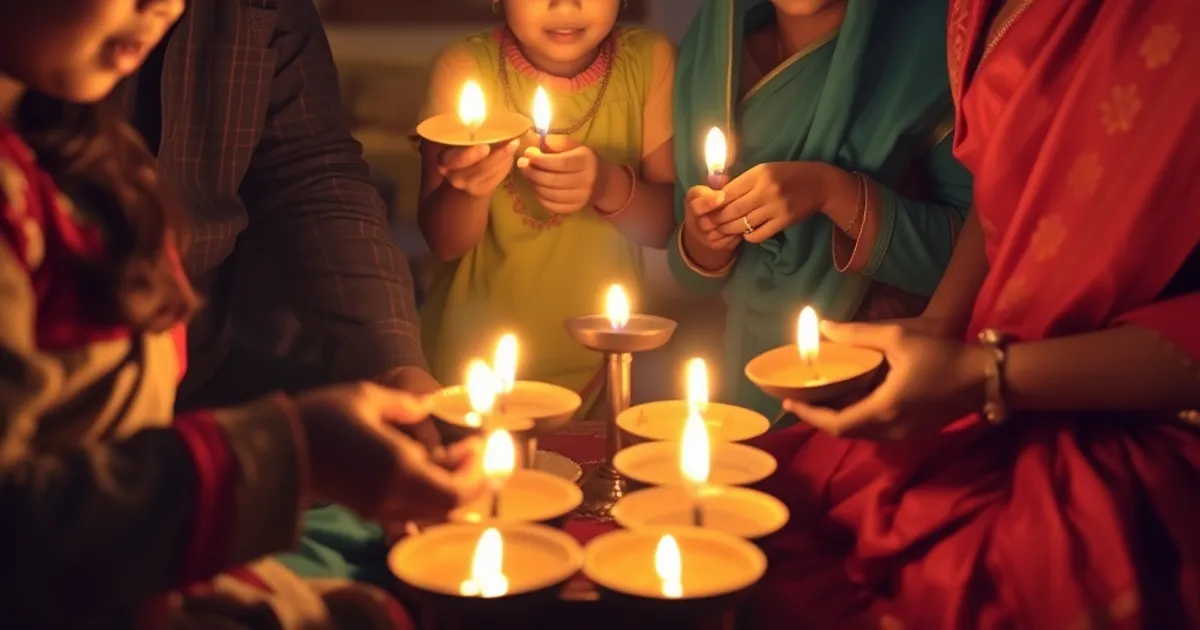
Pradosh Vrat falls on both July 26 and July 27. Pradosh is a bi-monthly observance dedicated to Lord Shiva, observed at dusk. The dual-day occurrence this year means families have flexibility. The twilight timing makes it a natural candidate for a short evening mandir visit followed by a home-cooked sattvic meal. Children who associate the Pradosh hour with family gathering and the soft light of lamps at home tend to carry the memory of the observance long after the detail of the date fades.
Guru Purnima 2026 falls on July 28 and continues into July 29. This is among the most culturally resonant days on the Indian calendar — a day to honor teachers, spiritual guides, and the chain of knowledge that connects generations. For Desi children, Guru Purnima is an ideal occasion to write a note to a beloved school teacher, visit their classical music or dance guru, or attend a mandir program focused on the guru-disciple tradition. Community organizations across New Jersey frequently hold cultural performances around Guru Purnima, featuring Bharatanatyam, Hindustani or Carnatic music, and shloka recitations.
Purnima — the full moon — coincides with Guru Purnima on July 28-29. The full moon is a simple, accessible entry point for introducing children to the lunisolar calendar. Stepping outside together at night to view the Purnima moon, naming it, and explaining why it marks the middle of the lunar month is a low-effort, high-impact parenting moment.
Weekend Activity Ideas for Desi Families in Newark
Beyond the calendar, Newark and its surrounding region offer a range of activities that Desi families can weave into the observance weekends.
Temple visits and cultural programs. Hindu temples, gurdwaras, mosques, and cultural centers in Newark and Essex County hold weekend children's programming that ranges from Sanskrit shloka learning to Bharatanatyam and Kathak classes. Guru Purnima weekend tends to bring out special guru-honoring events and classical performances. Arriving early and staying for prasad makes the visit a full experience for children.
Classical arts and music classes. The NJ-NY Desi corridor has an active ecosystem of Indian classical arts teachers. Many hold summer workshops in Carnatic and Hindustani music, Bharatanatyam, Kathak, tabla, and veena. A one-day or weekend workshop gives children an activity that is culturally anchored and skill-building at the same time. Guru Purnima is the traditional occasion for students to formally honor their arts teacher — making it the ideal weekend to enroll or to attend a recital.
Festival cooking at home. Observance days like Ekadashi and Pradosh Vrat traditionally call for specific foods — sabudana-based dishes, fruit, dairy, and dishes made without certain grains. Involving children in preparing these dishes turns the kitchen into a classroom. A child who learns to make sabudana khichdi for Ekadashi or prepares panchamrit for a puja at home has acquired a cultural skill that travels with them.
Outdoor time in Essex County. Branch Brook Park in Newark is one of the largest parks in Essex County and a familiar Desi family destination. In late July, the park offers shade, open lawns, and walking paths that work well for a packed lunch outing. A container of rotis, sabji, and homemade laddoo for the Purnima weekend picnic is a small ritual that children remember.
Planning for Sankashti Chaturthi and Amavasya
The observance arc continues into August.
Sankashti Chaturthi falls on August 2. This Ganesh-dedicated monthly fast is widely observed in Maharashtrian households and increasingly across the broader South Asian community in New Jersey. The Sankashti fast is traditionally broken after sighting the moon, making moon-watching a built-in family activity for the evening of August 2.
Ekadashi returns on August 8, followed by Pradosh Vrat on August 10. The cycle closes with Amavasya on August 12 — the new moon. Amavasya is quieter and more inward-facing than Purnima. Many families observe it as a day of ancestral remembrance. For children, it can be introduced as a day to think about family elders — to look at old photographs together, to hear a story about a grandparent, or simply to light a lamp in their memory.
Insider Tip
The stretch of Newark Ave in Jersey City — approximately 15 minutes from Newark — is one of the most concentrated Desi commercial strips in the northeastern United States. On Guru Purnima weekend (July 28-29), Desi families in Newark routinely combine a temple visit with a Newark Ave outing for South Indian tiffin, Bengali sweets, chaat, or Gujarati snacks. The street is walkable, lively, and gives children a rare experience of South Asian culture at street scale. It is especially vivid on a festival weekend when the community is already in a celebratory mood.
FAQ
Q: Are there Hindu temples in Newark proper for Guru Purnima events? A: There are Hindu temples and cultural organizations across Newark and Essex County. Specific program schedules are best confirmed through community WhatsApp groups, local South Asian newspapers, and individual temple websites, as programming details change each year.
Q: What age is right to start bringing children to temple observances? A: Any age works. Toddlers engage with the sensory experience of a temple visit — lights, music, incense, and ritual — without needing conceptual explanation. Children from about age seven onward can engage meaningfully with the stories and significance behind observances like Guru Purnima when explained simply.
Q: Is Pradosh Vrat something we can observe at home if we cannot get to a temple? A: Yes. Lighting a lamp at dusk, reciting a simple Shiva mantra together, and offering bilva leaves if available are accessible home practices. Many families adapt observances to what their household schedule realistically allows.
Q: Do I need to be Hindu to attend community events during these observances? A: Most Hindu temples in New Jersey welcome visitors of all backgrounds to community cultural events. It is respectful to dress modestly and follow posted guidelines about footwear and photography.
Bottom Line
Newark's Desi families have a genuinely full weekend calendar from late July into mid-August 2026. The back-to-back sequence of Ekadashi, Pradosh Vrat, Guru Purnima 2026, Purnima, Sankashti Chaturthi, and Amavasya creates multiple touchpoints for weaving cultural and spiritual education into ordinary weekends. None of these observances require expensive outings — many center on the home, the kitchen, and the local mandir. Combined with the Newark Ave food strip, Essex County's parks, and the NJ-NJ Desi corridor's rich ecosystem of classical arts teachers, this stretch of the calendar gives Desi children in Newark some of the most vivid family memories they carry forward.