
Raksha Bandhan 2026 in Palo Alto: Events, Puja & Where to Celebrate
TL;DR
- 🪢 Raksha Bandhan 2026 falls on August 27 — the most emotionally significant Desi celebration of the month in Palo Alto
- 🐍 Nag Panchami 2026 on August 16 opens the final stretch of festival season
- 📿 Sankashti Chaturthi on August 2 and August 31 keeps the Ganesha fasting rhythm through the month
- 🎵 Krishna Janmashtami 2026 on September 4 follows close on the heels of Raksha Bandhan
- 🐘 Ganesh Chaturthi 2026 on September 14 closes what will be an exceptional run of Indian festivals in the Bay Area
Raksha Bandhan in Palo Alto's Indian Community
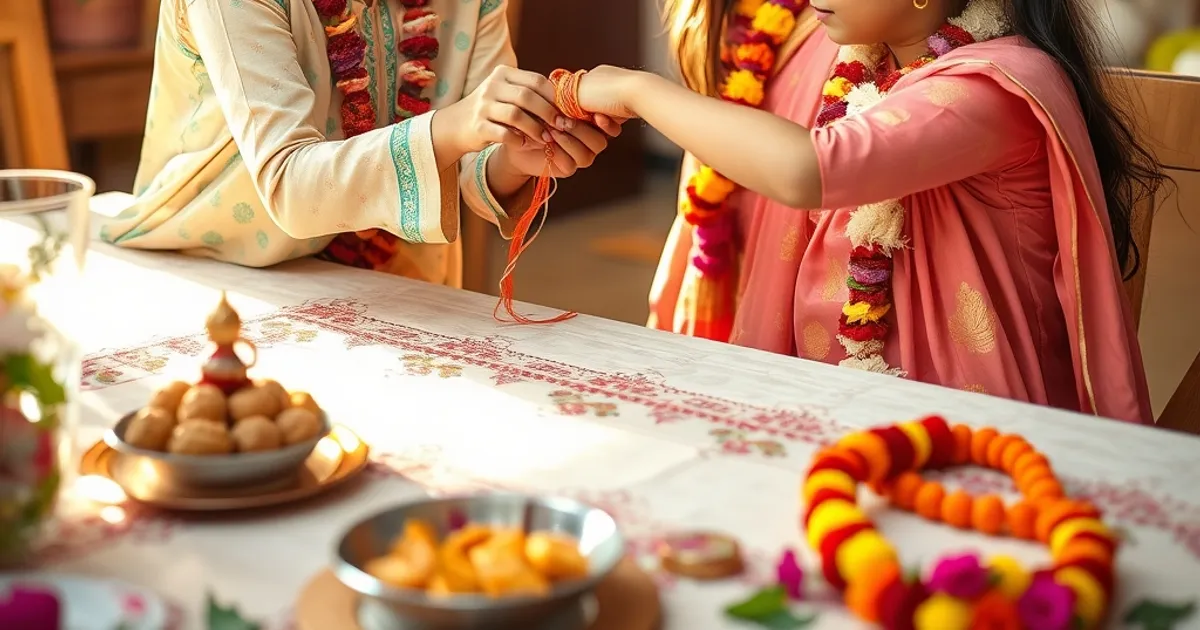
August 27, 2026 is Raksha Bandhan 2026, and for the Indian community in Palo Alto and across the Bay Area, it carries a weight that goes beyond festival logistics. The day centres on the bond between siblings — a sister ties a rakhi around her brother's wrist, a promise of love, and he pledges protection in return. It is one of the most emotionally resonant days on the Indian calendar, precisely because it is rooted not in abstract spirituality but in the concrete, irreplaceable bonds of family.
In Bay Area Indian households, Raksha Bandhan has adapted gracefully to diaspora life. Sisters mail rakhis weeks in advance — to brothers in Hyderabad, Mumbai, and London, and to brothers across the Bay who still prefer the in-person ceremony over any digital substitute. Brothers send sweets and gifts from Bay Area shops to siblings on the subcontinent. Video calls run through morning hours, bridging time zones. And in households where siblings live close enough, the day becomes a reunion — a meal, a ceremony, and the kind of afternoon that doesn't end until long after the lamps are lit.
This year, Raksha Bandhan 2026 falls on the same day as Purnima — the full moon — making it doubly auspicious. The Purnima of Shravana is considered a particularly sacred full moon in the Hindu calendar, and its alignment with Raksha Bandhan amplifies the occasion. Families who observe Purnima with evening prayers will find the night already filled with meaning.
What to Do in Palo Alto for Raksha Bandhan
Palo Alto itself is not a city with a large Indian commercial corridor, but the Bay Area fills the gap entirely. Indian grocery and specialty stores in Sunnyvale, Milpitas, and Fremont carry a full range of rakhis through July and into August — from simple thread designs to elaborate jewelled and beaded varieties. Mithai shops and Indian sweet counters stock the sweets traditionally exchanged on the day: coconut barfi, motichoor ladoo, kaju katli, and seasonal preparations.
Community events for Raksha Bandhan vary year to year. Cultural associations and Indian community organisations periodically arrange celebrations, and some Bay Area temples host programmes around the festival. Checking local Indian community platforms, Desi.Net listings for the Bay Area, and community group announcements in the weeks before August 27 will give the clearest picture of what is happening that year.
Insider Tip: Rakhis sell out faster than most people expect. By the second week of August, popular styles at Bay Area Indian stores are routinely gone. If you are shipping a rakhi to a sibling in India, factor in international delivery windows — standard services from the US can take ten days or more. Order by late July to be safe on both counts.
The Build-Up: A Full Indian Calendar Through August
Raksha Bandhan 2026 arrives at the end of a month that has been devotionally active from its first days. Understanding the full calendar helps Palo Alto's Indian community plan and participate.
The month opens with Sankashti Chaturthi on August 2. This is the monthly Ganesha fast — observed on the Krishna Paksha Chaturthi (fourth day of the waning moon) of every month — and is one of the most widely kept observances among Indian families across regional backgrounds. Devotees fast through the day, break the fast at moonrise, and perform Ganesha puja with the recitation of the Vrat Katha. Modak preparations are traditional, and the evening aarti brings a sense of completion to the day.
Nag Panchami 2026 falls on August 16. It honours serpent deities — nagas — as protectors of home and family, and falls in the sacred Shravana month associated with Lord Shiva. Bay Area Indian families mark the day with milk offerings, naga drawings at home entrances, and prayers for household protection. It is a home observance for most families, connecting them to traditions with roots that run very deep.
Ekadashi on August 23 and Pradosh Vrat on August 25 add Vaishnava and Shaiva fasting observances to the final days before Raksha Bandhan. Ekadashi, the eleventh-day fast dedicated to Lord Vishnu, is among the most widely kept in the community. Pradosh Vrat, observed in the evening hours of the thirteenth lunar day, is a Shiva-focused fast with its own prayers and rituals. Together, they give the final week of August a devotional intensity that makes Raksha Bandhan feel like a culmination.
Then August 27 arrives: Raksha Bandhan 2026 and Purnima together.
What Comes Next: Janmashtami and Ganesh Chaturthi
The festival season does not rest after Raksha Bandhan. September brings two of the year's largest Indian celebrations to the Bay Area.
Krishna Janmashtami 2026 falls on September 4 — just eight days after Raksha Bandhan. This is the birthday of Lord Krishna, and its celebration is one of the most joyfully observed in the Indian calendar. The festival is famously centred on midnight, the hour of Krishna's birth, with fasting through the day, devotional singing, and prayer programmes running late into the night. Bay Area temples host elaborate Janmashtami programmes drawing hundreds of families. Dahi handi events — in which teams form human pyramids to break a pot of yogurt suspended high above the ground — bring a festive, participatory energy to community celebrations.
Ganesh Chaturthi 2026 arrives on September 14. The birthday of Lord Ganesha inaugurates a ten-day celebration that is the single largest festival in Maharashtra's calendar and one of the most widely observed among Indian families from any background. Community pandals, idol installations, daily aarti, and the final visarjan — the ceremonial immersion of the Ganesha idol — are its hallmarks. Bay Area celebrations of Ganesh Chaturthi draw participation from across the Indian community, and Palo Alto families have strong access to the major programmes happening throughout the South Bay.
The window from August 27 to September 14 — Raksha Bandhan 2026 through Ganesh Chaturthi 2026 — amounts to eighteen days of consecutive festival season. For Palo Alto's Indian community, it is the social and spiritual peak of the year.
Palo Alto's Indian Community and How It Connects
The Indian community in Palo Alto is predominantly professional — technology workers, academics, life science researchers, and their families. It organises through a combination of cultural associations, temple communities serving the broader South Bay, school parent networks, and Bay Area-wide Indian organisations. The community's size and density means that even without a dedicated Indian commercial district in Palo Alto itself, the full range of community life is accessible through the broader Bay Area infrastructure.
For newcomers, finding the community means looking slightly beyond Palo Alto's borders. Cultural associations based in Sunnyvale, Santa Clara, and Fremont serve South Bay Indians broadly. Temples in Milpitas, Sunnyvale, and Livermore are within practical reach. And digital connection — through Desi.Net, community apps, and South Asian professional networks — has made geographic proximity less of a barrier than it once was.
FAQ
Q: Where can I buy rakhis near Palo Alto for Raksha Bandhan 2026? Indian grocery and specialty stores in Sunnyvale and Milpitas are the closest reliable options. Stock arrives in late July and sells down by mid-August, so shop early.
Q: Are there organised Raksha Bandhan events in Palo Alto? Community events vary year to year. Check local Indian cultural associations, temple bulletins, and Desi.Net's Bay Area listings closer to August 27 for what is being organised that year.
Q: How do Bay Area Indian families celebrate Raksha Bandhan when siblings live in India? Rakhis are mailed weeks in advance, with the ceremony conducted over video call on the day. Brothers frequently send gifts through Indian delivery apps or from Bay Area shops with international shipping.
Q: What is Sankashti Chaturthi and how often does it occur? Sankashti Chaturthi is the monthly Ganesha fast observed on the fourth day of the waning lunar fortnight. It occurs every month. In August 2026, it falls on both August 2 and August 31.
Q: What are the biggest Indian festivals in Palo Alto through September 2026? Raksha Bandhan 2026 on August 27, Krishna Janmashtami 2026 on September 4, and Ganesh Chaturthi 2026 on September 14 are the three headline festivals of the season.
Bottom Line
For Palo Alto's Indian community, the stretch from late August through mid-September 2026 is among the most festival-rich of the year. From the Sankashti Chaturthi fasts and Nag Panchami 2026 observances of early August through the sibling celebration of Raksha Bandhan 2026, and on into Krishna Janmashtami 2026 and Ganesh Chaturthi 2026 in September, the Desi calendar offers something meaningful nearly every week. This is the season to connect — with community organisations, with temple programmes, and with the traditions that make the Indian community in the Bay Area one of the most culturally active Desi populations in the United States.