
Indian Culture Commands Paris: Textile Heritage, a BAPS Festival, and Couture on the Runway
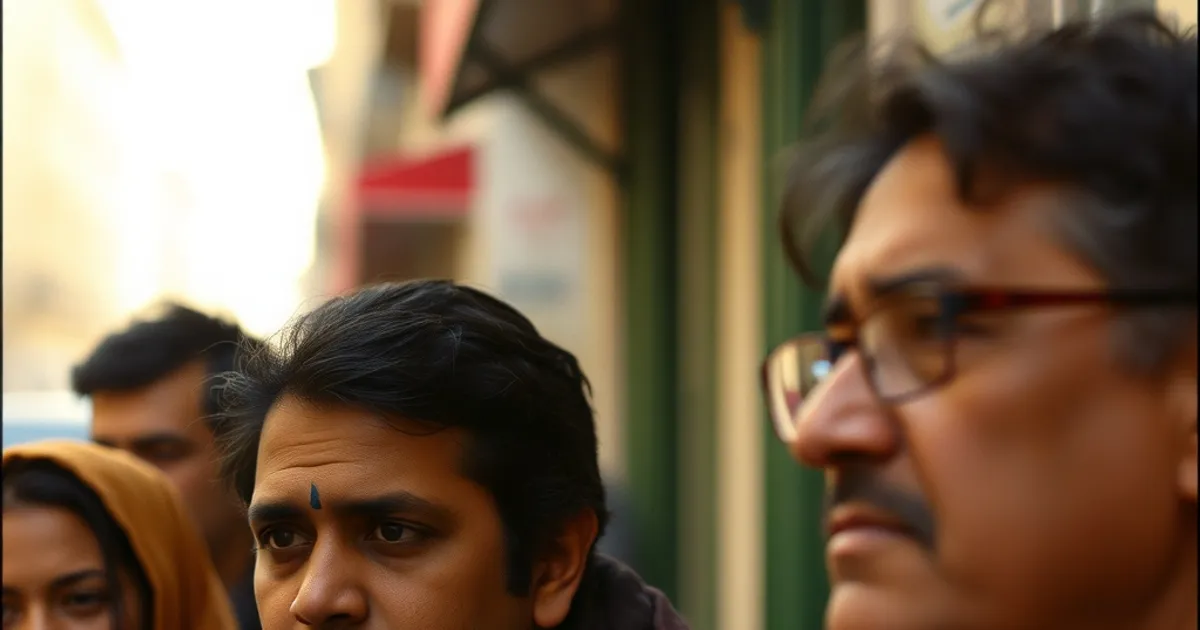
Paris is affirming its layered connection to Indian culture across multiple domains simultaneously — through the launch of a BAPS Swaminarayan Mandir Mahotsav, the ascent of Indian couture on the city's runways, the influence of temple architecture on haute couture design, and a reflection on the centuries-old textile trade linking West Bengal's mill towns to Parisian fabric houses.
🎬 From Rishra to Paris: The Journey of Indian Linen and Its Textile Heritage
The storied journey of Indian linen from Rishra, a mill town on the banks of the Hooghly River in West Bengal, to the fabric houses and fashion ateliers of Paris traces a path spanning continents, centuries, and cultures. An exploration of this textile heritage illuminates how Indian craftsmanship and raw material production became intertwined with European fashion over generations of trade. Rishra, historically known for its jute and linen mills established during the colonial period, developed expertise in natural fiber processing that positioned it as a supplier to international markets including those in France. The Aditya Birla Group, one of India's largest conglomerates with deep roots in the textile sector, has documented this heritage as part of a broader effort to connect Indian manufacturing traditions with their global commercial journey. For the Indian diaspora in Paris, this narrative holds particular resonance — it frames Indian industry not merely as a supplier to Western luxury but as a foundational contributor to the global textile economy. The journey from Bengal's mills to Paris's fabric houses reflects the depth of economic and cultural exchange linking India and France for well over a century, a relationship that continues to inform both fashion and commerce today, even as new generations of Indian designers and entrepreneurs add fresh chapters to the story. [1]
🎉 BAPS Swaminarayan Launches Mandir Mahotsav Cultural Festival in Paris
The BAPS Swaminarayan Sanstha, one of the world's largest Hindu organizations, launched its Mandir Mahotsav festival in Paris, bringing a major celebration of Indian spiritual culture to the French capital. The festival, whose name translates roughly as grand temple celebration, is part of BAPS's global outreach, designed to introduce the organization's traditions and Hindu spiritual values to broader audiences while strengthening community bonds among the Indian diaspora resident in France. BAPS has maintained an active presence in Europe for decades, establishing mandirs and cultural centers that serve as anchors for Hindu communities living far from South Asia. The Paris launch of the Mandir Mahotsav represents a significant milestone in the organization's European engagement, with programming that typically includes devotional music, cultural performances, exhibitions, and discourses on Hindu philosophy and ethics. For the Indian-origin community in Paris, which numbers in the tens of thousands and is concentrated in neighborhoods such as La Chapelle and around Gare du Nord, events mounted by organizations like BAPS provide important opportunities for cultural and spiritual grounding. The festival is simultaneously an invitation for French residents and visitors to encounter Hindu culture in an accessible and celebratory format, advancing the kind of cross-cultural dialogue that has deepened ties between India and France in recent years. [2]
🎬 Indian Couture Takes Centre Stage in Paris
Indian fashion arrived at centre stage in Paris as designers and labels rooted in the subcontinent's rich couture traditions garnered significant attention in the French capital, long regarded as the global home of high fashion. The prominence of Indian couture in Paris reflects a sustained and growing recognition among the international fashion establishment that the Indian subcontinent produces work of extraordinary craftsmanship, artistry, and conceptual depth. Indian designers have brought techniques developed over centuries — intricate embroidery traditions such as zardozi, chikankari, and kantha alongside weaving traditions tied to specific regions and communities — and presented them within the format of Western haute couture shows and exhibitions. The result is a creative conversation between two of the world's oldest and most sophisticated textile cultures, one that challenges the long-standing hierarchy that placed Paris at the apex and all others as peripheral. For the South Asian community in Paris and the broader Indian diaspora across France, the visibility of Indian fashion in Paris carries symbolic weight beyond aesthetics alone. It signals a cultural confidence and international stature that many in the community have sought to see reflected in mainstream European cultural institutions. The reception of Indian couture in the city widely considered fashion's capital is a meaningful marker of shifting global cultural dynamics and a recognition long in coming. [4]
🎬 Temple Architecture Steals the Show at Paris Haute Couture
The grandeur and geometric intricacy of Indian and Mughal temple architecture became an unexpected centerpiece of Paris haute couture, as fashion insiders encountered design vocabularies drawn from the sacred spaces of the Indian subcontinent. A publication focused on parametric and architectural design observed that the influence of temple motifs — soaring gopurams, carved stone tracery, mandala-like symmetry, and the ornate layering of Mughal arches and domes — had penetrated runway presentations in ways that went well beyond surface-level exoticism. Designers drew on these architectural traditions to shape silhouettes, surface treatments, and structural elements, producing garments that carried the weight and presence of monument-scale forms while remaining wearable. The crossover between sacred South Asian architecture and Parisian couture raises substantive questions about cultural exchange, influence, and attribution, even as it demonstrates the worldwide resonance of India's built heritage as a design language. For the Indian community in Paris and India-watchers in the fashion world, seeing temple architecture cited as a decisive aesthetic influence by the haute couture establishment represents a form of recognition that carries genuine cultural significance. It positions Indian architectural tradition not as decorative borrowing but as a serious design vocabulary capable of reshaping one of the world's most rarefied creative fields in lasting and visible ways. [5]
Sources: [1] adityabirla.com · [2] BAPS Swaminarayan Sanstha · [4] A&E Magazine · [5] Parametric Architecture